
November at the dacha: Stavropol told how to finish the season without losses
November is the time when the garden and garden go to rest, and the summer resident gets the last chance to dispose of the plot wisely
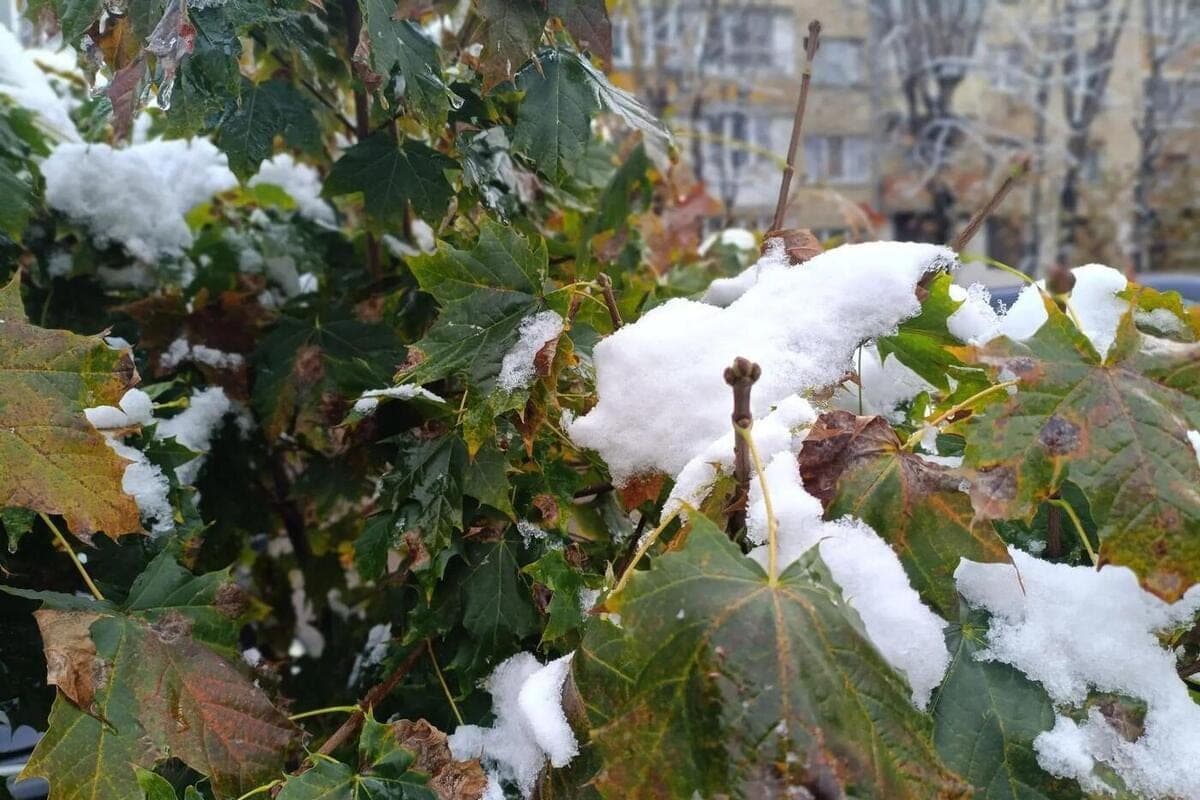
November is the time when the garden and garden go to rest, and the summer resident gets the last chance to dispose of the plot wisely. Proper preparation for the winter in the spring will turn into saved forces, time and money. A clear work plan for readers of MK-Caucasus was prepared by the head of the plant protection department of the Stavropol branch of the Rosselkhozcenter Natalia Luchko.
Garden: shelter, protect, feed
The first step is cleaning. Fallen leaves and scavengers are an ideal shelter for wintering pests and spores of diseases. Healthy leaves can be laid in compost, but foliage with spots, plaque, rotten or traces of pests is better to burn or take out of the site: otherwise in the spring, "sleeping" problems will wake up and hit the garden. Padalis is also dangerous because it attracts rodents and serves as a source of infections - scab and monoliosis.
Sanitary pruning is carried out without fanaticism: only dry, broken and clearly sick branches are removed, since strong pruning weakens the tree before winter. The branch is cut "on a ring", without hemps - they become a breeding ground for rot. Wounds with a diameter of more than 1 cm are first treated with a 1% solution of copper sulfur (100 g per 10 liters of water), and then closed with garden brew. It is better to burn all plant debris - this is the most reliable way to prevent diseases and pests from wintering on the site.
If autumn is dry, you can not do without moisture-charging irrigation: moist soil freezes more slowly and to a lesser depth, protecting the roots from freezing. Under an adult apple tree or pear can go 50-100 liters of water, young seedlings enough 30-40. Water not at the trunk, but along the perimeter of the crown, where the main suction roots are located, and it is better in 2-3 receptions. If the soil is already frozen, watering should be abandoned - the water will remain an ice crust and will not bring benefits.
Whitewashing of trunks is not just a tradition, but protection of the bark from sunburn and freezer at sharp temperature changes. Before whitewashing, moss, lichens and dead bark are carefully removed, the trunk is treated with a 3-5% solution of copper sulfur, and then the composition is applied from the bottom up, along the fibers, with a layer of 2-3 mm to a height of 1.5-2 m, capturing the bases of skeletal branches for about a third of their length.
Physical barriers are saved from rodents: a fine mesh wrapped around the trunk with a cylinder with a depth of 3-10 cm in the ground, lapnik with needles down, spunbond or garden bandage, spirally wound over, plastic bottles with a mandatory mulching layer. But the ruberoid, dense black film and other airtight materials without a "breathable" layer can not be used: condensate forms under them, the bark will spray, cracks and fungal diseases will appear.
Young coniferous trees are covered when stable sub-zero temperatures (−5...−7 ° C) are established, so it will be possible to avoid precipitation. Only breathable materials are suitable: sack, light spunbond (optimally 60 g / m2), shading mesh. A good option is a light frame with airways near the ground. The trunk circle is mulched with a layer of 7-10 cm, leaving a gap of 5-8 cm to the trunk, and the crown is carefully tied with a twine spiral from the bottom up - this will protect the branches from snowbreaking.
Garden: beds for the future harvest
A healthy top is sent to compost, sprinkled with lime or a strait with a solution of copper sulfur, the rest is burned or taken out. Digging improves the structure of heavy soils and helps to fight overwintering pests: shovels are dug on the bayonet, but large lumps are not broken - in winter they will freeze, and some of the pests and roots of weeds will die. Near the trunks of trees and shrubs there is enough light loosening so as not to damage the surface roots.
Under the digging make humus or compost (4-6 kg per 1 sq. m.), ash (100-200 g per 1 sq. m.), phosphoric and potash fertilizers - they slowly decompose in winter and by spring create an affordable supply of food. Nitrogen fertilizers are not applied in November: they are quickly washed out and can provoke the growth of greenery, which will die at the first frosts. Sour soil should be corrected with dolomite flour or lime.
As soon as the soil freezes by 2-3 cm, cold-resistant crops are sown: dill, parsley, carrots, spinach, radishes, onions of crops and garlic. Seeds are taken dry, the rate of sowing is increased by 25-30%, the depth of insemination is made slightly more than usual, and such crops cannot be watered.
Proper preparation in November is a contribution to the future harvest. Following the recommendations, you will help plants calmly overwinter and meet spring strong and healthy. Good ending to the season!
Previously, Stavropol told how to save the pumpkin until winter without a cellar.


