
Ombudsman of Bashkiria: “Occasionally, missing fighters were found in the hospital”
The main part of the appeals received by the Commissioner for Human Rights in Bashkortostan Mikhail Zakomaldin concerns the search for missing participants of a special military operation
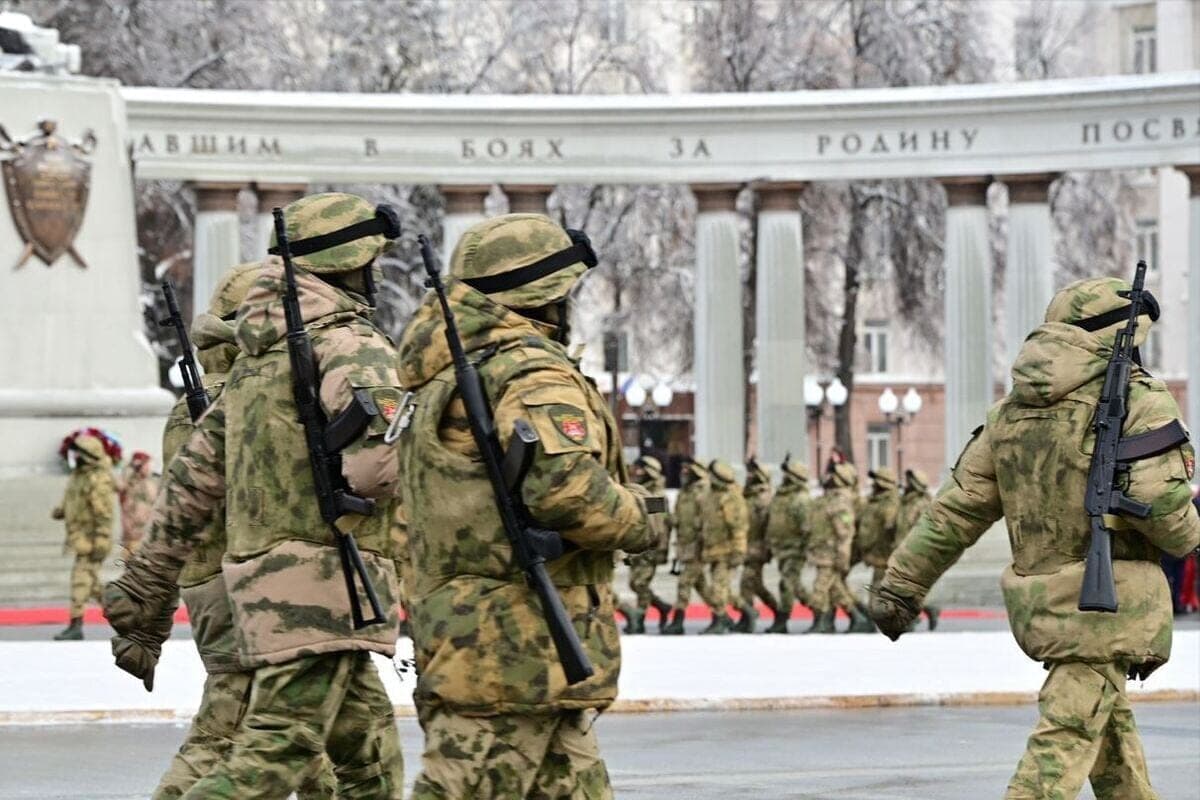
“The military department is looking for missing persons,” explains Mikhail Ivanovich. We interact with them, send inquiries and pay attention to specific cases. There were situations when it was possible to establish that a person had not been in touch for several months because he was in a military hospital.
According to the Bashkir Ombudsman, today the mechanism for informing the relatives of the missing fighters is well established.
- If a serviceman goes missing, then, as a rule, within two weeks, the information goes to the military commissariat at the place of residence, says Mr. Zakomaldin. At the beginning of the special military operation there were some failures, but now such cases are practically not found.
The Ombudsman stressed that sometimes relatives have to wait for the return of fighters from combat missions, which can last for several months.
- It happens that soldiers do not get in touch for a long time, because they are on the front line, and in order not to detect themselves, they do not turn on their phones, he recalls various cases. - And relatives are starting to worry. Later it turns out that the person performed a combat mission and most often calls back himself. It is much worse when it is discovered that the fighter is in captivity. Of course, to understand that your relative is being held captive by the enemy is a difficult situation, but the main thing is that the person is alive.
Mikhail Ivanovich explained how the lists of prisoners for exchange are formed: our fighters are changed to Ukrainian ones who are in Russia.
“Priority for the exchange is given to those who have many children, who have been seriously injured or are in a particularly difficult situation,” he said. We had a case where, thanks to prompt treatment, we managed to include in the exchange a fighter who lost both legs. By the New Year he was back home.
According to Mr. Zakomaldin, there is a regular exchange of bodies between the Russian and Ukrainian sides.
“The number of bodies exchanged makes it clear who has a pre-eminent position in these hostilities: Russia,” he said. During the next action on the exchange of bodies, the Russian side handed over to Ukraine the bodies of 501 dead soldiers, we returned 31 bodies. And for all the exchanges, a total of 25,978 bodies were transferred to Ukraine, and only 3,514 dead soldiers were given to Russia. In 2026, Russia handed over 4,561 bodies. Ukraine has returned 219 bodies since the beginning of the year. The ratio was 1 to 20.
It happens that a soldier died, but his body is in the so-called gray zone, which is shot daily or over it hangs sleeping drones that respond to movement. Evacuation of the deceased may mean the risk of losing several more fighters. Commanders usually wait for such an area to become secure and for personnel to be saved. Then relatives are told to wait until the front line moves.
Appeals related to monetary payments to military personnel are received much less often.
- Approximately half of such appeals are confirmed, and then payments are made, says Mikhail Zakomaldin. In other cases, it turns out that people simply misunderstand the order of charges. For example, payments for participation in hostilities are not accrued during vacation or hospital treatment, but other compensations are provided.
The Ombudsman noted that there are almost no cases of non-payment of compensation for injuries.
- Over the years, I have had only one such case, explains Mikhail Ivanovich. After contacting the military prosecutor's office, the issue was resolved very quickly.
At the same time, appeals to the office of the Commissioner for Human Rights are received almost daily.
- If a person wants to come to my reception, I will always accept him if I am on the spot, says the Commissioner for Human Rights in Bashkiria. This is not an easy job, because people come with serious life problems and count on help.
According to Mikhail Zakomaldin, among the “civil” appeals, the most common are health care, pensions, the work of the bailiff service and housing problems.
- On medical issues, appeals are indeed confirmed, comments Mr. Zakomaldin. Health care complaints come first. The Ministry of Health responds carefully to our requests, and most of the problems can be solved. There are issues of drug provision, the quality of medical care, but for each appeal is checked.
Mikhail Ivanovich adds that the institution of the Commissioner for Human Rights remains in demand.
“We have people who have already passed all the instances,” he said. Our task is to draw the attention of state bodies to possible violations of human rights. We are heard, and if this does not happen, we seek the restoration of rights through the prosecutor’s office and the court.


