
From 40 to 88 operations per month: how new technologies are changing the work of the Ulyanovsk hospital
In the Central City Clinical Hospital of Ulyanovsk expanded the possibilities of diagnosis and surgical treatment
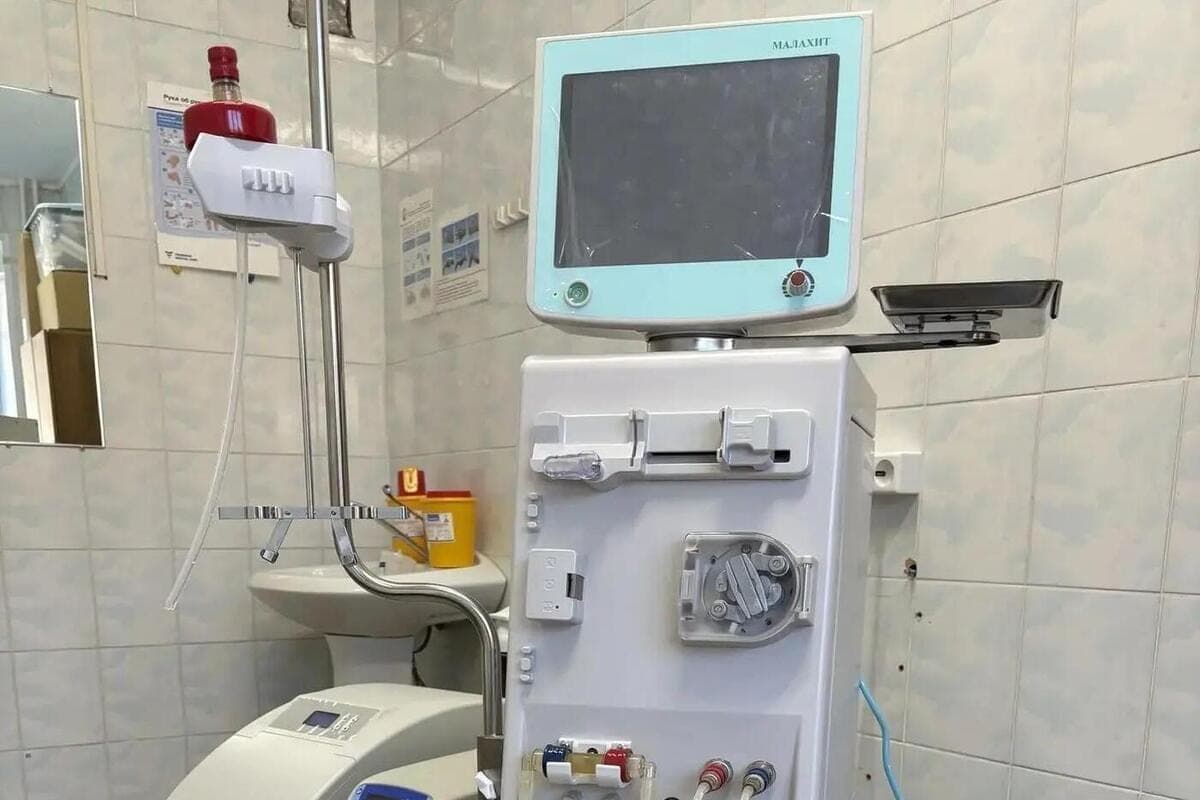
The Central City Clinical Hospital of Ulyanovsk has expanded the possibilities of diagnosis and surgical treatment. Thanks to the introduction of new methods, the number of operations in the urology department increased from 30-40 to 88 per month. At the same time, the medical institution received a domestic blood purification device worth 3 million rubles.
One of the innovations was transurethral resection of the prostate gland. This is a minimally invasive operation that allows you to remove overgrown tissue without external incisions. During the first month of using the technique, doctors operated on 19 patients with prostate adenoma.
In addition, experts have mastered laparoscopic interventions on the kidneys and ureters for cysts and urolithiasis. Such operations are less traumatic and allow patients to recover faster after treatment.
The hospital’s diagnostic capabilities have also expanded. Since the summer of 2026, a puncture biopsy of the prostate gland has been independently performed here. Previously, such studies in the region were performed only in the regional oncology clinic, which increased the waiting time.
Urologists now perform five to seven biopsies per week. The study is performed under ultrasound control, and hospitalization takes one to two days. The survey can be carried out by residents of the entire Ulyanovsk region.
According to the head of the urological department Andrey Bezyazychny, the new technique has already allowed to detect several cases of cancer at an early stage. When confirming cancer, patients are sent to a specialized dispensary, and the treatment of benign formations is carried out in the TSGKB.
Changes also affected the resuscitation department. Here began to test the Russian device "Malachite", designed for extracorporeal purification of blood. The equipment was manufactured in Yekaterinburg and acquired by the hospital.
Previously, the German Fresenius system, provided under a public-private partnership, was used for such procedures. The transition to its own equipment will allow the medical institution to abandon dependence on a third-party organization.
The Russian device cost 3 million rubles, while the cost of a foreign analogue together with a water treatment system is about 10 million. Once the setup is complete, the equipment will be able to work around the clock and provide treatment to up to six patients per day.
The head doctor of the hospital Olga Svirid noted that carrying out procedures directly in intensive care is especially important for patients who cannot be transported. Medical personnel have already been trained, and assistance will be provided free of charge under the MHI policy.
The modernization of the institution will continue. The operating unit received modern endoscopic equipment for testing. In the near future, a new surgical rack and a domestic laser are expected to arrive.
Updating the technical base is carried out within the framework of the national project “Long and active life”.


