
Do you have an ID card but no readers? We understand why and when you will not need to carry extra papers
Digitalization and artificial intelligence penetrate into all spheres of life. The technological process moves inexorably, it is important to keep up with it. The president practically ...
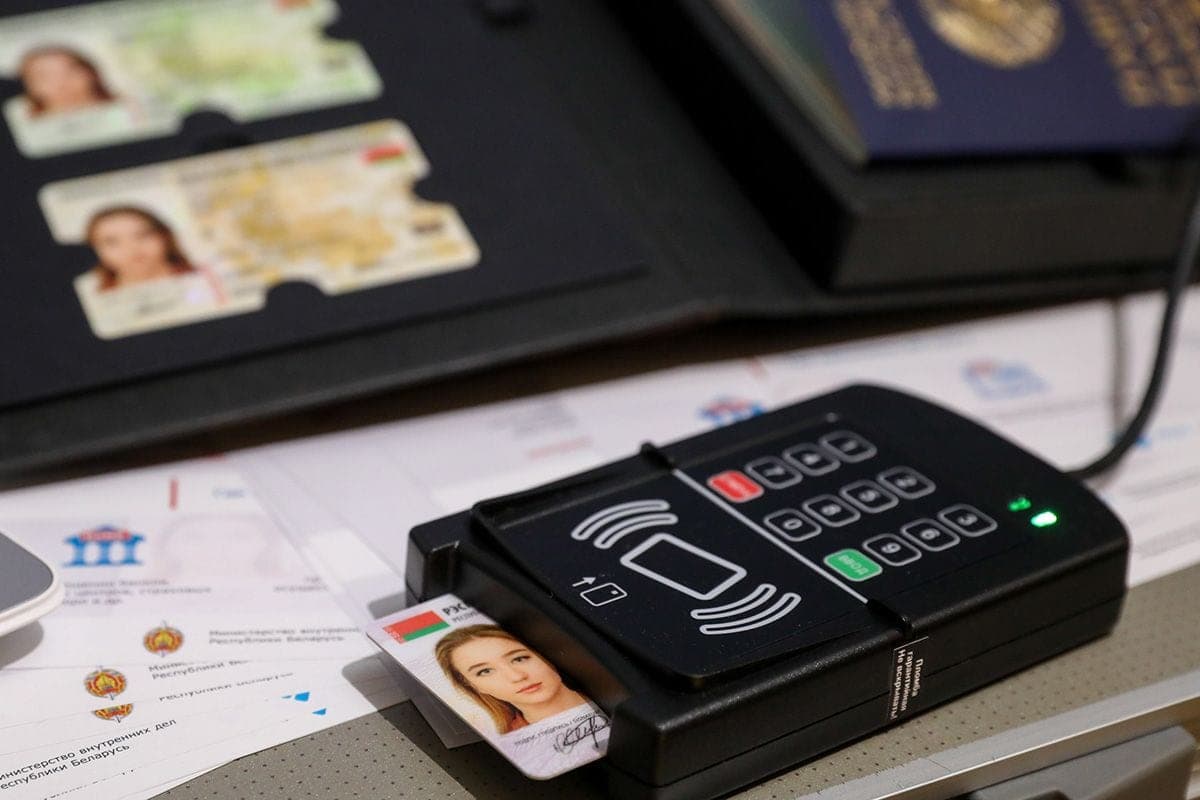
Digitalization and artificial intelligence penetrate into all spheres of life. The technological process moves inexorably, it is important to keep up with it. At almost every meeting devoted to science, production and technology, the President emphasizes: we must have our own, high-quality, modern, benefiting people. Five years ago, Belarusians were able to issue a new type of identity card. The new passport gives quick access to electronic services, reliably protects personal data. The number of people who chose an ID card is growing every year, but a full-fledged infrastructure for its maintenance, apparently, in some organizations has not yet been observed
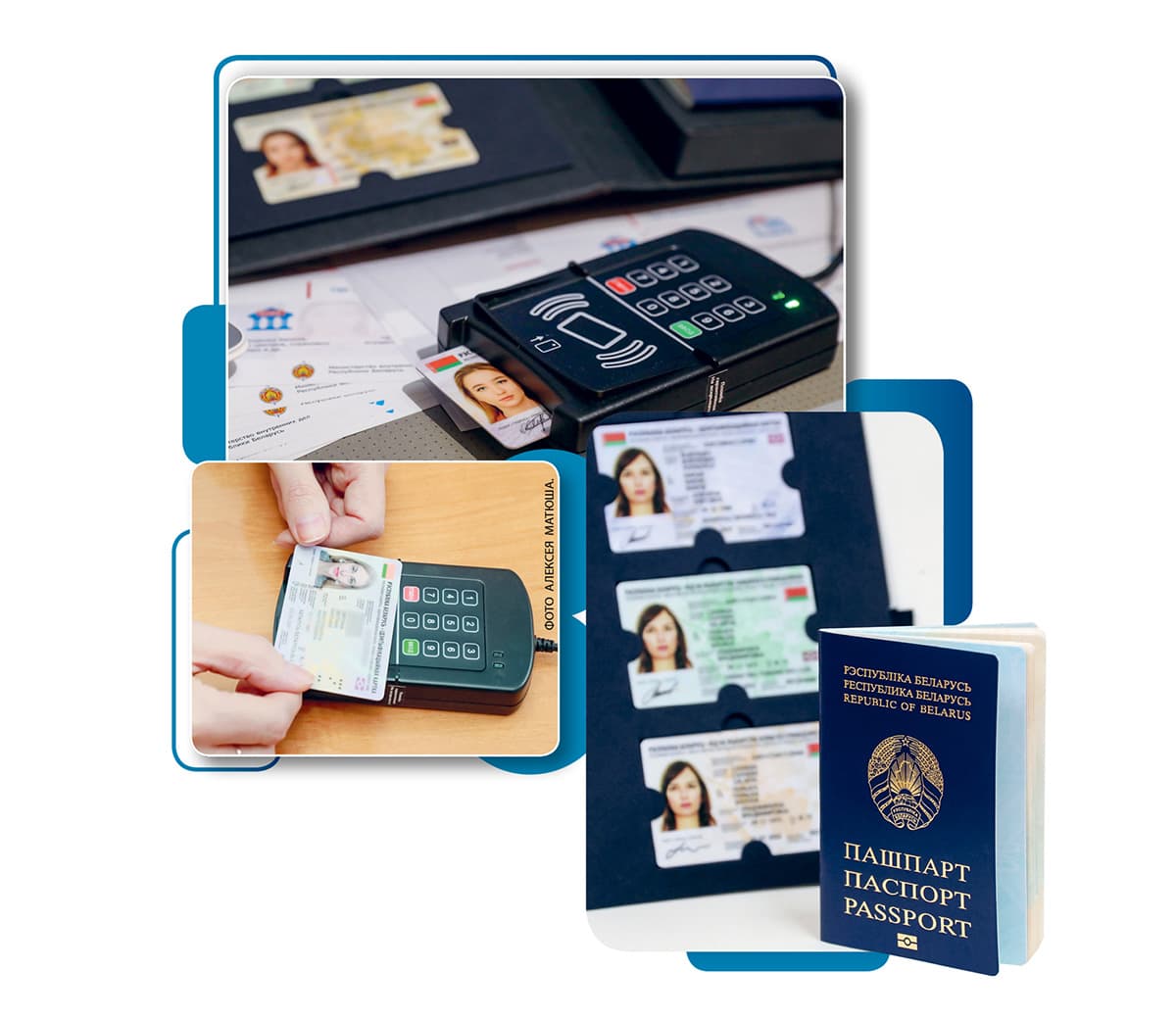
Recall that from 2021, according to Presidential Decree No. 107 “On Biometric Documents”, a new type of identity document was introduced – an identification card. It can be used inside the country, and a paper “foreigner” is issued to travel abroad, where all relevant stamps are put.
Belarusians received the innovation positively: the country does not stand still, new technologies are being introduced that significantly simplify life. Among the advantages are the compactness and practicality of the identification card compared to a regular passport, the rapid passage of passport control at the airport, the ability to obtain an electronic digital signature, which will give quick access to administrative procedures. For organizations, too, a huge plus: the registrar in the clinic, for example, do not need to manually enter all the data from the passport – the reader (if any) will automatically give all the necessary information.
But at the same time, the map itself does not indicate information about registration, marital status and children. It's encrypted in an electronic chip. On the one hand, it is the protection of personal data: the extra eyes will not see anything. And on the other hand, it creates certain inconveniences when making installments, insurance, service in communication salons, because to check the “hidden” information from the ID card, organizations need a special device – a reader. It's like a bank card terminal. A Threads user complained about the lack of such a device: Today I took a child to donate blood to a famous laboratory. I am told to show a document showing that it is your child! I said, here's the chip -- read it! The answer is: we don’t have a device – give birth certificate! Commentators divided into two camps: the same dissatisfied, faced with the problem, and holders of ID-cards, who for all the time of use did not have a single such incident. Let's see what it really is. Take your word for it? If a citizen himself wants to check information about himself, you can go to the E-Shepherd application, attach an ID card to a phone with the NFC function and enter pin codes that were issued with it. However, only owners of Android-based devices can do this. I failed to use this function - the service gave an error. Another situation was told by a friend:
- I went to the hospital to get my daughter vaccinated. Identity document is requested. When I gave the ID-card, they realized that the residence permit and marital status would not be easily reached – they do not have a reader. Then the data was recorded from my words.
I decided to check. Having reached the medical laboratory of a well-known clinic in Zhlobin, I asked if additional help is needed to pass tests to prove that my child is mine, or if the information from the identification card will be enough. The girl from the contact center replied, “There is no reader.” Bring the birth certificate.” That is, you can buy a vending machine for free coffee, but the basic thing for checking patient data is not.
In the hotel of one district center, which we called under the guise of tourists with children, said that there is a reader, but the birth certificate still need to be seized. Thus, it turns out that a digital passport is a lottery in which it is unclear whether you will be served or sent for a pile of papers. Without a reader, an ID card is, unfortunately, just plastic with a chip, name and photo, carrying no more information than a normal pass to any enterprise. Commitments fulfilled, but what is missing? Deepening into the essence of the issue, we turned to the regulatory framework. According to the decree of the President, the Ministry of Internal Affairs issues a ready-made document and accumulates data on citizens. The Ministry of Communications and Informatization, in turn, is obliged to place on its website information about equipment requirements, as well as training materials. The National Center for Electronic Services provides electronic services for citizens and government agencies. In general, all their obligations are fulfilled from and to. So the problem is not execution, but then what.
According to the decree of the enterprise themselves "taking into account the need to ensure the availability of equipment and (or) software that allows authentication of owners of biometric documents." That's the point. Some organizations working with personal data of citizens, for some reason, do not see the need to spend money on the purchase of readers. Although the need is obvious: since 2021, more than 600 thousand ID cards have been issued. The loophole in the legislation and the absence of government agencies responsible for monitoring the installation of equipment allow businesses to postpone this for later, redistribute resources to other, in their opinion, more important things. Maybe we should specify the legal act, designate the regulatory authorities and introduce responsibility for non-compliance with the regulations in order to avoid inconvenience and, as a result, dissatisfied posts in social networks? This question we asked the Deputy, Chairman of the Standing Committee of the House of Representatives on Human Rights, National Relations and Media of the House of Representatives Nikolai Buzin.
- It is impossible to oblige organizations to purchase readers - this will cause a wave of rejection, he said. In banks, government agencies, hotels they stand. Otherwise, you just have to wait. We're in a transition period. The system is being adjusted, shortcomings are being eliminated. I think another year and a half and everything will come back to normal.
Support the position of the Deputy and at the enterprise - the supplier of readers of JSC "Promsvyaz". The marketing department told us that this is a very popular product: they order one or two devices a week.
“State organizations, especially banks, take whole batches,” the company noted. In smaller volumes, but also often ordered by small and medium-sized businesses. We are able to meet the demand. There are now about 700 readers in stock. One costs 160 rubles. In general, the process of procurement and installation is systematic.
beleckaya@sb.by


