
Show or relic: the world is divided over the death penalty
World Day Against the Death Penalty is celebrated on 10 October 2026 for the 24th time.
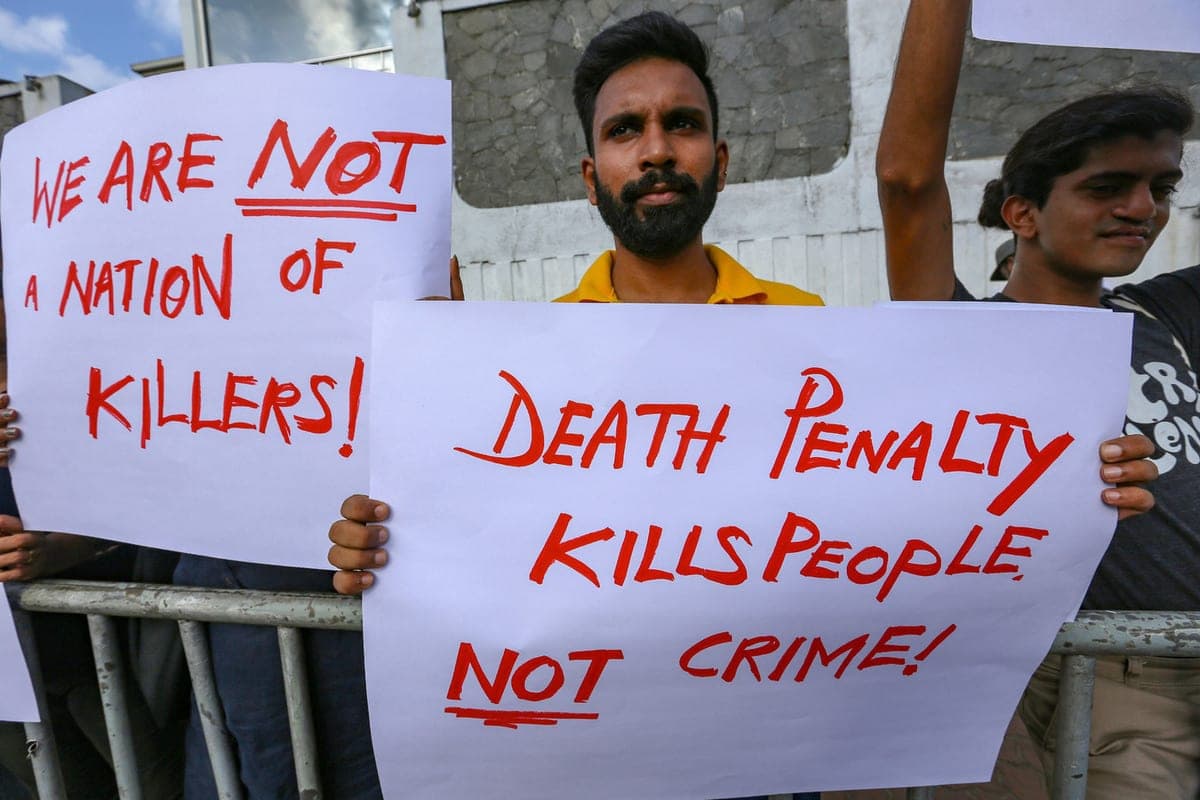
World Day Against the Death Penalty in 2026 comes amid divergent trajectories. The global movement to abolish capital punishment has achieved a record number of legislative bans and moratoriums in two decades. But individual states not only retain the death penalty, they make it public.
The death penalty is often discussed as an abstract concept that deals only with predators. The article emphasizes the structural conditions that could lead a person to conflict with the law: poverty, discrimination, trauma, mental health problems. Separately, the suffering from a long stay on death row, which can be equated with torture, is noted.
Execution as a TV show
On Thursday, October 8, the Pentagon confirmed plans to livestream the execution of Nidal Malik Hassan, a former army major and psychiatrist convicted of killing 13 people at Fort Hood in 2009. The execution is scheduled for December 3, 2026 at the same base.
Public broadcasting of the death raises serious concerns under international law. The International Covenant on Civil and Political Rights (ICCPR) allows the death penalty in states that have not abolished it, but article 7 prohibits torture and degrading treatment. The UN Human Rights Committee has explicitly defined public executions as incompatible with Article 7 and considers that executions in violation of this provision constitute arbitrary deprivation of life. The legality of the sentence does not remove the restrictions governing its execution.
The committee did not directly consider whether the execution was live-streamed over the internet public. However, its interpretation provides a basis for evaluation: if government officials deliberately report the death of a convicted person to an indefinite audience, the execution becomes an event presented for public observation. The absence of an audience in the camera does not eliminate the humiliating characteristics. Unlimited state-sponsored broadcasting can reasonably be described as public performance.
The U.S. ratified the ICCPR in 1992, but with reservations: the prohibition of Article 7 is linked to U.S. constitutional standards, and Articles 1–27 are defined as non-self-executing. Finland, Spain and Sweden had objected to the reservations, but that had not prevented the entry into force of the Covenant. The United States is not a party to the First Optional Protocol, so Hassan could not file an individual complaint with the Committee.
On November 5, 2009, Major Hassan opened fire at the Soldiers’ Readiness Processing Center at Fort Hood. Thirteen people were killed and 31 wounded. In 2013, a military court found him guilty and sentenced him to death. Appeals confirmed the verdict in 2020 and 2024, the Supreme Court rejected the petition in March 2025. President Trump approved the verdict on October 2, 2026. If executed, it would be the first U.S. military execution since 1961 and the first execution since 1945.
However, Trump’s approval of the shooting of servicemen is called a blow to the US Armed Forces. This type of execution has not occurred since 1961, when Private John Bennett was hanged for rape and attempted murder. Now things will change.
Defense Secretary Pete Hegseth calls Hassan a "brutal terrorist" and insists on "immediate justice." Legal expert Linda Meyer said: “The possibility of pardons cannot be excluded from military justice without addressing an important aspect of military culture: teamwork and community.”.
Over the past century, the army has executed 135 soldiers. The tradition dates back to 1776, when Private Thomas Hickey was hanged for planning to extradite Washington to the British. During the Civil War, about 500 people were executed, two-thirds for desertion. Today, in addition to Hassan, there are three more on death row. According to the Uniform Code of Military Justice, 15 offenses are punishable by death, but only the president can approve the sentence.
Execution survivor
At the same time, calls for the abolition of the death penalty are growing in the United States after the “harrowing” failed execution of Christa Pike in Tennessee. Pike, who was sentenced for the 1995 murder of Colleen Slemmer, was set to become the first woman executed in the state in more than 200 years.
On the evening of Sept. 30, Gov. Bill Lee canceled the procedure after Pike was injected with two full syringes of pentobarbital - a dose generally considered fatal. She survived and was in critical condition. An hour after the first injection, eyewitnesses recorded that the convict was still breathing, and she also had a heartbeat. Lawyer Randy Spivey, who was present in the cell, called the ordeal "cruel and excruciating" and said he personally counted seven needles stuck only in his left hand, "one of which was bent when removed." Corrections Commissioner Frank Strada has resigned.
Pike's lawyers said she had pneumonia, had a blood clot, and could not swallow or move her arms. The court ordered the state to retain evidence: drugs, tubes, needles, catheters and records.
Human rights advocate Brian Stevenson said nearly a dozen botched executions in recent years should have led to a review long before. Instead of asking if a prisoner deserves to die, he suggested, “do our governments that tolerate inequality, insecurity, and bias deserve murder?”
Joel Zivot, an anesthesiologist who has analyzed hundreds of autopsies of executed men, said lethal injections never deserved the name of medicine: “It is an imitation of a medical act.” This is the theft of a medical document. So when things go awry, it doesn't surprise me. The specialist also warned that Pike had a blood disease with elevated platelets and her veins were of “low quality”.
This is the second failed execution in Tennessee in five months: in May, Tony Carruthers survived after failing to install an IV. Alabama also failed to execute Alan Miller and Kenneth Smith for failing to find a vein. In the end, the criminals were killed using nitrogen gas, a method prohibited as inhumane. In June, a federal judge found him a cruel and unusual punishment.
Across the country, about 7 percent of lethal injection attempts result in prolonged suffering or leave people alive. A federal judge in Ohio ruled that a dose of one of the drugs was not enough to avoid "unnecessary pain." Arizona's governor suspended executions after three failed injections in 2022, and Ohio and Oklahoma did the same. Most states now have formal or de facto moratoriums on lethal injection. UN human rights chief Volker Turk has called on Tennessee to halt future attempts to execute Pike.
Medical problems
Lethal injection is the most common method of execution in the United States, but one of the least reliable. A study of executions from 1890 to 2010 found that lethal injections were more than twice as common as all other methods. The reason is the complexity of the medical procedure in prison conditions without qualified staff. Large medical organizations prohibit staff from assisting in executions, so prisons rely on people with questionable credentials.
Legal specialist Corinne Barrett Lane explained: "It's a really nasty combination of a delicate procedure that isn't done delicately.".
In addition, pharmaceutical companies restrict the use of their products in executions, so some states purchase drugs in so-called prescription pharmacies, where drugs are not thoroughly tested. Some stocks may be overdue or of poor quality.
The risks are exacerbated by those who are injected. Sentenced people often spend years or decades waiting; many are in old age and have health problems. Failed executions are often accompanied by unsuccessful attempts to find a vein. Robin Maher, executive director of the Death Penalty Information Center, suggested that Pike's injection got into the blood wrong: "She probably had thin veins or a needle went through a vein.".
Sociologist Michael Radelet notes that lethal injection has replaced older forms that have come to be seen as outdated and draconian.
“Lethal injection is a relatively new phenomenon, but it is part of a long-term trend that goes back hundreds of years in the search for a more humane method of execution.”.
However, the promise of a peaceful and clinical procedure has been disproved: autopsy results show that prisoners are still in pain.
According to Lane, lethal injection from the outset was about the notion of humane execution, not about humane execution. The expert emphasizes that this is a big difference.
The last nationwide moratorium was imposed in 1972, when the Supreme Court ruled that the death penalty was applied arbitrarily. The ban was lifted four years later.
Paradoxically, calls for a new pause are peaking at the same time as pressure for executions. Trump has repeatedly called on states and the federal Justice Department to speed up the proceedings. In 2025, 47 people were executed in the United States, a historic high in 16 years. Biden’s massive commutation of sentences (37 of 40 federal inmates) remains the main reason for the lack of a spike in federal executions.
Support for the death penalty fell from 77 percent in 1995 to 52 percent in 2025. The acquittal of more than 200 people since 1973 has cast doubt on the reliability of the system. In 2000, Illinois was the first to impose a moratorium, and in 2011 completely abolished the execution.
The death penalty is now in effect in 27 states, but four, California, Oregon, Ohio and Pennsylvania, have moratoriums. Nebraska lawmakers abolished the execution in 2015, but Gov. Pete Ricketts helped fund the voter initiative and reinstated it in 2016.
Reform and isolation
More and more countries in the Association of Southeast Asian Nations (ASEAN) are restricting the use of the death penalty. Over the past 20 years, a wave of reforms has changed the situation in 11 countries. Cambodia, the Philippines and East Timor have abolished capital punishment. Indonesia has marked a decade without executions, with Malaysia and Thailand achieving that target in 2027 and 2028. Brunei and Laos also refrain from executions. However, Myanmar, Singapore and Vietnam are firmly committed to the practice.
“The number of ASEAN countries where executions are carried out is steadily declining,” said Joshua Eriksson, an anti-death penalty activist. The reforms prove that the death penalty is supposedly unique in ensuring public safety.
Singapore remains the only member of ASEAN to regularly execute and openly oppose reforms. As of the end of September 2026, 19 death sentences have been executed, which is more than for the whole of 2025 (17) and more than twice as many as for 2024 (9). All for crimes related to prohibited substances.
Myanmar resumed executions in 2022 after a 30-year hiatus and expanded the use of capital punishment in 2025-2026. Vietnam plans to reduce the number of crimes punishable by death from 18 to four. Thailand has restricted the use of capital punishment for banned substances. In Malaysia, the number of convicts dropped from more than 1,200 to about 100 by the end of 2025. In Indonesia, the new Criminal Code classifies the death penalty as a “special punishment” used only as a last resort.
“The death penalty remains the ultimate measure of cruel, inhuman and degrading punishment, but its abolition is possible throughout the region,” Ericsson said. Every year, millions of people oppose the death penalty, demonstrating the true power of humanity.
In the Middle East, Saudi Arabia is considered one of the world’s leading executioners. As of October 2026, at least 175 people have been executed, most of them foreigners: 94 people from more than 20 countries. Human rights activists explain that in the Arab kingdom, many crimes and punishments are left to judges who judge according to Shariah.


