
Smolensk investigators warn of new fraudulent schemes
In Russia, cases of telephone fraud continue to be recorded, when attackers impersonate law enforcement officers or banks in order to seize citizens’ funds
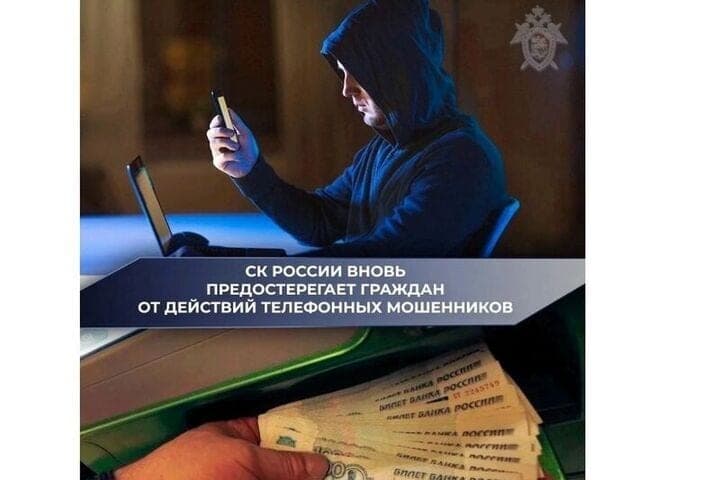
In Russia, cases of telephone fraud continue to be recorded, when attackers impersonate law enforcement officers or banks in order to seize citizens’ funds.
Of particular danger is the scheme in which criminals are presented as employees of the Investigative Committee of Russia. They can report criminal cases and send fake procedural documents through messengers to intimidate the victim and make her believe what is happening. To stop the so-called persecution, fraudsters require the transfer of money. Often they pose as high-ranking officials of the department, using the names of famous employees who appear on television. At the same time, attackers behave aggressively and rudely, putting strong emotional pressure on the interlocutor.
There is another type of deception, when a person is trying to convince that in the framework of the investigation, the use of his personal data by criminals was revealed, because of which the money must be urgently transferred to a certain “safe account”.
In this regard, the Investigative Committee of Russia urges citizens to be vigilant and recalls that investigators do not conduct any procedural actions remotely. The law does not provide for interrogations or telephone interviews. To participate in investigative actions, citizens are called officially through a subpoena or telephone message, and the address of the investigative body can always be checked on the official website.
Officials do not have the right to request information on bank accounts, card data or codes from SMS messages. Employees of the department never require the transfer of money to any accounts either in a telephone conversation or in person. Any suggestions to help catch criminals through remittances or measures to "safeguard" savings are a clear sign of fraud.
It is also worth considering that fraudsters may try to prevent a person from independently verifying information, threatening him with liability for allegedly possible “disclosure of information” when trying to call government agencies or banks. Such statements are illegal and are intended solely to prevent the victim from seeking clarification. Citizens are urged not to succumb to persuasion and threats, and to immediately report such facts to law enforcement agencies.


