
Clock on the roof and rich stucco: what today looks like a revived church in the Kamenetsky district
Today it is hard to believe, but in the XVIII century in a small town on Brest region was in full swing political and cultural life. A magnificent palace, alas, time is not...
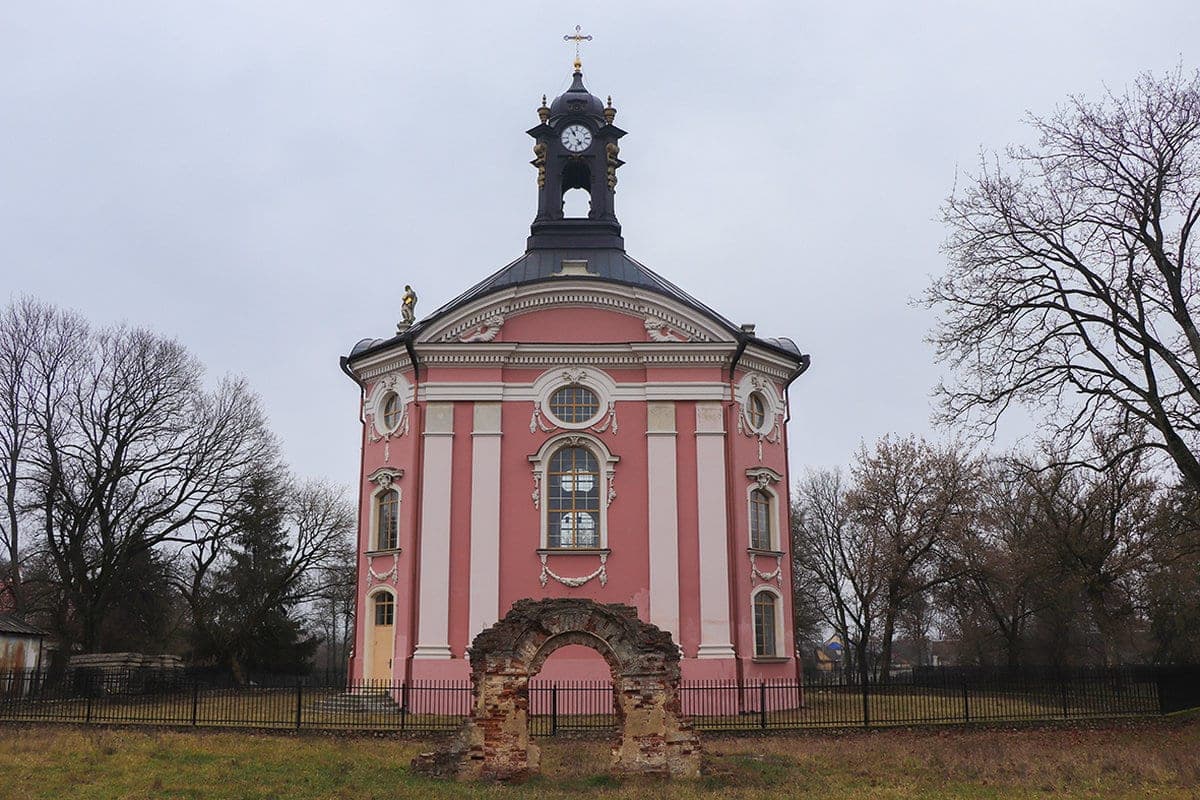
Today it is hard to believe, but in the XVIII century in a small town on Brest region was in full swing political and cultural life. The magnificent palace, alas, time did not spare. But it reminds of the former glory of the amazing beauty of the church in the late Baroque style.
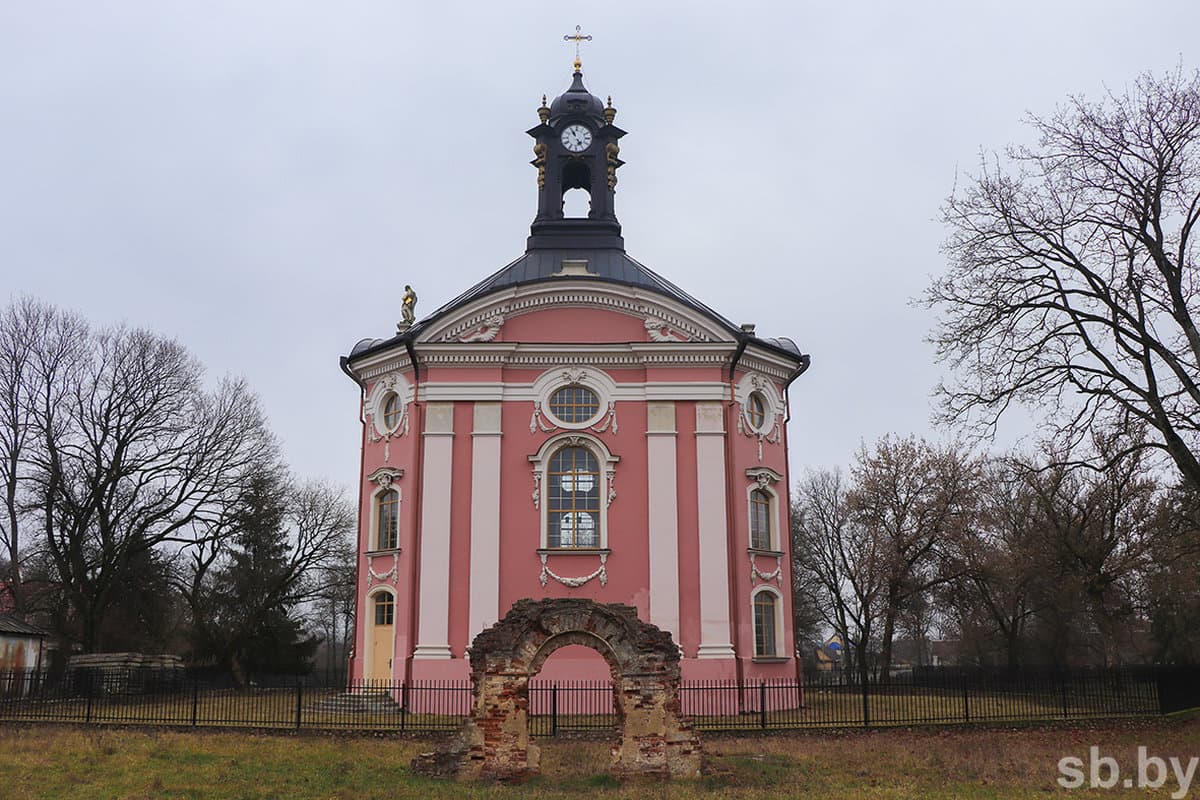
Volchin for centuries belonged to eminent dynasties: Soltans, Sapegs, Flemings, Czartorysky, Puslovsky... It was here that the last king of the Commonwealth, Stanislaw August Poniatowski, was baptized. The church in honor of the Most Holy Trinity was built at the expense of his father. And although the work on the decoration of the temple was not completed, the sacrament was held in Volchin.
The author of the temple project was court architect Johann Sigmund Deibel. It is believed that he drew inspiration from the Vatican style of Roman architecture. And the work was completed by his student - Jakub Hempel.
The eight-sided building adorns the belvedere with a chime clock. On the edges of the roof once stood sculptures of the apostles-evangelists (to this day one has survived). Inside it is very light, rich stucco, pilasters.
The church was consecrated in the summer of 1743 in honor of the Most Holy Trinity, the Introduction of the Blessed Virgin Mary and St. Stanislav. Almost immediately after that, the owner of Volchin Mikhail Czartorysky began the construction of a large-scale palace and park ensemble. This estate in the second half of the XVIII century received guests of the highest level, including Stanislaw August Poniatowski, who by that time became the king of Poland. According to the descriptions of contemporaries, the Czartorysky Palace had a rich library, a valuable collection of paintings and a home theater with French actors. Poets were invited to literary evenings, and conversations about state affairs were held in the living rooms.
In the XIX century, with the descendants of Mikhail Czartorysky, the estate began to lose its shine and glory. Later, the new owners completely dismantled the palace to the ground. The only thing that survived was a stone church. However, for several decades by the decision of the authorities of the Russian Empire, it was re-consecrated in an Orthodox church
The return of Catholics took place in 1918. Two decades later, the remains of Stanislav August Poniatovsky were reburied here (they were transported from St. Petersburg). Already in 1945, after serious destruction during the war and the barbaric looting of the grave, the Soviet authorities transferred the building to the local collective farm.
It seemed that the church would disappear as without a trace as the neighboring palace. But after the collapse of the USSR, the local Catholic community did not leave the shrine. A thorough reconstruction began in 2009. In November 2020, the restored temple was re-consecrated. It looks great - the stucco, the watch on the roof, and the warm atmosphere of faith and hope have been returned.
infong@sb.by


