
In Kostenki found ancient jewelry over 41 thousand years old
About 50 ornaments from shells were discovered by archaeologists during the field season of 2026 in the parking lot of Kostenka 14, located in the western part of the monument
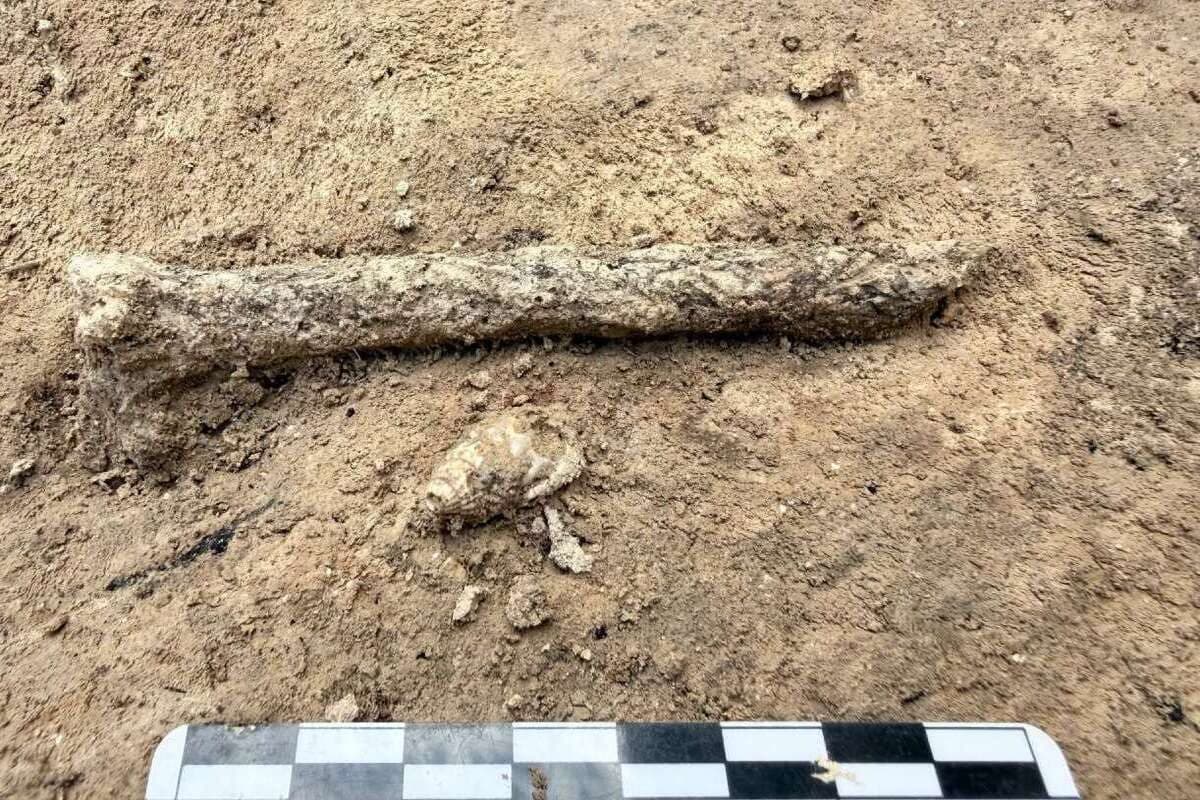
About 50 ornaments from shells were discovered by archaeologists during the field season of 2026 in the parking lot Kostenka 14, located in the western part of the monument. The findings were made in one of the oldest cultural strata. This was reported at the Institute of the History of Material Culture of the Russian Academy of Sciences on September 18.
Bones 14, also known as Markina Mountain, are located on the right bank of the Don. This is a multi-layered archaeological site that the Kostenkovsk expedition of the IIMK RAS has been exploring under the leadership of Andrei Sinitsyn for about 30 years. The found jewelry belongs to the layer IVw, whose age is estimated at 41.5-41 thousand years. He was one of the first Homo sapiens to reach this part of Eastern Europe.
The exact purpose of shell objects has not yet been established. Scientists suggest that they could be used to decorate clothes - by analogy with mammoth tusk beads found in the Sungir parking lot. It is also possible that the shells served as pendants or were part of other jewelry. To answer this question will help special transological studies that allow you to study traces of manufacturing and wear on the surface of objects.
Similar finds have already been found in Kostenki 14, but earlier their number was much smaller. The repeatability of jewelry with holes, according to researchers, indicates the existence of a stable tradition among the ancient inhabitants of the site. Such items could give archaeologists more information about the cultural characteristics of this group of people.
Of particular interest are two shells of marine mollusks. Their origin is associated with the Black Sea coast, since it was impossible to collect such shells directly on the banks of the Don. Scientists are considering two options for their appearance in the parking lot: the items could have been brought by people who moved from the south of Eastern Europe, or they could have gotten to Kostenki as a result of exchange between different groups.
Determining which path was associated with the appearance of seashells may help researchers better understand the processes of settlement of Homo sapiens in Eastern Europe.


