
Large-scale exercises on preparedness for radiation accidents were held in the Ostrovets district
Large-scale exercises on actions in case of radiation accidents were held in the Ostrovets district. They were attended by representatives of the EMERCOM, the Ministry of Health, the Ministry of Energy, the Ministry of Natural Resources, ...
Large-scale exercises on actions in case of radiation accidents were held in the Ostrovets district. They were attended by representatives of the Ministry of Emergency Situations, the Ministry of Health, the Ministry of Energy, the Ministry of Natural Resources, as well as other specialized services and departments and representatives of district authorities. Information about this was provided in the Grodno regional EMERCOM, writes sb.by.
According to First Deputy Minister for Emergency Situations Sergey Lapanovich, the systematic conduct of such exercises serves as a guarantee that in case of a real accident, all participants will clearly understand their tasks and work as efficiently as possible.
The first object of practical development was a protected emergency control point of the Belarusian NPP. It is placed in a separate shelter. From it, managers are able to coordinate the work of station units and attached forces involved in emergency response. Representatives of the NPP showed how the shelter functions, its main components and assemblies.
At the second site, participants tested the speed and order of alerting the radiation shelter. “Such training is needed to make sure that the structure and its systems can perform their tasks if people have to hide inside,” commented Ruslan Zhukovsky, chairman of the district executive committee.
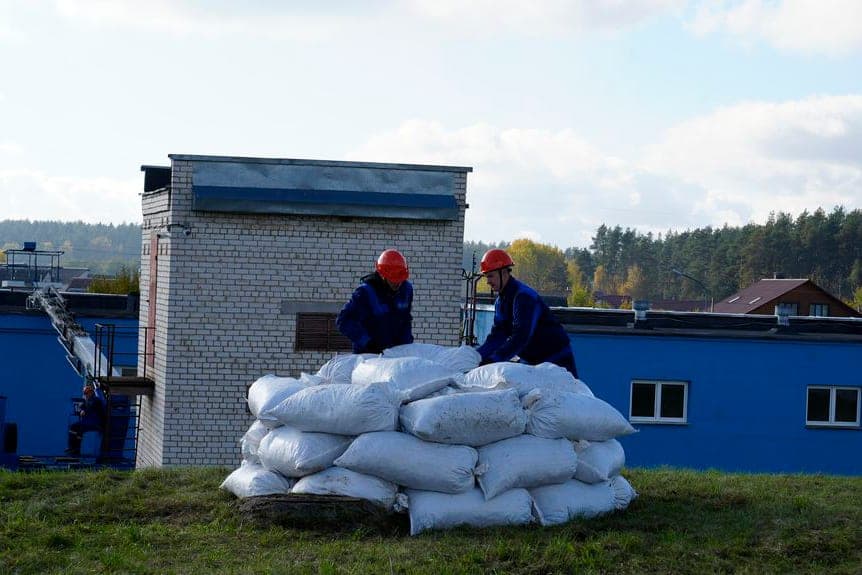
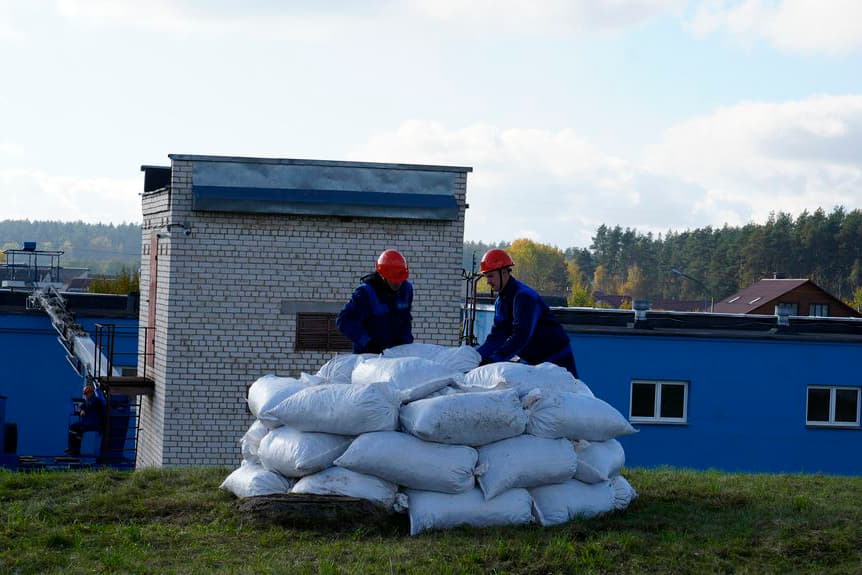
The third stage of the exercises was devoted to the development of measures to seal the water intake and protect open water sources. We have worked out the methods of sealing water intake structures, including the installation of protective screens and seals. Particular emphasis was placed on checking the condition of the valves at the inputs and terminals of water supply systems, as well as on inspecting the thermal insulation of pipes and water intake structures.
The final stage of the exercise took place at a dual-use defensive facility. Such objects in peacetime can be used for economic or social needs, but in case of an emergency they will be converted to protect the population.
The exercises demonstrated the high readiness of all participants to respond to a radiation accident. “Today’s testing allowed us not only to check the existing algorithms, but also to identify areas for further improvement,” said Sergey Lapanovich. The coordination of the actions of medical services, medical authorities, operational personnel of nuclear power plants and civil defense units confirms the readiness of the system to protect the population in conditions of radiation threat.


