
In Sochi arboretum ripened pink “lanterns” exotic tree from China
In the Sochi arboretum kolreuteria twice-feathered decorated with pink fruits resembling small paper lanterns
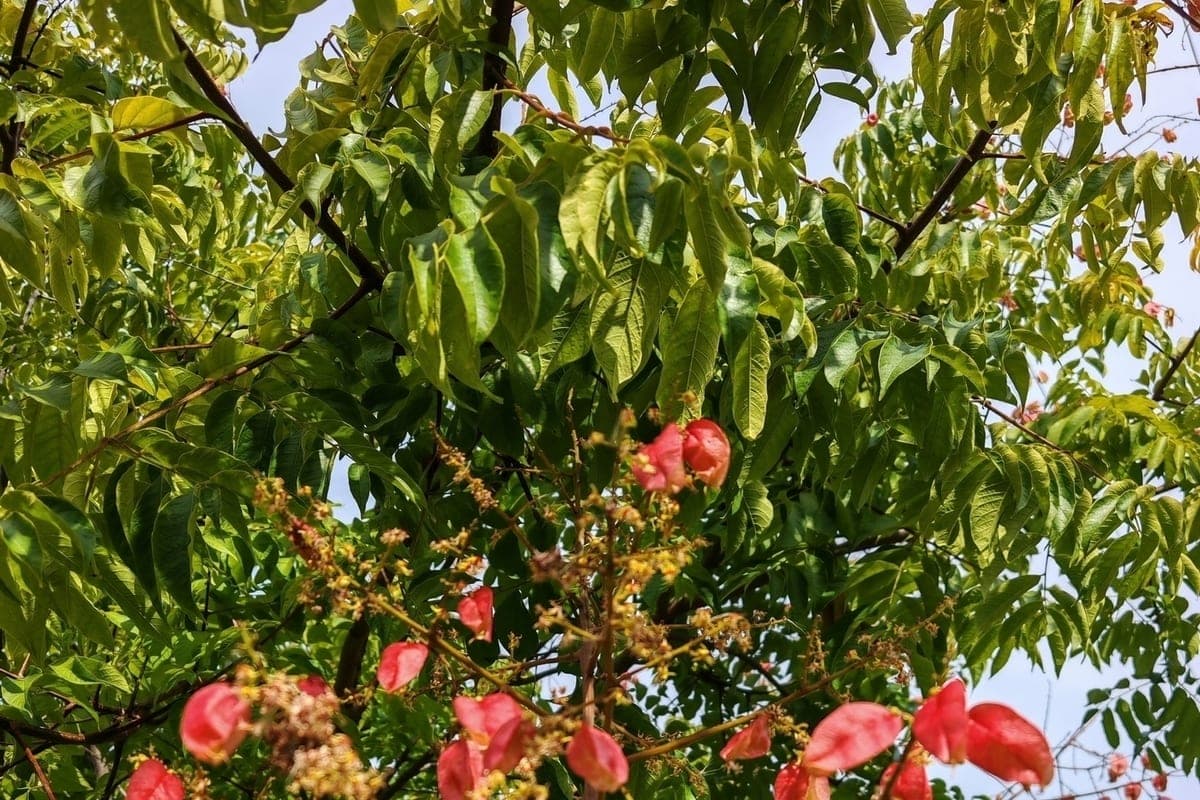
In the Sochi arboretum, the double-peaked kolreuterium was decorated with pink fruits resembling small paper lanterns. Inside the unusual boxes, black shiny seeds ripen, and the tree itself is interesting not only in appearance, but also in the history of application in Asian culture.
The fruits of kolreuteria are tricuspid boxes with thin walls. Each of the three nests contains one seed. Due to this shape, ripe fruits look especially decorative and attract the attention of visitors to the park.
The birthplace of the plant is southern and southwestern China, where it is found in rarefied mountain forests at an altitude of 400 to 2.5 thousand meters above sea level. Kölreuterium belongs to the sapind family, to which also belong the lychee, longan and rambutan.
In China, the tree is known by several symbolic names. One of them translates as “Flower of the National Day”: the flowering period of the plant falls in early October, when the country celebrates a public holiday. Another name – “tree shaking money” – is due to the fact that dry fruits make a sound resembling the ringing of coins.
Kolreuteria occupies a special place in the Buddhist tradition. Its seeds are used to make beads, so the plant is also called a temple tree. Historically, flowers were used to produce yellow dye, and wood – to make small objects. In traditional Chinese culture, tree bark was credited with medicinal properties.
In the Sochi arboretum seasonal change in the color of the fruit allows you to see another feature of the exotic plant. Its decorativeness is associated not only with flowering, but also with unusual boxes that become a noticeable decoration of the autumn garden.


