
In Ulyanovsk for the first time performed the liturgy of Tchaikovsky for worship n
In the Savior-Voznesensky Cathedral of Ulyanovsk on November 8, the “Liturgy of St. John Chrysostom” by Peter Tchaikovsky was performed for the first time in the city
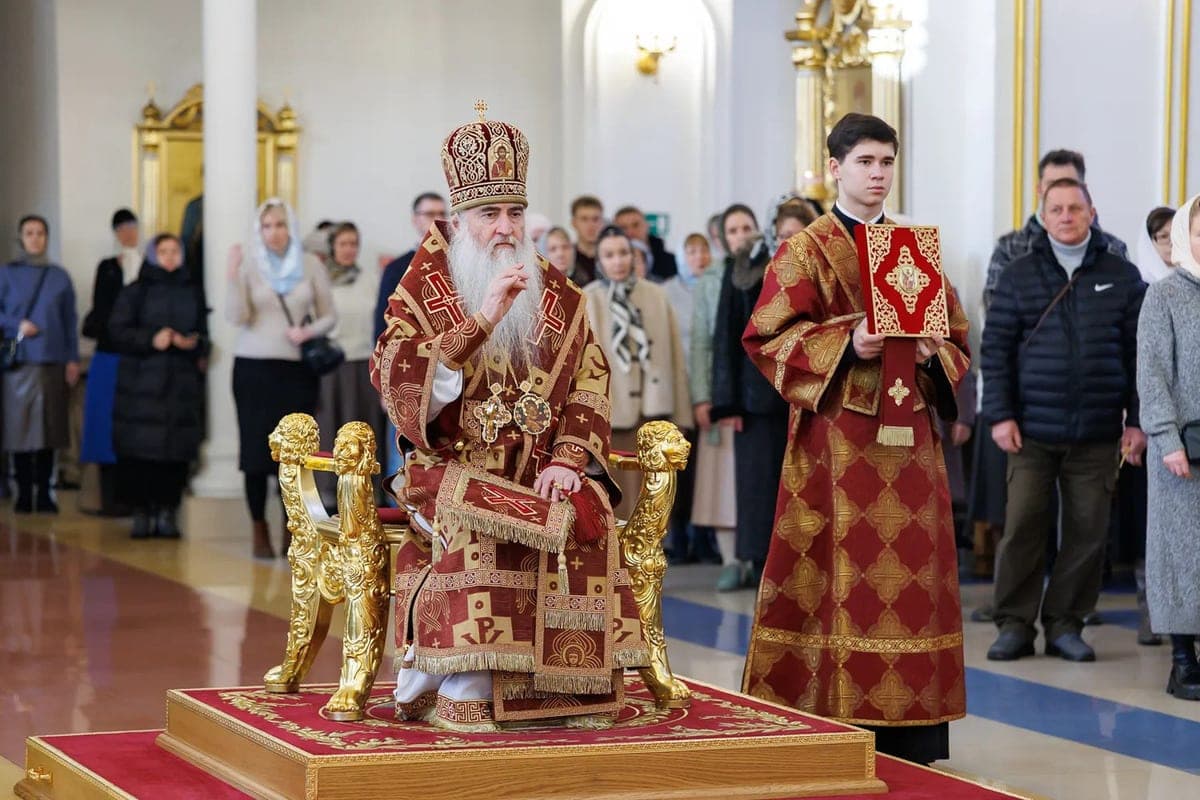
In the Savior-Voznesensky Cathedral of Ulyanovsk, on November 8, the “Liturgy of St. John Chrysostom” by Peter Tchaikovsky was performed for the first time in the city. The work was performed by the mixed choir of the cathedral under the direction of the regent Roman Khitev during the Sunday service, which was headed by Metropolitan of Simbirsk and Novospassky Longin.
The Divine Liturgy was held on the day of the memory of the Great Martyr Dimitry of Solun. The metropolitan was served by the cathedral clerk Hieromonk Hilarion (Chronicle), priest Dimitri Trofimov and deacons Ioann Kosyakov and Grigory Shevchenko.
The performance of the work was timed to the anniversary of the death of Pyotr Tchaikovsky, which is celebrated on November 6. After the service, Metropolitan Longin told the parishioners about the history of the creation of the work and its place in Russian sacred music.
According to the bishop, the Liturgy of St. John Chrysostom was one of the first attempts of a major secular composer to write a full musical cycle for Orthodox worship. At one time, the composition caused controversy, but later took a prominent place in the history of domestic choral culture.
The Metropolitan noted that the performance of the Tchaikovsky Liturgy requires a high level of preparation of the church choir. Therefore, in temples, individual chants are often heard, rather than the whole cycle.
The composer himself completed the work on the Liturgy in May 1878. In April 1879, the work was first performed at a service in the University Church of Kiev, and in December 1880 its open concert performance took place in Moscow.
The series consists of 15 small parts and was originally intended for church service, not for the concert stage. Tchaikovsky sought to convey in music his own perception of Orthodox worship and preserve the originality of the Russian church singing tradition.
After the Liturgy, Metropolitan Longin expressed hope that acquaintance with the work helped parishioners not only to participate in prayer, but also to touch the heritage of Russian sacred music.


