
In the Ulyanovsk regional hospital 50 patients removed kidney stones without incisions
In the Ulyanovsk regional clinical hospital for less than two months conducted 50 operations on crushing stones with a new thulium laser
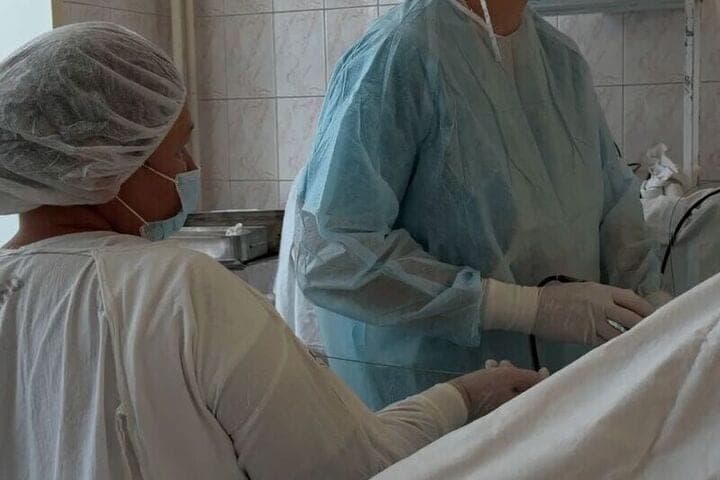
In the Ulyanovsk regional clinical hospital for less than two months conducted 50 operations on crushing stones with a new thulium laser. Modern equipment allows you to treat urolithiasis without surgical incisions, reducing the trauma of the intervention and facilitating the recovery of patients.
The new device appeared in the urology department of the hospital in August 2026. In a short time, the technology became part of the daily work of doctors and helped dozens of residents of the region to receive the necessary medical care.
The main advantage of the method is that no cuts are required to remove the stones. The doctor inserts a thin endoscope through the natural urinary tract and, under the control of the image on the monitor, directs the laser to form inside the kidney.
Under the influence of a laser, the stone breaks down into small particles, which are subsequently excreted from the body naturally. At the same time, the equipment allows you to influence even dense formations that are poorly amenable to other methods of crushing.
As explained by the urologist of the regional hospital Dmitry Vagaev, the new device has expanded the possibilities of specialists in the choice of treatment. Due to the high accuracy of exposure, doctors can break down complex stones, minimizing damage to surrounding tissues.
However, the usual methods of treatment in the hospital remain. Patients are still available shock wave lithotripsy. What method will be most suitable, experts determine individually, taking into account the size, density and location of the stones, as well as the general condition of the person.
According to the chief doctor of the Ulyanovsk Regional Clinical Hospital Ignat Ponomarenko, the introduction of the thulium laser was the next stage in the development of minimally invasive surgery in the institution.
The hospital's technical upgrade will not end there. In the near future, new equipment for surgical and otolaryngological departments are expected to arrive here.


