
Volgograd residents told where to look for the moon and Antares on October 15
October 15, 2026 is a calm day in both geomagnetic and astronomical terms. Earth's magnetosphere returns to normal after the perturbations of the beginning of the week, and the evening sky offers a graceful spectacle: the thin sickle of the moon next to the reddish Antares. Weather permitting, go outside and look at the western horizon after sunset.
Geomagnetic environment
On October 15, 2026, a mostly calm geomagnetic environment is expected. According to the Solar Astronomy Laboratory, the probability of magnetic storms on this day is minimal – about 7%, while the probability of a calm magnetic field is most scenarios.
The planetary index of geomagnetic activity Kp is expected at level 2, which corresponds to the minimum background level. For comparison, in the previous days, October 13-14, the Earth’s magnetosphere was in an excited state after a series of solar emissions, but by Thursday the situation stabilized.
People sensitive to changes in space weather are unlikely to feel noticeable discomfort on this day. The geomagnetic background will be even, without sharp fluctuations. This is good news for those who are watching their health: October 15 is one of the quietest days of the week in terms of solar activity.
What's interesting about the sky?
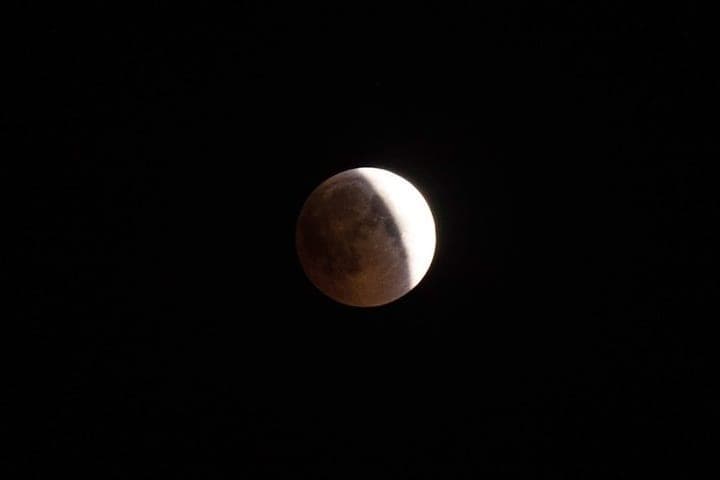
The main astronomical event of the evening of October 15 is the close rapprochement of the growing Moon and the bright star Antares from the constellation Scorpio. This phenomenon, called “connection” or “rapprochement”, can be observed with the naked eye under clear weather conditions.
The best time to observe is right after sunset, in the early evening hours. The moon will look like a thin growing sickle, and next to it, slightly lower and to the left, will be a reddish Antares. For observation, choose a site with an open western or southwestern horizon - both stars will be low above the horizon and will come quite early.
What is Antares?
It is a red supergiant, one of the brightest stars in the night sky, located more than 500 light years from Earth. It got its name from the Greek "Anti-Ares" - "rival of Mars" - because of the characteristic reddish hue, reminiscent of the color of the Red Planet. Despite the visual proximity in the sky, the Moon and Antares are separated by a huge distance: the Moon is hundreds of thousands of kilometers from us, while the light from Antares has been traveling for more than five centuries.
Meteor activity
In mid-October, the period of activity of the South Taurid meteor shower continues, the peak of which occurred on October 12-13. Although the maximum has already been passed, individual slow and bright meteors, known as Halloween fireballs, can still appear in the sky. However, on October 15, the intensity of the flow is already decreasing, so you should not count on a real “star rain”.


