Live bacteria in a jar: what are the benefits of pickles
Pickles are more than just a snack
What happens to the cucumber in the brine
The main difference between pickles and pickled cucumbers is the method of preparation. Pickling uses vinegar "from the outside", and pickling triggers a natural lactic fermentation. Salt suppresses foreign microflora and creates conditions for the work of lactic acid bacteria. It is these bacteria that process sugars, forming lactic acid — it gives a characteristic taste and works as a preservative.
Key point: if the cucumbers are prepared by fermentation (and not filled with vinegar), they retain live bacteria.
Gut benefits — and modest caveats
Gastroenterologist Larisa Nalbandyan confirms that fermented cucumbers support a variety of intestinal microbiota. Probiotics in their composition improve digestion and reduce inflammation.
However, there is a nuance that is worth knowing about. Pickles contain dietary fiber, but in small amounts. It is not necessary to expect that a couple of cucumbers will close the daily rate of fiber — this is just an addition to the diet of fresh vegetables, fruits and whole grains.
Salt — where is the boundary?
The World Health Organization recommends no more than 5 grams of salt per day (1 teaspoon). Pickles are high in sodium. Excess salt retains fluid, increases the load on blood vessels, kidneys and heart. For people with hypertension and kidney disease, portion control is especially important. Practical life hack: rinse pickles with water before eating — the taste and beneficial properties will be preserved, and the excess salt will go away.
Recipe: cold crispy cucumbers
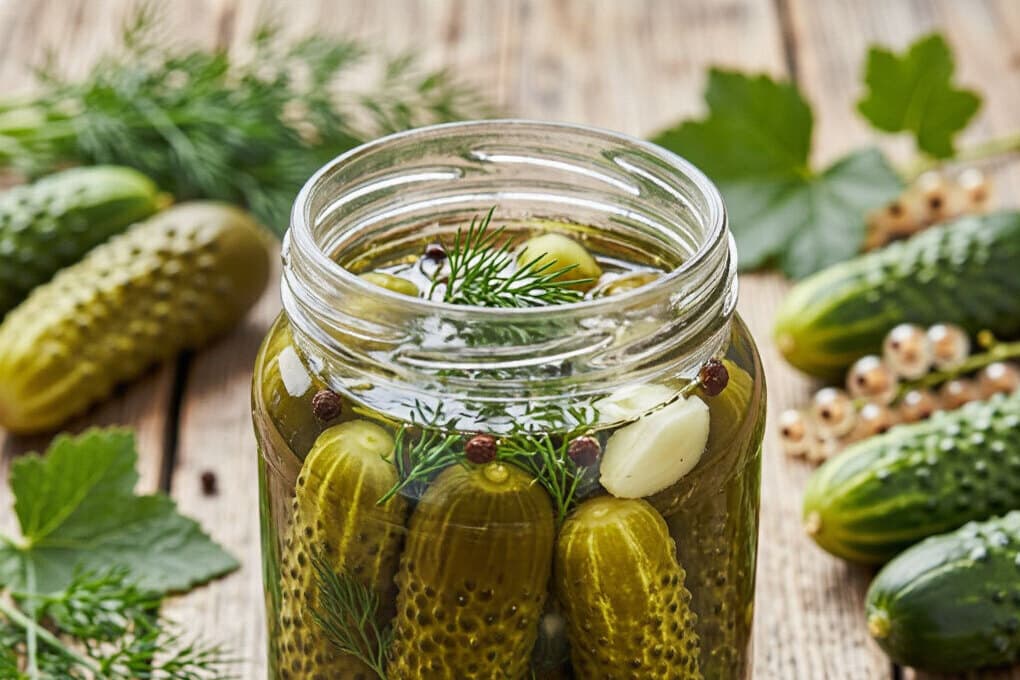
The cold salting method is the easiest way to fermented cucumbers with a “live” taste. The brine does not boil, the cucumbers are filled with cold water, and the fermentation starts naturally.
Ingredients per 3 litre can:
- Cucumbers — 2 kg (small, strong)
- Coarse salt, not iodized — 50 g per 1 liter of water
- Garlic — 5 cloves
- Dill (umbrellas), blackcurrant leaves, cherries, horseradish
Black peppercorns
Instructions:
1. Soak the cucumbers in ice water for 2–3 hours.
2. Place in a sterilized jar, shifting with herbs and garlic.
3. Prepare the brine: dissolve the salt in cold boiled water.
4. Pour cucumbers, cover, leave at room temperature for 3–5 days.
5. When the brine stops seeping through the lid, transfer the jar to the refrigerator or cellar.
Do not use iodized salt — iodine inhibits fermentation bacteria and the brine may become cloudy.
How to choose and store
- Store homemade pickles in a cool dry place, protected from light, at a temperature not lower than 0°C
- The maximum shelf life of pickles is 2 years, keep an open jar in the refrigerator for no more than two weeks.
- Bloated lids, turbid brine, bubbles — signs of spoilage. It is better to throw away such a jar.
Pickles are not a “superfood”, but they are also not a useless snack. It is an additional source of live bacteria, potassium and dietary fiber — provided you eat them in moderation (1–2 cucumbers, not a jar) and combine with a variety of fresh vegetables. Fresh cucumbers remain a priority for the daily diet — they have less sodium. And pickles are a delicious addition that, if used wisely, works to the benefit of your intestines.