Slow Lori: An Endangered Primate Species Discovered in Indonesia
Slow loris – one of the most exotic primates of the Earth was listed as endangered animals last scientifically.
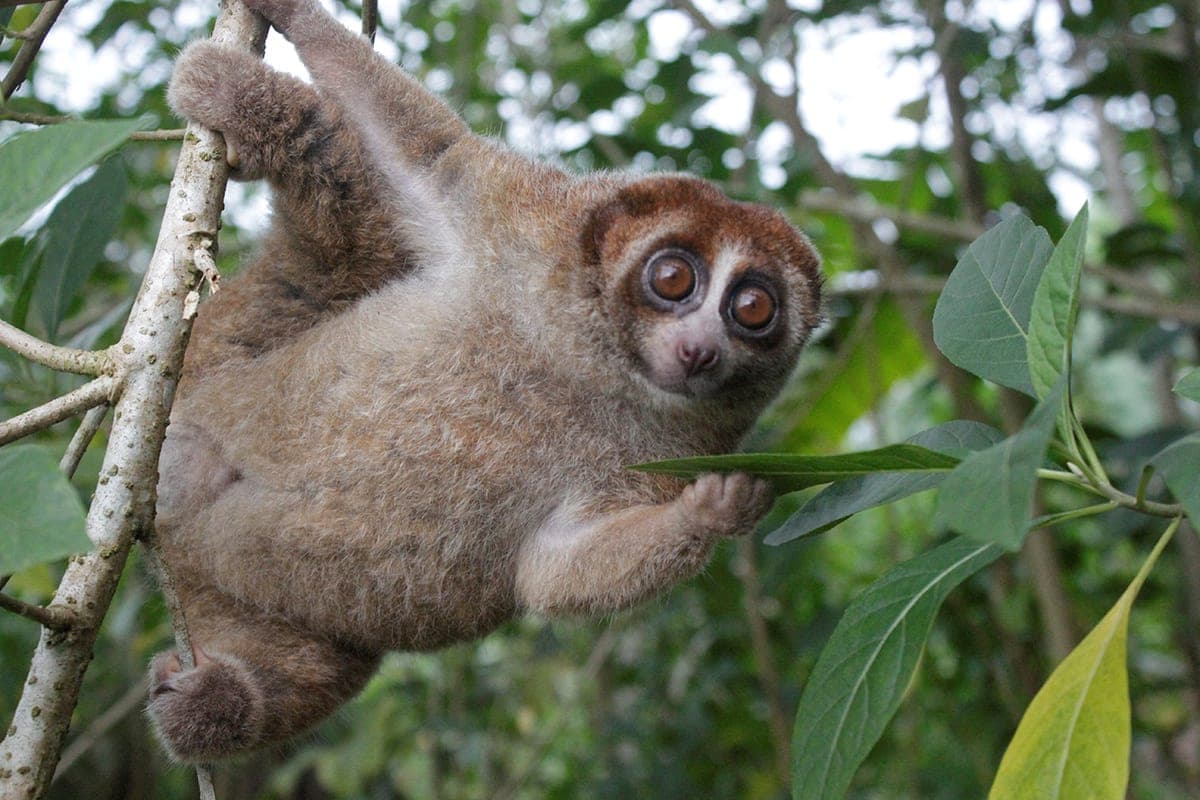
The slow lori, one of Earth’s most exotic primates, was listed as an endangered animal last scientifically recorded in the 1930s and has now been rediscovered on the tropical Indonesian island of Banka.

According to Reuters, a new study found that in recent years, an animal rescue organization found more than 90 individuals of slow loris on Banka Island, located off the southeastern coast of Sumatra. Most of them have been returned to the wild.
“The slow loris from Banka Island is still alive,” said a graduate student in conservation and biodiversity management at the Haus des Meeres Aqua Terra Zoo in Vienna, Austria, and study co-author Timon Glow.
The rescued animals came from different parts of Banki, he said, suggesting the species survived in several areas despite extensive habitat destruction and decades of scientific oblivion. The scientist noted that its habitat was reduced due to tin mining and clearing of land for oil palm plantations.
What strikes me particularly is that such a charismatic and unusual primate has received so little scientific attention for nearly a century. Its rediscovery also raises hope that other species that were thought to be extinct may still exist in places scientists haven't searched for decades. After all, Banka is only an hour’s flight from Jakarta, one of the largest cities in the world.
Slow Lori Banki, whose scientific name is Nycticebus bancanus, is a relatively small nocturnal primate with a reddish-brown coat, characteristic marks on the face and large eyes. It moves slowly and measuredly through trees, unlike other arboreal primates such as monkeys, monkeys and lemurs, which can move quickly through branches.