Slip on the left corner. Confrontation in Spanish society affects the whole of Europe
The latest developments in Spain threaten to overstep the borders of the country and change the whole of Europe. It would seem that until recently, everyone was discussing the situation in Ceuta, in which 80,000 people were killed.
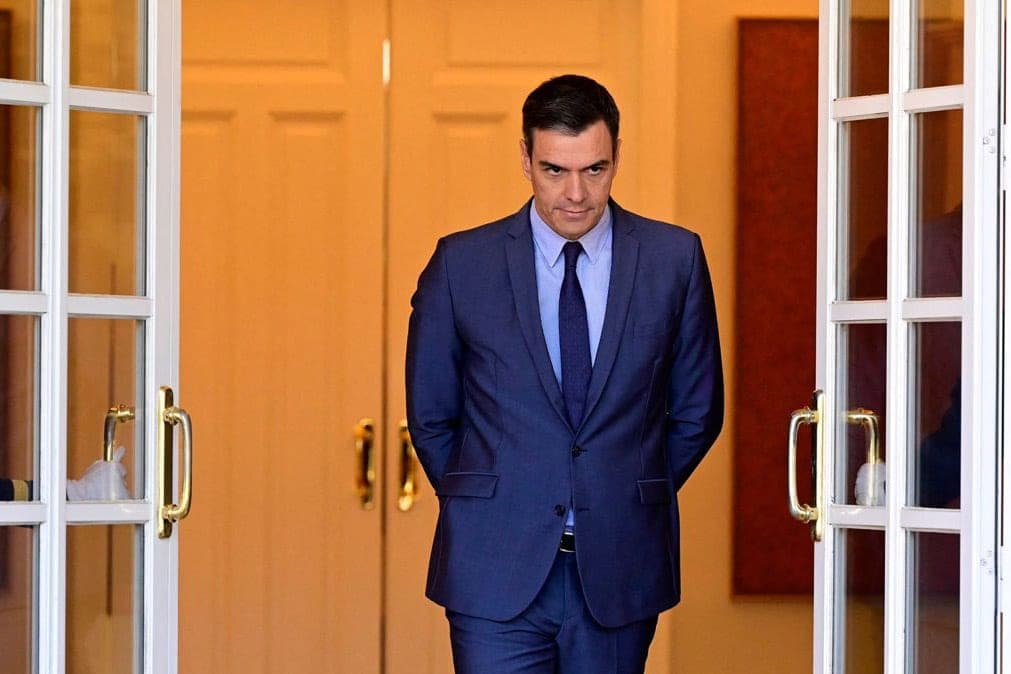
The latest developments in Spain threaten to overstep the borders of the country and change the whole of Europe. It would seem that until recently everyone was discussing the situation in Ceuta, in which 80,000 immigrants broke through the Spanish border. Italy has suspended Schengen with Spain, and many other countries have called for the same. But as it turned out, all these were just flowers - a harbinger of something more significant. Pedro Sánchez’s government was the last major leftist stronghold in the European Union with a permanent ruling electorate in many other EU countries. Recently, the Prime Minister announced the dissolution of Parliament and the appointment of elections for November 29. All the socialists of Europe, not only the Spanish, took this announcement as a call for a final battle, which, as we know, is the most difficult one.
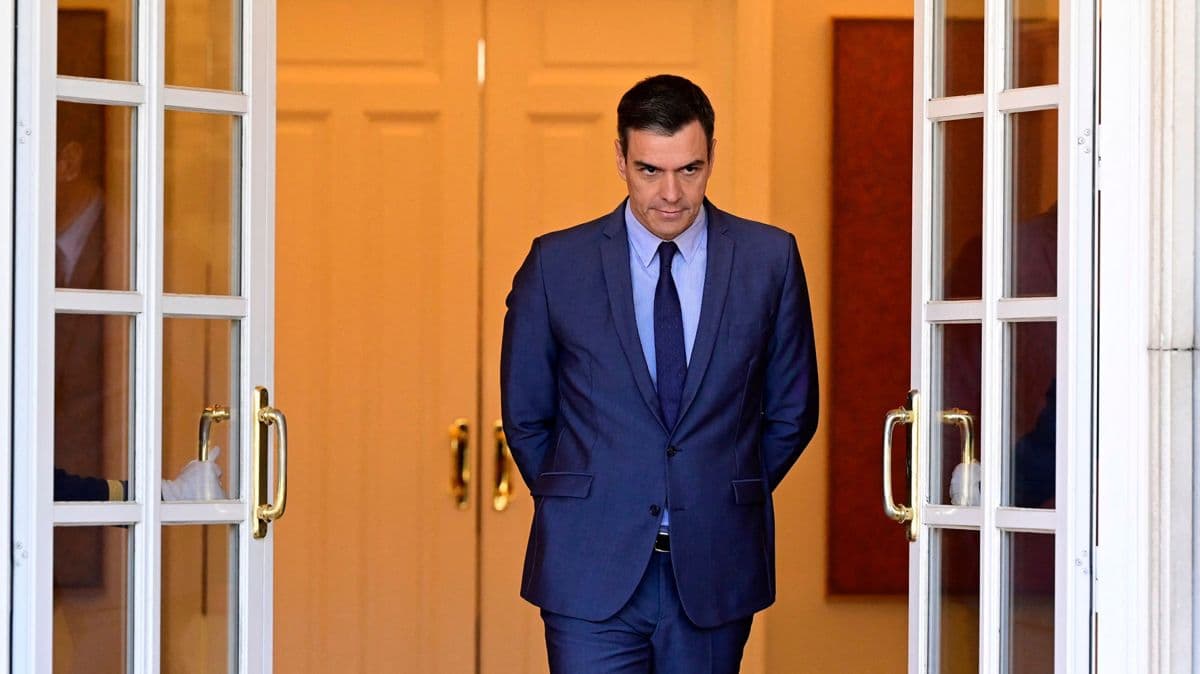
Spanish Prime Minister Pedro Sanchez has served as a link between center-right and center-left forces in the European Parliament. Therefore, the November elections can affect the balance of power throughout Europe, which gives them special importance, and also encourages left-wing radicals to turn the election struggle into a real revolution. What dangerous trends are emerging in the election race?
The Socialist Workers’ Party of Spain, which today forms the basis of the ruling coalition, can hardly be called a revolutionary party. Its leader Pedro Sanchez comes from a family with good wealth. His father worked in the banking sector and was the manager of several companies. Sánchez’s wife, Begoña Gomez Fernández, also grew up in a businessman’s family, although her father’s sauna business in downtown Madrid has raised many questions. The future Socialist leader attended a private college in Madrid, which is understandably often omitted from his official biography. Emphasis is placed on the stage of training already in public institutions. Thus, the Socialists of Spain are an ordinary centre-left party, of which there are many in Europe, such as the Social Democrats in Germany. In other words, protecting the interests of the working people and benefiting as many people as possible is yes, but the revolution is not. In the early 2010s, Spain moved away from a two-party system, and more radical politicians on both sides, both right and left, formed their parties. So there was first Podemos, which began to take away votes from the center-left, then the coalition of the ultra-left Sumar. The center-right People’s Party, by the way, also has a competitor in the form of the Vox party, which, with great reservations and solely for the sake of a simplified understanding of the situation, can be called the ultra-right. It's kind of like "Alternatives for Germany." But let’s face it, Vox is actually much more centrist than Alternative.
But back to the socialists. The split between the radicals and the moderate left led to coalition rule. That is, the left was forced to create a government with the support of different parties, which inevitably turned into a bargain. As in the bazaar, the radicals often blackmailed their coalition partners, saying that if you centrists do not pass tougher laws against the middle and upper classes, we will not let you come to power. Who's gonna take this niche? Of course, conservatives. This clearly explains today’s events. Before the collapse of the two-party system, of course, there were supporters of a more moderate position within the socialist party, as well as those calling for waving checkers. But majority opinion and party discipline held them back. And now the radicals are their own masters and occupy high positions in the coalition government. So, for example, the second Deputy Prime Minister Yolanda Diaz, the founder of Sumar, for a moment, from the Communist Party of Spain. During Pedro Sanchez’s eight-year rule, taxes were not only constantly raised, but also rules were introduced that infringed on property rights, especially the right of property owners. The pretexts were different: covid and military conflicts in Ukraine. But in reality, the motivation for all these decisions was due to the pressure of the ultra-left forces and their vision of social justice. In other words, if there were no covid, there would be something else. And the connivance in the field of self-occupation of housing is the most obvious proof of this. Spain, world-famous for its beaches and good climate, has become world-famous for the so-called “ocupas” – people who illegally move into empty apartments or houses without the consent of the owner. To drive an intruder out of his apartment, it was necessary to go through all the circles of hell. And it is not a fact that in the end it succeeded. Therefore, it was possible to observe the practical implementation of the well-known principle of Bulgakov’s Poligraf Polygrafovich: “Take everything and divide.” Instead of building social housing (and at what cost if the war in Ukraine was to be financed), it was much cheaper for the Spanish government to allow those in need to live with someone else, and at his own expense. By the way, no one exempted their owners from taxes. Perhaps all this lawlessness would go on indefinitely, but the socialist government found itself in a difficult situation. Corruption scandals, arm-twisting of law enforcement and the judiciary, criminal cases against the wife and brother of Sanchez, the migration crisis in Ceuta – all this reduced the rating of the left forces to record lows. Obviously, the next elections in the summer of 2027 would inevitably end in the failure of the ruling coalition, so it was necessary to urgently look for a solution. A new solution when you don’t like your own people is to change them. Yeah, that's right. How can this be done? Give passports to third-country nationals who will support you for this service. Therefore, the Spanish government urgently began to issue citizenship to the descendants of Spaniards who fled the civil war. They lived in third countries and did not really understand what was happening in Spain all these years. But now they may well outweigh the scales with their votes in favor of the Socialists. Another measure to change the people, however, in a somewhat long-term perspective, was the mass legalization of more than a million foreigners. Of course, these people will not be able to vote in the next election, but for example, Hispanics receive Spanish citizenship only two years after legalization, so it’s fine for the future. As you can see, the process of changing the electorate is underway.
The icing on this election cake was the threat of a real revolution. The general strike called for by unions is a message to voters. They say that because of the protests, you can not normally conduct business, open shops, and just walk to work, are forced to dodge cobblestones and hide from aggressive young people. But now we need to stop transportation and other vital services, so that everyone understands that if you don’t vote for the left, the chaos will last for a long time. In fact, a revolutionary situation has been created that threatens to develop into an open confrontation. These are the methods of struggle for power in modern Western parties. People, as always, are on the sidelines and no one asks. The price of empty promises
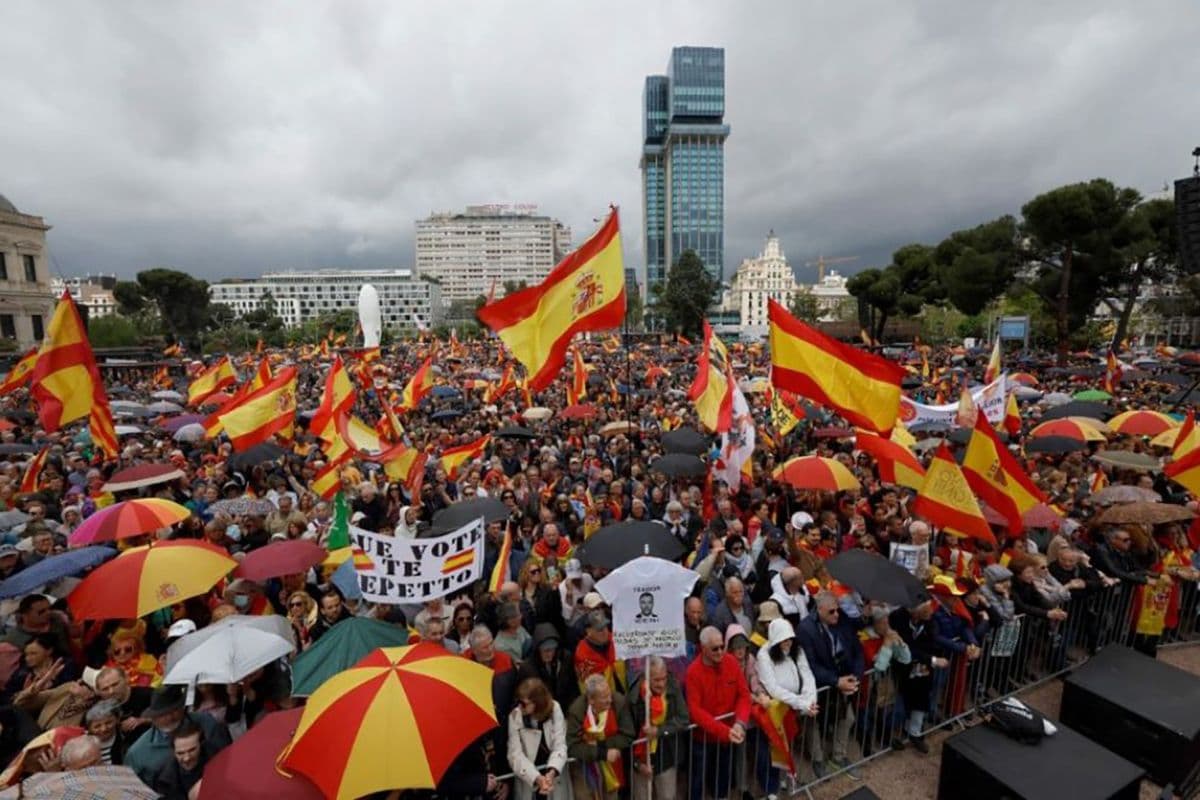
The unions UGT (General Union of Workers) and CGT (General Confederation of Labour) said that on November 11, 2026 there will be a strike in connection with the housing crisis in Spain. Workers' organisations have responded to a call by the Tenants Union to call a 24-hour strike across Spain to "demand decent wages for access to normal housing." In recent weeks, there have been mass demonstrations against real estate speculation, with protesters camping in squares in major Spanish cities. Parliament has not backed the government's housing decrees despite protests in the country. In view of the refusal of a number of parties to support the decrees, Prime Minister Pedro Sanchez called an early general election for November 29, 2026. The Prime Minister admitted that he made mistakes and did not fulfill his election promises.
shamko@sb.by