Archivists from Rechitsa are preparing a project based on the front letters of the Red Army
For several years, the website of the Archives of Belarus has published the most interesting documents stored in the funds of the Rechitsky zonal state.
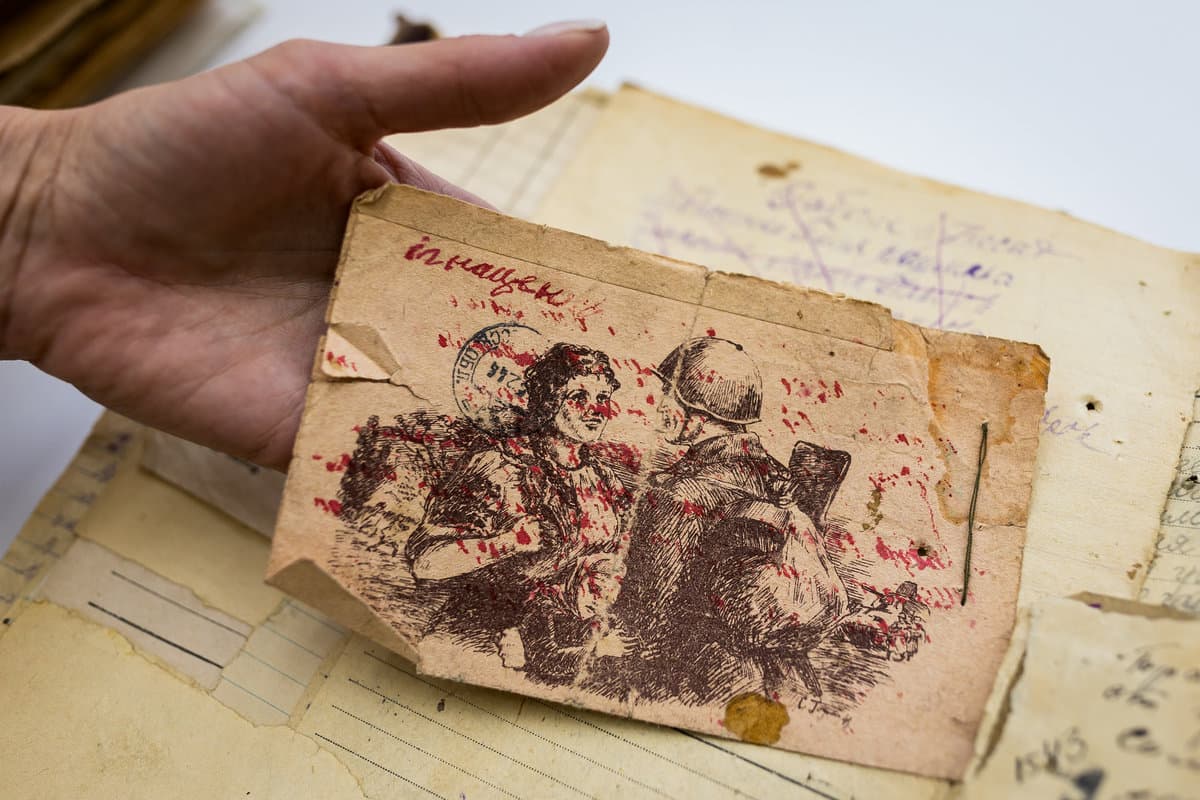
For several years, the website of the Archives of Belarus has published the most interesting documents stored in the funds of the Rechitsky Zonal State Archives. Among them are letters from the time of the Great Patriotic War, written by Red Army soldiers at the front to their relatives and friends. Our correspondents learned about how the initiative was born and what other projects the archivists are planning.
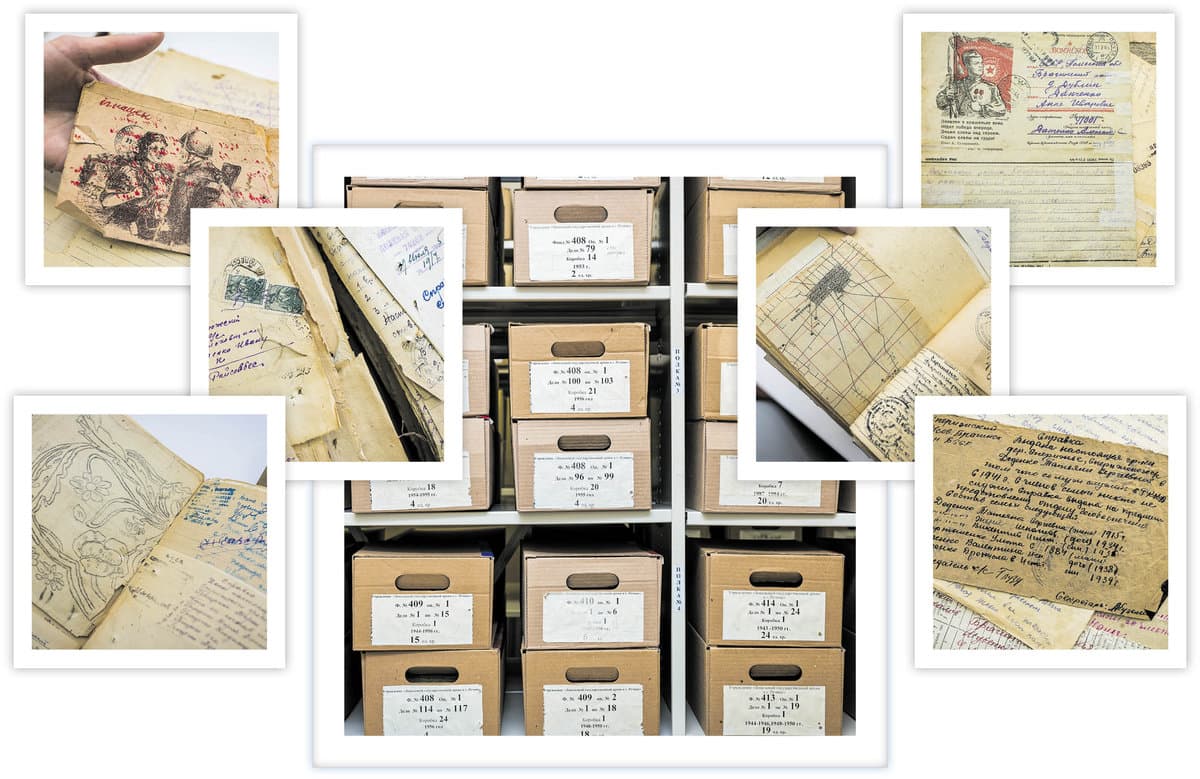
- Every year, we identify documents that need to be revised and improved. When the turn came to the funds of the social security departments of the Khoinik and Bragin districts, cases of granting benefits to the families of Soviet soldiers fell into our hands. Unexpectedly, among the state papers found a large number of letters from the front.
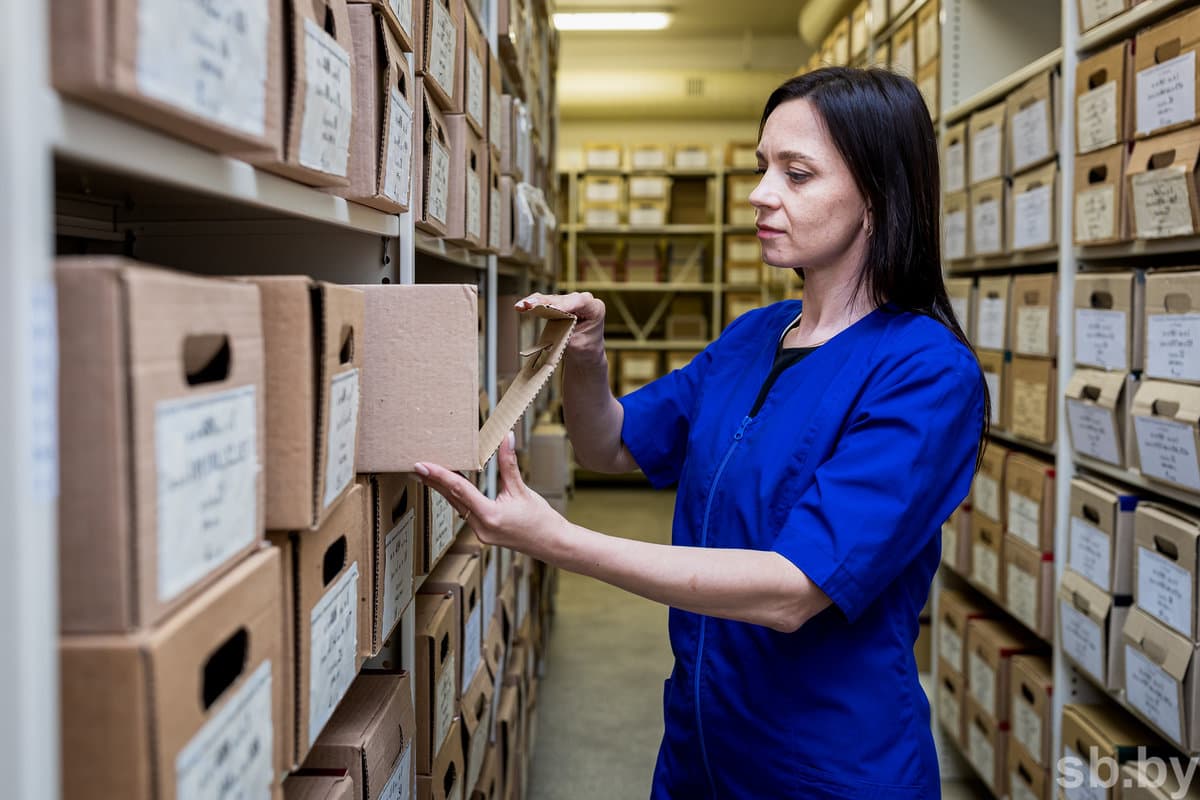
Natalia Pachitskaya, head of the department. Apparently, they were brought to the Sobies by those to whom they were written to confirm the presence of their relative in the ranks of the active army. And this served as the basis for the appointment of cash payments. After all, getting any official documents in the hardship of the war was difficult. And in these letters were the names of the authors, their relatives, addresses, field mail numbers. Archaeographer of the Department of Information and Use of Documents Sergey Zharnosenko took up the compilation. By the way, after school he studied at the Faculty of Journalism of the BSU and worked for a few years in the newspaper.
- Apparently, the correspondent in me has not finally died, Sergey smiles. For any journalist, the archive is a treasure trove of valuable information. Especially on historical and local history topics. I proposed to publish the first letter two years ago, on the eve of the 83rd anniversary of the beginning of the Great Patriotic War. The management supported me and it was decided to publish such letters regularly.
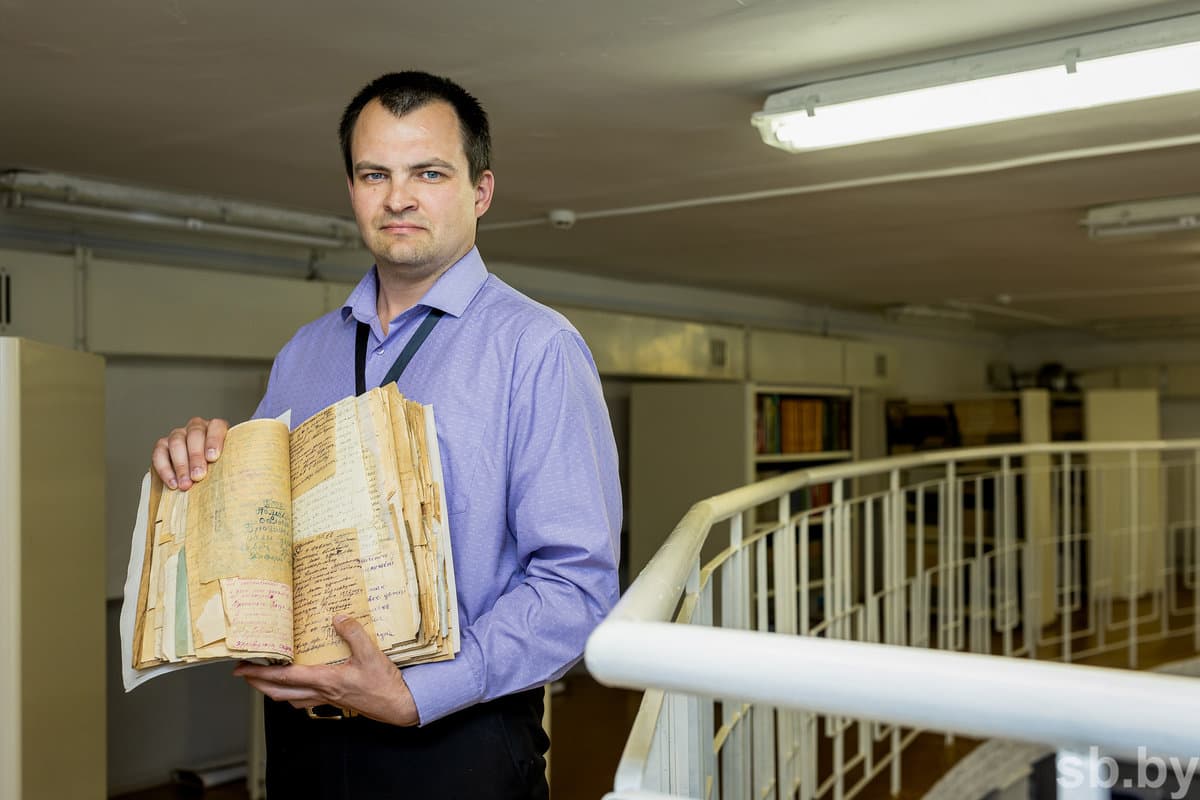
Sergei Zharnosenko, archaeographer. Touching the worn, yellowed from time, written with a simple pencil sheets, you involuntarily experience an inner awe. In each line comes a story that holds invaluable evidence of that era – heavy, terrible and heroic at the same time.
Here is a letter from Semyon Karpovich Aniskovets, written on November 25, 1943, and sent to the village of Kliva, Khoynik district. He writes to his relatives that from the first day of the war he was at the front, “fighting Hitler’s gang”, in 1941 he was shell-shocked near Bryansk, and two years later he was wounded near the town of Staraya Russa. The letter ends with a simple-hearted and sincere wish: “I am your son, your brother, your uncle, your countryman now alive and well, which I wish you from the whole soldier’s soul.” Semyon also rejoices at the news that just yesterday his native district was liberated from the occupiers. Unfortunately, he himself did not live to Victory, Sergey Zharnosenko shares information:
- Through the databases of the Memory of the People project, we found out that in 1944 Semyon Karpovich died in Latvia, where he was buried. After the publication of the letter, his relatives contacted us, thanking us for preserving the family heirloom, the existence of which they did not even know. At their request, we sent them a digital copy of the letter. With love from the front, a Red Army man named Vladimir from the village of Yaseni tells his parents about his combat path: "...I went through many battles, was wounded, contorted, awarded the Order of the Red Star, and all this time I did not forget about you for a single minute about all ..." I still keep your postcard, Dad, which you wrote on August 7, 1941. This was the last postcard I received from you, after which the village of Yaseny was occupied by the Germans. How the most valuable document saved this postcard I read it many times before the battle and therefore went to beat the enemy with more anger.
On July 9, 1944, the Red Army soldier Alexander Danchenko wrote to his wife Anna and daughters, who survived the occupation in the village of Dublin, Braginsky district: “...The second day I go through the newly liberated territory of Western Belarus.” The enemy could not withstand our onslaught and reeled the rods. Let's go to Pinsk, go west. Stolin passed yesterday. It was a beautiful town, but it is not, only ashes and ruins. People evacuated, deserted... On the way lay the corpses of murdered Germans, their weapons and uniforms. The devils have gone through ...”
In addition to descriptions of harsh front-line everyday life, each letter has moments that touch especially strongly, admits archaeographer Sergei Zharnosenko:
- These are lines filled with love for families, worries for relatives and friends, gratitude for each letter received from them and concern if the letters were not too long. Let us not forget that this is written by people who are on the front lines and look death in the face every day. Even today, after more than 80 years of reading this, it is impossible to remain indifferent. Together with other documents, the found letters are digitized so that in the future you can safely work with their copies. The originals will remain in storage under proper conditions. Only a small part of the front messages found in the security funds has been published. Employees of the archive continue to prepare for the publication of several dozen more. And these plans are not limited, says Natalia Pachitskaya:
- We plan to prepare for publication a printed collection and at least two virtual exhibitions that will be freely available to all Internet users. One of them is “The image on the forms of military letters as a source of military graphics and cultural heritage”. The second is War Letters and Destinies. Documentary heritage of the Great Patriotic War”. This collection will publish the texts of the letters and everything that we managed to learn about the exploits of their authors, their fates and the fate of their families. We collect the necessary information bit by bit. First of all, from the funds of our archive, historical and documentary chronicles of cities and districts from the Memory series, the database of the Internet portal Memory of the People and other sources. The amount of work is enormous, but we are confident that its result will be a significant contribution to the preservation of the historical memory of the terrible war that affected all Belarusian families.
prolesk@sb.by