“The Art of the Silk Road”: Chinese-Belarusian exhibition opens in Minsk
The Chinese-Belarusian exhibition runs at the National Art Museum from October 1 to October 30. On friendship through art.
The Chinese-Belarusian exhibition runs at the National Art Museum from October 1 to October 30. About friendship through art, unique exhibits, unexpected materials and a box of the XVIII century - in the material of the correspondent of the agency "Minsk-Novosti".

New exhibition "The Art of the Silk Road". The Soul of Craft over Clouds was a joint project of the National Art Museum of Belarus, the Chinese Research Institute of Folk Art and the Donou Cultural and Educational Exchange Center. First of all, the exposition demonstrates the dialogue between Belarus and China and presents a synthesis of oriental motifs and the Belarusian spirit. Mythological, sacred and allegorical images of traditional art make it possible to touch the history of the two countries, feel their culture and feel the connection between peoples.
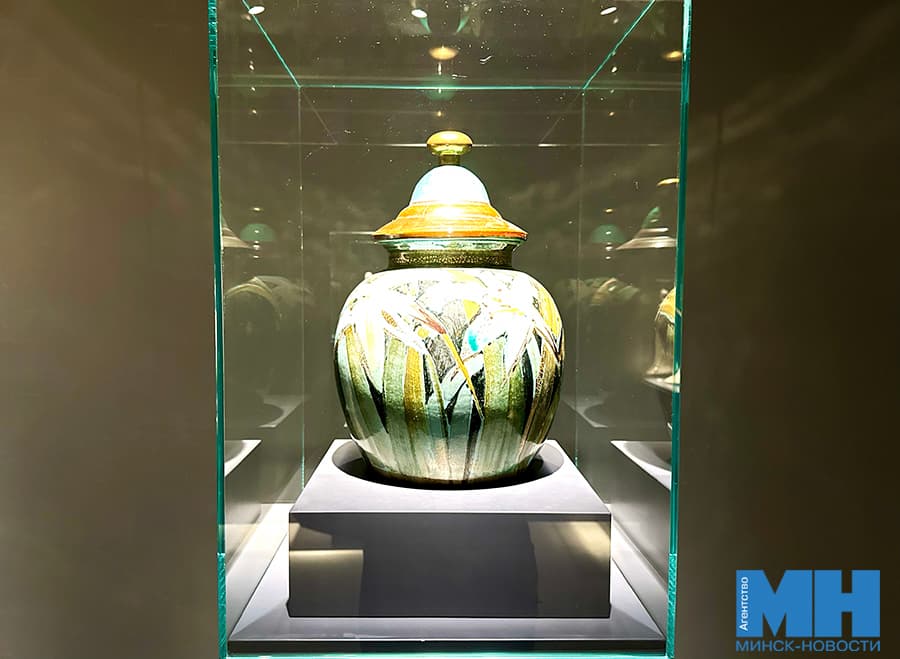
- In the first hall there are works from the collection of the National Art Museum. In the left part of the exposition from the entrance there are works that were transferred from Chinese masters through the mediation of the Dunou Center to the museum collection in 2023. On the right side are the works of Belarusian masters – two paired ceramic vases “Journey to China” and one glass one called “Chinachat”. They seem to reflect the impression of China, which is formed by us, Belarusians, said researcher at the department of foreign art of the museum Bogdan Tupchienko.
Crab handshake and Chinese treasures
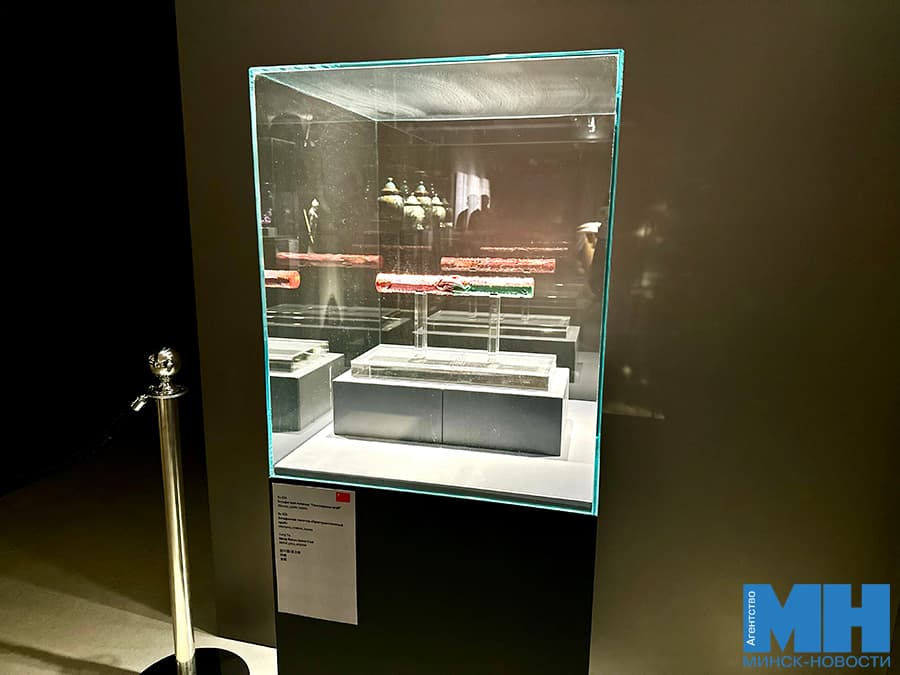
The central exhibit of the grand hall was the relay baton “Space crab”. Indeed, in appearance, its framing resembles tenaciously fastened claws. The exposition is made in red and green colors: one side in accordance with the flag of Belarus, the other in the style of the PRC.
Another striking discovery from the collection of the National Art Museum was the panel “Treasure of China”.
- It is made in the technique of application from bamboo. The master goes to the forest and chooses bamboo. Then he specially treats it, takes the buds of the leaves and divides them into fibers, dries, divides into small parts, and then attaches each of them to the base. This is how the pandas depicted on the panel were created, the expert explained.
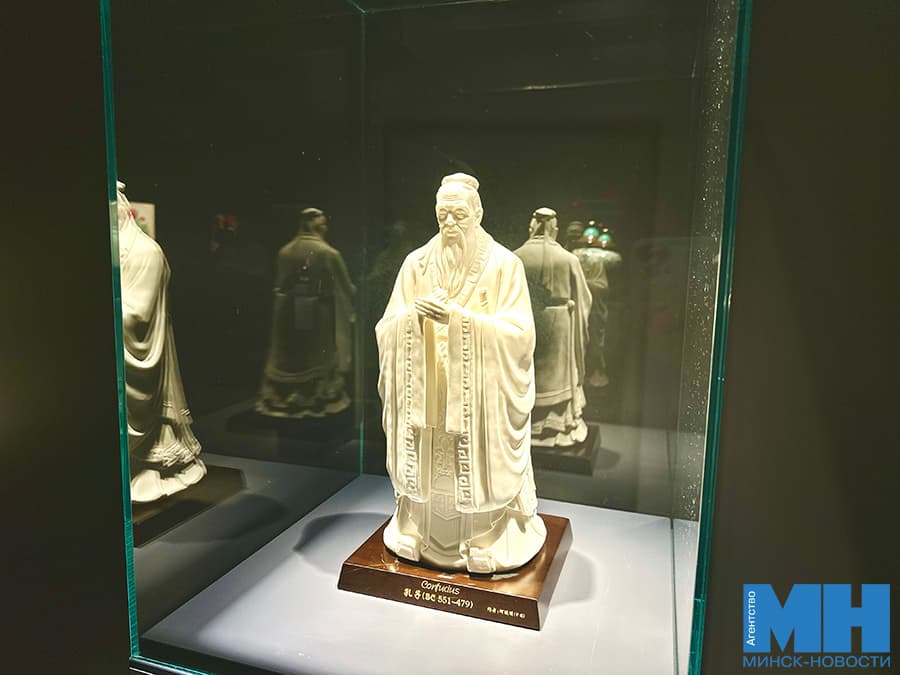
Here you can find small sculptures of wood, natural stone, glass and porcelain. So, in one of the windows there is a sculpture of Confucius. The work was transferred from China and is a gift from the cultural and educational center “Dunou”.
To the Symbolic Principles of History
In the second hall, the organizers presented works brought to Belarus from China. They were selected through collaboration with the Research Institute and presented to the public for the first time.
- The latest exhibits store an interesting combination of traditional techniques and largely experimental technologies of Chinese art, said B. Tupchienko.
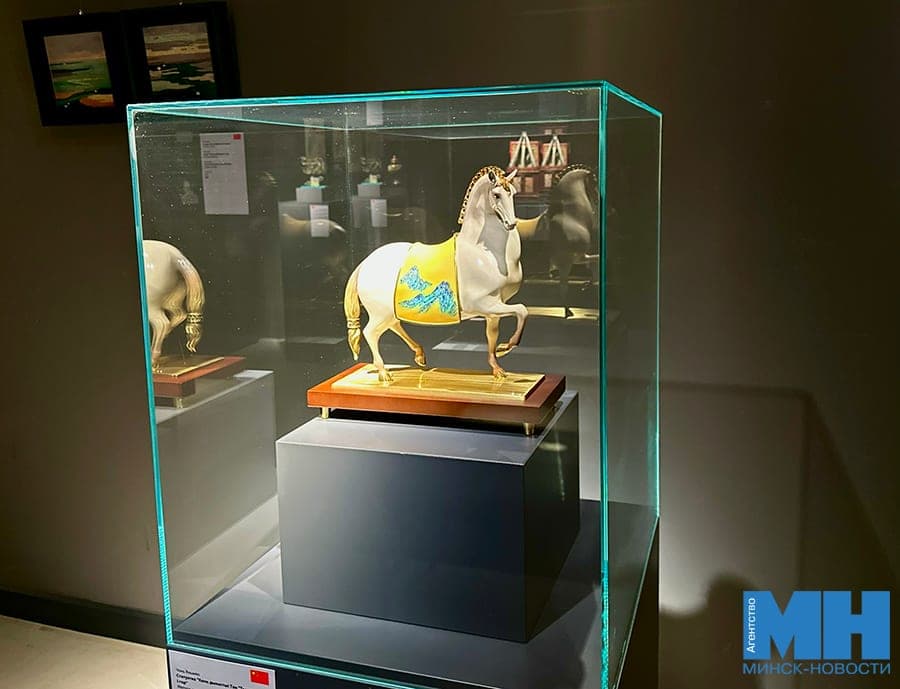
Here is a completely different approach, rooted in the distant Chinese past. The horse in China is a special animal. It has never been used as a pulling force under any circumstances. The exhibition presented several statuettes of these sacred animals.
The statuette “The Horse of the Tang Dynasty: Thousands of Rivers and Mountains” is completely made in the style of the Tang Dynasty. We see a textured three-dimensional image of the horse. The horse was considered one of the most expensive animals. The Chinese traditionally plowed the land using cows, so horses were obtained either through trade through the Silk Road or through trade with nomads. But at that time, in no case did they go, the researcher explained.
In Chinese tradition, the white horse was often called the green dragon. And in general, this sacred animal often appears in Chinese iconography, literature and even in modern animation and cinema.
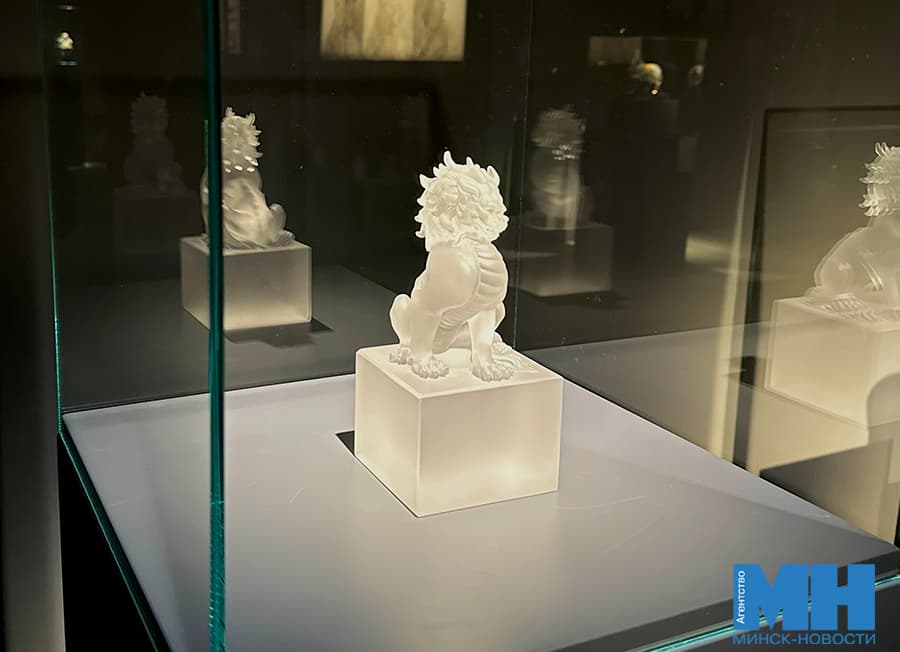
- The first links to dragon iconography are found in the Neolithic and earlier periods. The dragon (Moon) in Chinese culture is positioned as the king of animals, so in his iconography there are features of other animals - originally it is the head of a camel, rabbit eyes, carp scales and, interestingly, three claws. Since man is threefold, the earth and the sky are three parts of the universe.
Paper: Dialogue of Civilizations
A clear connecting element of Belarusian and Chinese art was a paper clipping. Belarusian women know everything.
- They use exactly the same in China. Most often they are made of red paper - a symbol of luck, happiness and protection from evil spirits. They are decorated with windows, doors, gates and any other interior items in the house. This creates an atmosphere of warmth, light and related comfort, explained Natalia Shchukina, an employee of the scientific and fund department of the museum.
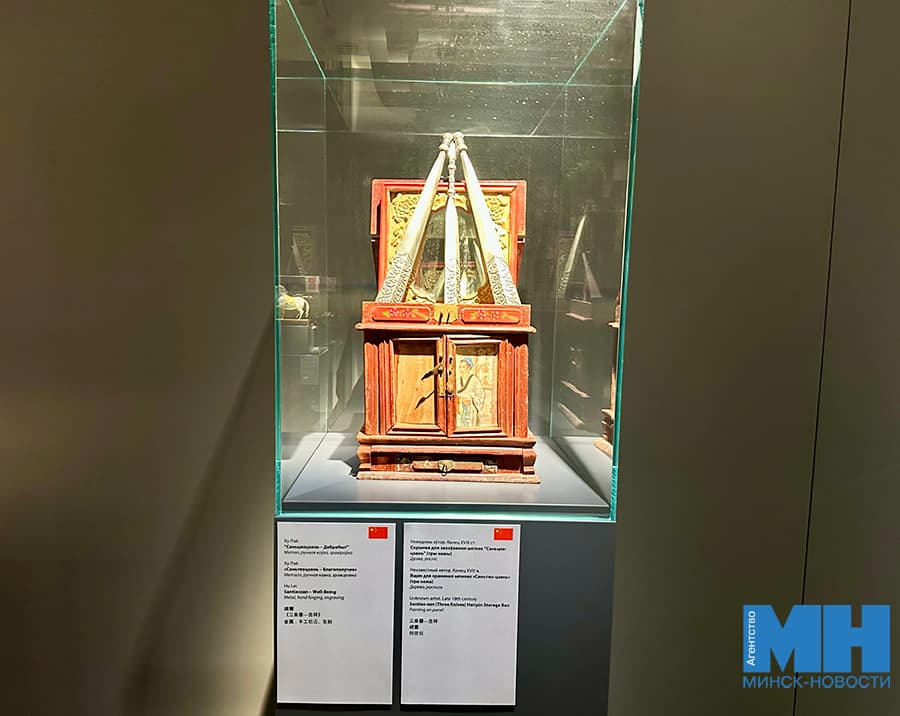
Women's box
The pearl of the exhibition can be called an exhibit dating from the end of the XVIII century - a box for storing studs "Santiao-zan". At the very top of the box you can see a bat - a symbol of longevity. China, as a rule, does not export things older than the XX century, but the National Art Museum still made an exception.
The box itself is absolutely authentic, but the studs are not made in life size. Their name translates as “three swords”, which corresponds to their form, said B. Tupchienko. They not only decorate the hair, but also act as a tool of self-defense.
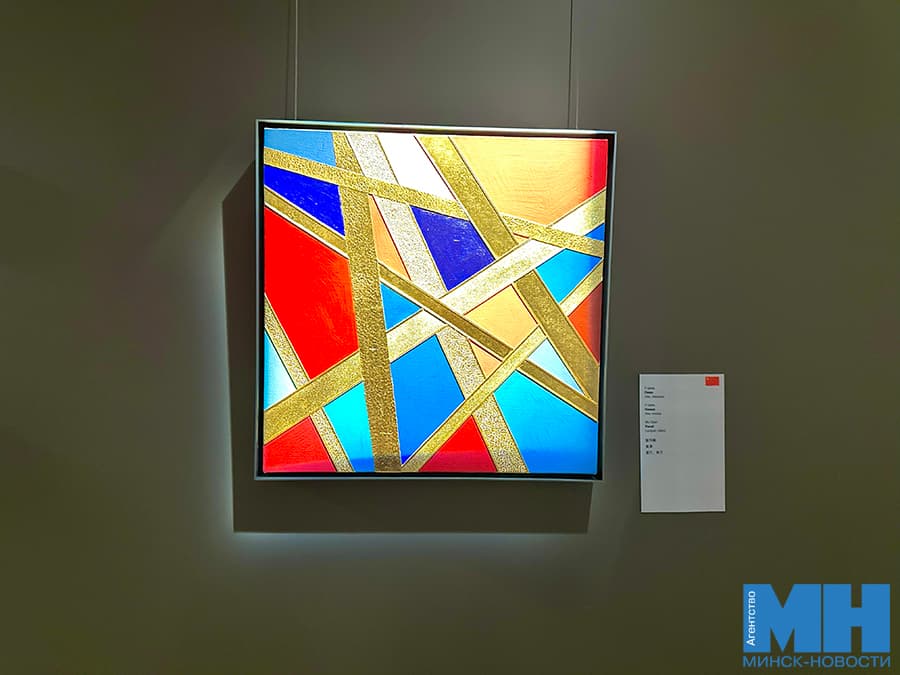
Photo by author