
Germany - Glucose without an alibi
According to a November report by Deutscher Gesundheitsbericht Diabetes 2027, about 9.5 million people in Germany are living with type II diabetes. In another two million, the disease remains undiagnosed. And prediabetes, according to the organization diabetesDE, occurs in every fifth adult. German news in Russian
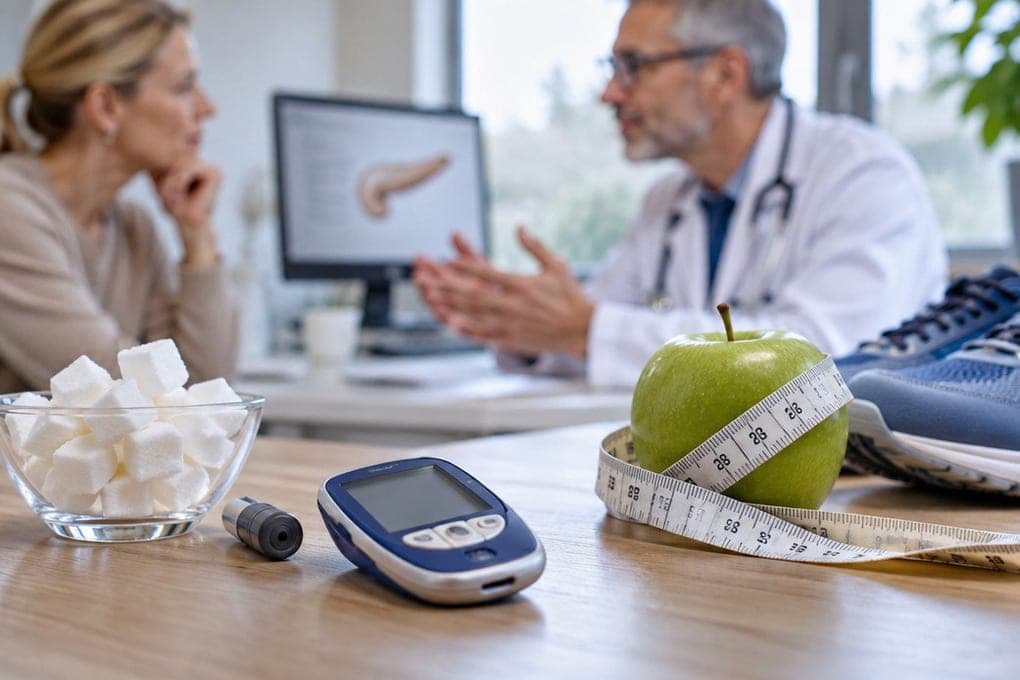
Imagine that the German health care system decided to act solely on the principle: no complaints, no problem. It would be easier for doctors, safer for insurance companies, and more pleasant for patients to live happily in ignorance. However, diabetes of the second type from such an administrative idyll would not disappear anywhere. On the contrary, it would be possible to expand its possessions freely. Fortunately, doctors trust the tests more than the cheerful “I feel great.”.
Imagine a conversation at the reception:
- Congratulations, you don’t have diabetes yet!
- Excellent, Doctor! So we can forget about the tests?
- That's not worth it.
In this dialogue there is all the ambiguity of prediabetes. The patient hears good news, the doctor hears a warning. One thinks of today, the other of how to avoid illness tomorrow.
Millions off-screen
According to a November report by Deutscher Gesundheitsbericht Diabetes 2027, about 9.5 million people in Germany are living with type II diabetes. In another two million, the disease remains undiagnosed. And prediabetes, according to the organization diabetesDE, occurs in every fifth adult.
How does that happen? Insulin helps cells absorb glucose. When sensitivity to the hormone drops, the pancreas produces more and more of it. However, its reserves are not infinite - blood glucose levels begin to rise. Blaming the cakes would be too easy. The risk increases age, heredity, inactivity, abdominal fat, high blood pressure and violations of fat metabolism. And a slender figure does not guarantee protection either. The reflection in the mirror does not recognize the disease.
Blanc instead of symptoms
Prediabetes has almost no noticeable symptoms. The main evidence is the results of laboratory studies. According to the criteria of the German Diabetes Society, fasting glucose 100–125 mg/dL (5.6–6.9 mmol/L) indicates prediabetes, and from 126 mg/dL indicates the diabetic range. Some organizations, however, consider the lower limit of increased risk to be 110 mg/dL.
Another indicator is HbA1c, which reflects the average sugar level over the past two to three months: 5.7-6.4% corresponds to prediabetes, from 6.5% to the diabetic range. In a test with a glucose load, the value of 140-199 mg / dl after two hours indicates impaired glucose tolerance. Indications of a home glucometer are not enough. Diagnosis requires laboratory tests and medical evaluation, sometimes repeated examination.
Jeans are not an indicator
It seems more than simple: shed pounds - defeated the threat. Researchers from Tübingen found that everything is not so clear. Participants who, due to lifestyle changes, returned glucose levels to normal without losing weight, had a 71% lower risk of type II diabetes than those who failed to normalize them. The result of the study is not an individual guarantee. It happens vice versa: a person noticeably loses weight, but the metabolism is not restored. As Deutsches Ärzteblatt noted, not only kilograms are important, but also fat distribution, liver condition and pancreas function. So the goal is not just to zip up old pants. Much more significant is the result of the survey.
Miracles aren't prescribed
There are no drugs specifically approved in Germany for the treatment of prediabetes. Metformin in some cases is used outside the recorded indications, and dapagliflozin is studied in the LIFETIME study. It is too early to judge the benefits of the latter for prevention. The basis of protection is everyday habits: walking, power loads, less long sitting. On the menu - more vegetables, legumes and whole grain products, less sugary drinks. With excess body weight, its reduction often helps, although in itself does not guarantee the normalization of metabolism. In the British Cornwall decided not to limit themselves to advice. WellFed program participants are given free vegetable sets, offer classes on cooking and gardening. Preliminary data are encouraging, with many reporting improvements in HbA1c performance. There are no final results yet. But the idea is clear: healthy eating should not be a slogan, but a real opportunity.
Get to the diagnosis
There is also a social problem behind the disease. According to the report Diabetes 2027, in 2023, type II diabetes occurred in 11.8% of residents of the most disadvantaged regions of Germany against 8% in the most affluent. Not only are habits affected, but income, working conditions, the environment and availability of doctors. Insured in the system of compulsory health insurance in Germany from 35 years have the right to preventive check-up every three years, including a blood test for glucose. In 18-34 years, such an examination is put once, and laboratory tests - if there are risk factors. If they are, you do not need to wait for a scheduled appointment: discuss the check with your family doctor. Prediabetes can disappear, persist for years, or turn into diabetes. Even moderately elevated glucose is associated with risks to the heart, blood vessels, kidneys and nerves. A strong thirst, frequent urination and unusual fatigue - a reason to consult a doctor without delay: this can manifest already developed diabetes. The most dangerous sugar is not the one seen in a cup of tea. One that no one knows about. To check it on time means to get a chance not to bring it to the disease.
This is what Germany says:
Germany - On the fishless and the bank - catch. Four from the sea: A Spanish nutritionist has identified seafood rich in valuable substances. What lies behind their nutritional reputation and where do the risks begin?
Germany, woe from wits. Artificial. Novice employees are particularly vulnerable to automation. What did the Ifo Institute of Munich study reveal?
Germany: Beauty demands sacrifice. Budget. While the authorities are calling for savings, ministries are buying furniture, paintings and sculptures. What costs are justified and why is the Ministry of Finance leading in decor spending?
Germany - Furious to the last euro. Berlin has pledged billions for electric cars by the end of 2029. Why does the money run out almost two years early and who gets the prize?
Germany is a mystery covered in a vulture. The victory of the AfD exacerbated the dispute over admission to classified information. What restrictions will the Bundestag legitimize?
Germany - Night. Street. Lantern. No pharmacy. More than five thousand pharmacies disappeared from the map of the country. What awaits patients if delivery pushes aid around the corner?
Germany: The Irony of the Budget, or With Easy Debt The government is preparing to borrow about 210 billion euros, but 59% of respondents are against such large-scale loans. Why is a record budget no guarantee of an easy life?
Germany: Three comrades and an empty treasury. You cannot win: the AfD won the election, but the power will go to the rivals. And with it, there's a huge budget hole
Germany - Love in the fourth class. Classes III and V may be abolished. Why will the annual tax remain the same and the monthly net of spouses change?
Germany - Features of national excise duties. What tax surprises are Berlin preparing for 2027, and why the new billions may still not be enough?
Germany is a gentleman of failure. Penalty conveyor: sanctions against Grundsicherung recipients have increased by almost 9%. Who is punished most often and does strictness help to find a job?
Germany - CDU at knockdown. Kretschmer is holding the punch. The AfD is 41 percent versus 20 percent for the Christian Democrats. Why does the head of government retain a personal advantage over political rivals?
