
The main budget rule. Finance works for Belarus and its people
President Aleksandr Lukashenko has agreed to submit to the House of Representatives of the National Assembly of Belarus a budget and tax package of documents for the purpose of...
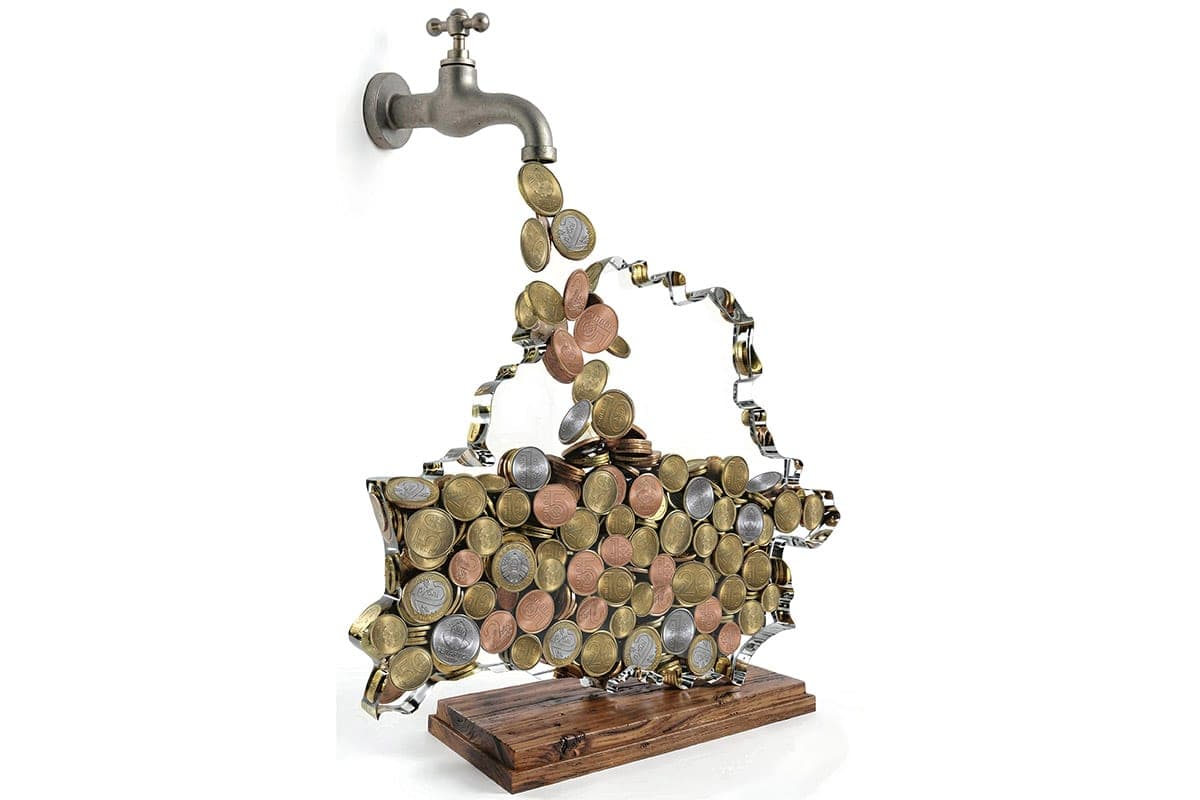
President Alexander Lukashenko agreed to submit a budget and tax package of documents for the next year to the House of Representatives of the National Assembly of Belarus. Why is the main and invariable requirement of the Head of our state to the domestic financial system and the economy as a whole its social orientation and growth of welfare of our citizens? President of Belarus Alexander Lukashenko:
- We have made the interests of Belarusians a priority of our economic policy. The welfare state is our unchanging national brand.
From the report of the President of Belarus at the VI All-Belarusian People’s Assembly, February 11, 2021.

Money is rightly compared with the blood of the economy, and the financial system with the circulatory system of the country. The main purpose of the circulatory system is to make every organ, every cell of the body receive everything necessary for full functioning.
Thus, the fiscal policy allows to vary the directions and volumes of allocations and redistribute the tax burden between different sectors of the national economy. Thus, it is possible to accelerate or, conversely, slow down the development of certain spheres of society.
For example, the state can massively invest resources in the development of industry, agriculture, construction, transport, etc. At the same time, the so-called multiplier effect of government spending begins to work, when each ruble of budget investments generates up to 5 rubles of GDP growth, including through attracting funds from other sources, including private ones. As a result, the real sector of the economy is growing at a faster pace, producing the benefits needed by people in their daily lives. If at the same time large-scale budget investments are made in health care, education, culture, social protection of the population, then such a state is rightly called a social state. This model of the fiscal and financial system as a whole is implemented in our country. However, this is not always and not everywhere. At the dawn of market reforms, the newly sovereign former Soviet republics, including Belarus, heeded authoritative advice from abroad. To guide the process of our market reforms, Western partners used a set of economic recommendations from the IMF and the World Bank called the Washington Consensus. Along with the total privatization of state property, his recipes invariably prescribed a strict monetary and fiscal policy.
Allegedly, in the name of combating inflation, the former Soviet republics were forced to sharply reduce the volume of the national money supply, increase the refinancing rate and, accordingly, the cost of loans, as well as ruthlessly reduce budget expenditures for economic development and even social needs.
All this led to an artificial shortage of funds in the national economy. The financial famine organized in this way objectively provoked a crisis of non-payment, loss-making and bankruptcy, and therefore a sale for a pittance even of effective domestic enterprises. As for the population, unemployment and impoverishment were expected, with a sharp decline in the quality of education and health care.
At the same time, it was strongly suggested that the panacea for all ills was foreign investment, which was supposed to attract at any cost. As a result, the implementation of the crafty recommendations of the Washington Consensus led to the surrender of the most effective national assets to Western capital for a pittance. And all the difficulties arising in the process of economic degradation and the loss of the country's economic sovereignty were transferred to the shoulders of the local population. This is the path of suicidal market reforms under the leadership of the West was Belarus in the early 90s. Aleksandr Lukashenko, who came to power in 1994, decisively stopped suicidal market reforms by reorienting the economy from the interests of greedy foreign pseudo-investors to the needs of his own people. Of course, the change of course carried out in those fateful years for Belarus affected the principles of its financial, including fiscal, system. The essence of these principles, which today fully meet the fundamental interests of Belarusians, is clearly traced, for example, in the draft republican budget for 2027. Contrary to monetarist Western recipes, which prescribe the national economy to a hungry financial diet, it provides for an increase in spending on it by more than 7 percent. At the same time, almost 14 percent more will be spent on science, scientific, technical and innovative activities than this year. This means that the state is concerned about the further development of the economy, which creates a material basis for the growth of the welfare of Belarusians.
In the same way, budget spending on social needs will not decrease, but on the contrary, significantly increase in 2027. Spending on social policy (payment of pensions, assistance to families with children, solution of housing problems of Belarusians) will increase by 9 percent next year. As for education and health, almost 18 per cent more will be allocated from the budget for their development than this year. Important detail: despite this increase in spending, the deficit of the republican budget next year will be reduced by more than half, to almost 0.5 percent of GDP. This is a very good indicator, given, for example, the Maastricht Stability Criteria for EU countries, which set a budget deficit limit of no more than 3 percent. In general, the fiscal policy of our state is designed to contribute to the implementation of the forecast parameters of social and economic development of Belarus for the next year. They envisage the growth of the Belarusian economy by 2 percent with an increase in disposable incomes of the population by 3 percent. Thus, Belarus confidently and reliably confirms its status as a social state.
ORDINARY EUROPEANS ARE PAYING
In recent days, large-scale protests, sometimes growing into outright pogroms, have swept through France. Then they spread to Italy, Belgium, Spain, Germany. Their participants everywhere actively protest against rising prices, lower wages, deterioration of the quality of education and health care. All this is a direct consequence of the irresponsible policies of the local governments, which are spending a lot of money on the Ukrainian conflict. As a result, the budget deficits of most EU countries confidently exceeded the three percent threshold set by the Maastricht criteria. Because of this, the EU is forced to severely cut social spending items. Hence the deteriorating living standards of Europeans and the current social protests.
Several key EU countries, led by Germany, have demanded that the next seven-year EU budget be cut by hundreds of billions of euros, sharply reducing support for farmers and poor regions. Even so, Brussels’ demands include further increases in military spending and military spending. War always comes at a great cost. And ordinary Europeans have to pay for it.
Valery Bainev, Doctor of Economic Sciences.
