
Israel Launches National Critical Minerals Program
Israel has approved a strategic programme on critical minerals, establishing a national mechanism to analyse and manage critical minerals knowledge
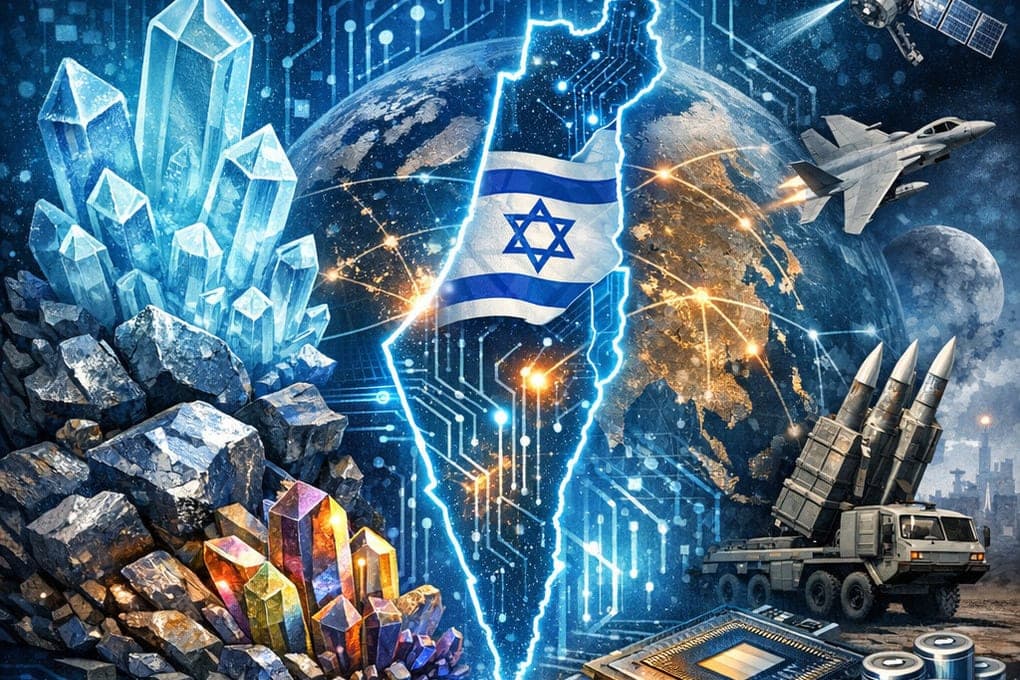
Israel has adopted a strategic programme on critical minerals, establishing a national mechanism for the analysis and management of knowledge in this area. Against the backdrop of tougher global competition for raw materials, similar initiatives are being implemented by the US, the EU and China, which underscores the timeliness and importance of the Israeli move.
The government of Israel has officially approved the recommendations of the interagency group on the formation of a national program in the field of critical minerals. The leader of the process was the Ministry of Foreign Affairs, and the senior department of Kav HaOfek of the Ministry of Innovation, Science and Technology plays a key role in the implementation. The decision establishes a national mechanism for the development and management of a unified knowledge base on critical minerals, which will allow the government to obtain an up-to-date, comprehensive and coherent picture of the global market and supply chains of these strategically important resources.
The new mechanism will analyze international trends, the level of concentration in the markets, bottlenecks in value chains, as well as identify dependencies, risks and opportunities relevant to the Israeli economy and national security. The findings will form the basis for public policy and long-term strategic planning. The Kav HaOfek Department, acting in accordance with the Government Decision No. 2998 of May 2025, has already established itself as a national center of knowledge on scientific and technological security issues. Its specialists monitor geotechnological trends, identify critical dependencies in technologies and raw materials, and assess their impact on the sustainability, economy and security of the country.
Critical minerals are indispensable components for the production of chips, artificial intelligence systems, energy technologies, industry and new technological solutions. The high concentration of supply sources and the growing international competition for access to these resources make securing their availability a strategic national challenge. Going forward, Kav HaOfek will continue to work with relevant ministries and expert structures to develop knowledge infrastructure, early risk identification and strategic assessments that will help strengthen Israel’s independence, resilience and security in the critical minerals sector.
International experience confirms the relevance of the Israeli initiative. Thus, according to the USGS and the Department of the Interior, on November 6, 2025, the Trump administration published an updated list of critical minerals, including 60 items - 10 more than before. Boron, copper, lead, metallurgical coal, phosphates, potash, rhenium, silicon, silver and uranium were added to the list. This was the result of Executive Order 14154, the American Energy Liberation Act, which directed the USGS to expedite resource mapping and update the list, and Executive Order 14347, which allowed Misrad Bitahon to make national security proposals. In April 2025, Washington announced measures to accelerate the development of offshore and offshore resources to reduce dependence on China and strengthen supply chains for infrastructure and energy.
The Critical Raw Materials Regulation (CRMA) has been in force in the European Union since 23 May 2024, which sets targets for 2030: at least 10% of annual consumption must be produced within the EU, at least 40% must be processed, at least 25% must come from secondary processing, and the share of any strategic raw materials from one country outside the EU must not exceed 65%. In October 2026, the European Commission selected 46 new strategic projects in 16 Member States covering the extraction, processing and recycling of 14 of the 17 key materials, with a particular focus on lithium, nickel, cobalt, manganese and graphite for the battery industry.
China, according to IEA and Reuters, controls about 90% of the world’s rare earth processing capacity and dominates the processing of 19 of the 20 key strategic minerals with an average market share of 70%. Since 2023, Beijing has consistently tightened export control, using it as a tool of geopolitical pressure: licenses for the export of gallium and germanium were introduced, from September 2024 - antimony, and from December 2024 - a complete ban on the export of gallium, germanium and antimony to the United States. In April 2025, seven medium and heavy rare earth elements were added to the control list, and in October 2025 the restrictions were extended to compounds, metals, magnets and technological know-how. In November 2025, some of the new restrictions were temporarily suspended, but the licensing system remained in place. For 17 of the 34 minerals deemed critical in the EU, China controls at least 70% of the world’s production or processing.
With the global race for critical minerals increasingly acute and control of supply chains becoming an instrument of geopolitical influence, Israel’s program to establish a national knowledge mechanism and strategic risk assessment looks timely and necessary. This will enable Israel to make informed decisions, build resilience and reduce dependency at a time when access to raw materials is becoming a matter of national security and technological sovereignty.
Summary table of international programmes on critical minerals
Country/Region Key measures and objectives Launch/update
Israel National Knowledge Mechanism, Risk Analysis, Strategic Planning, Interagency Cooperation 12.11.2026
U.S. Updated list (60 minerals), accelerating mapping, developing marine resources, reducing dependence on China 06.11 2025
EU targets 2030: ≥10% production, ≥40% refining, ≥25% recycling, ≤65% from one non-EU country; 46 strategic projects 23.05.2024 (CRMA), 10.2026 (projects)
China Control 90% of rare earth processing, export restrictions, use as a pressure tool 2023-2025 (escalation of control)
By launching a national program on critical minerals, Israel responds to global challenges in a timely manner and strengthens its strategic autonomy. At a time when world powers are tightening control over raw materials flows, the formation of their own base is a sign of the country’s security.
