
Oil at $100 a barrel, inflation is rising and your savings are winning. Explain why
The world’s central banks are tightening monetary policy simultaneously. The reason is one – the growing inflation, which drives the rising price of oil to the...

The world’s central banks are tightening monetary policy simultaneously. The reason is the growing inflation, which is driven by rising oil prices amid the Middle East conflict. But there is an unexpected plus for Belarusian depositors in this situation: ruble deposits still bring 14.5% per annum. How global financial trends are reflected in our market, is it worth waiting for changes – in the material of the correspondent of the agency “Minsk-Novosti”.
Photo by Depositphotos.com
Central banks are tightening the screws again
In the first half of September, leading central banks are holding or have already held monetary policy meetings. Last Thursday, September 10, the European Central Bank raised the interest rate by 0.25 percentage points to 2.5%. On Friday, September 11, the Bank of Russia left the key rate unchanged at 14%, interrupting the cycle of decline. On Wednesday, September 16, a meeting of the Open Market Committee of the US Federal Reserve will be held. There is a high probability that the US regulator may also raise the interest rate. What is the reason for such unanimity of regulators and how can it affect the Belarusian financial market? What are the prospects for our compatriots and their personal savings?
The reason for such unanimity of world regulators in tightening monetary policy is the growing worldwide inflation. In the same European Union in August, it was 3.3%. In the US, the final inflation for August was 3.4%. In Russia, 6.34%. Forecast inflation in developed and developing countries is different. Both here and there, the current figures are far from the target levels. Moreover, almost all over the world, inflation is growing, and this will push central banks to further raise interest rates.
The main factor that accelerates inflation indicators around the world is the increase in the cost of fuel, which is included in the price of almost all consumer goods. And the price of gasoline, kerosene, etc., is rising following the rise in the price of oil. The latter is growing against the background of the expanding conflict in the Middle East. So we got to the root of today’s financial problems.
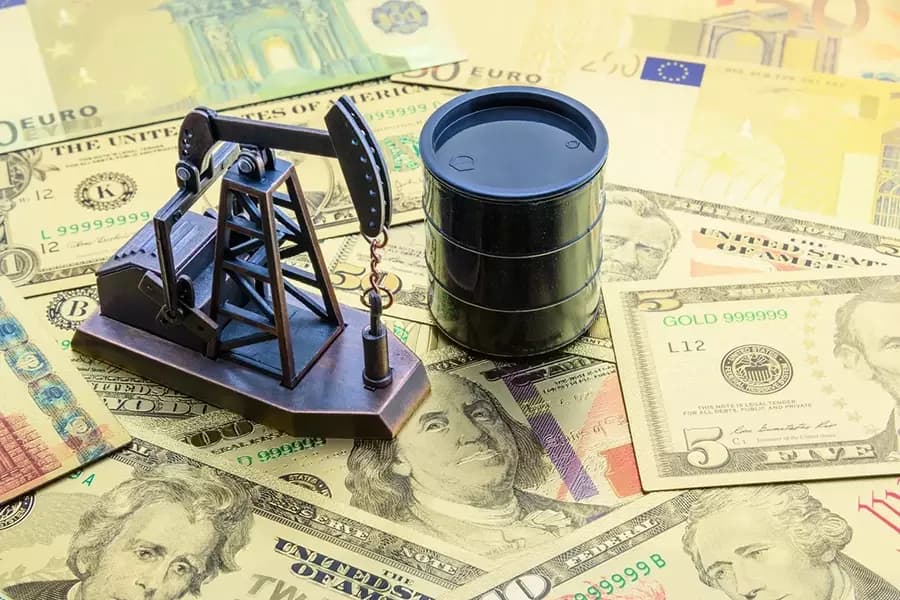
How the Middle East conflict is driving up oil prices
After the outbreak of the conflict in March 2026, the price of the benchmark Brent variety went up and in a short time from about $ 60-65 per barrel soared to $ 124.5. I mean, almost twice as much. Then, in July of this year, due to the search for a truce, the price of oil fell to $ 80-85. But around the beginning of August, with the resumption of active actions of the parties and the expansion of the number of participants in the conflict, the price of Brent oil again exceeded the hundredth threshold and today is trading about 108.5 dollars per barrel.
In addition, due to massive attacks on Russian refineries, the Russian authorities are forced to limit the export of motor fuel, which also increased the shortage of finished petroleum products on the world market. Thus, the price of gasoline, diesel, etc. worldwide reached peak values, which gradually affected the cost of delivery and, as a result, the final price of the consumer basket.

Photo freepik.com
What High Rates Mean for Savings
But back to raising interest rates and their impact on our savings. Oddly enough, this is from the category “no evil without good”.
The fact is that with the increase in interest rates, the yield on deposit deposits and government bonds is not only maintained, but also shows growth. A striking example is the yield of American 10-year treasuries, which on the eve of the Fed meeting exceeded the mark of 5% and today is trading about 5.040 %. Of course, this does not please the state budget, but a holiday for holders of securities.
The situation is similar in the Belarusian financial market. The yield on bank deposits in Belarusian rubles remains at 14.5-14.6%. Taking into account the fact that the previously favorite cash dollars increased in price by 4.34% this year, and the current inflation is also 4.5%, it is obvious that a bank deposit in Belarusian rubles remains quite a profitable tool. And, among other things, do not forget about the state law on guarantees of safety of bank deposits of citizens.
The next question is, how long will the current situation last? The answer is likely to be simple – long. Judging by the way the issues of peaceful settlement of current conflicts are resolved, breakthrough solutions should not be expected in the next few months. All sides, at a minimum, have the resources to maintain the degree of confrontation. An increase in this degree is also unlikely. Thus, all the processes discussed above are likely to continue their trend.
The stakes will remain high. Our savings are still in a good place.
