
RAPP: China Ready to Re-Export Russian Gas to Europe, Like India
Experts of the Russian-Asian Union of Industrialists and Entrepreneurs believe that China is ready to organize the supply of Russian gas to Europe, repeating the scheme that India previously applied for the export of petroleum products
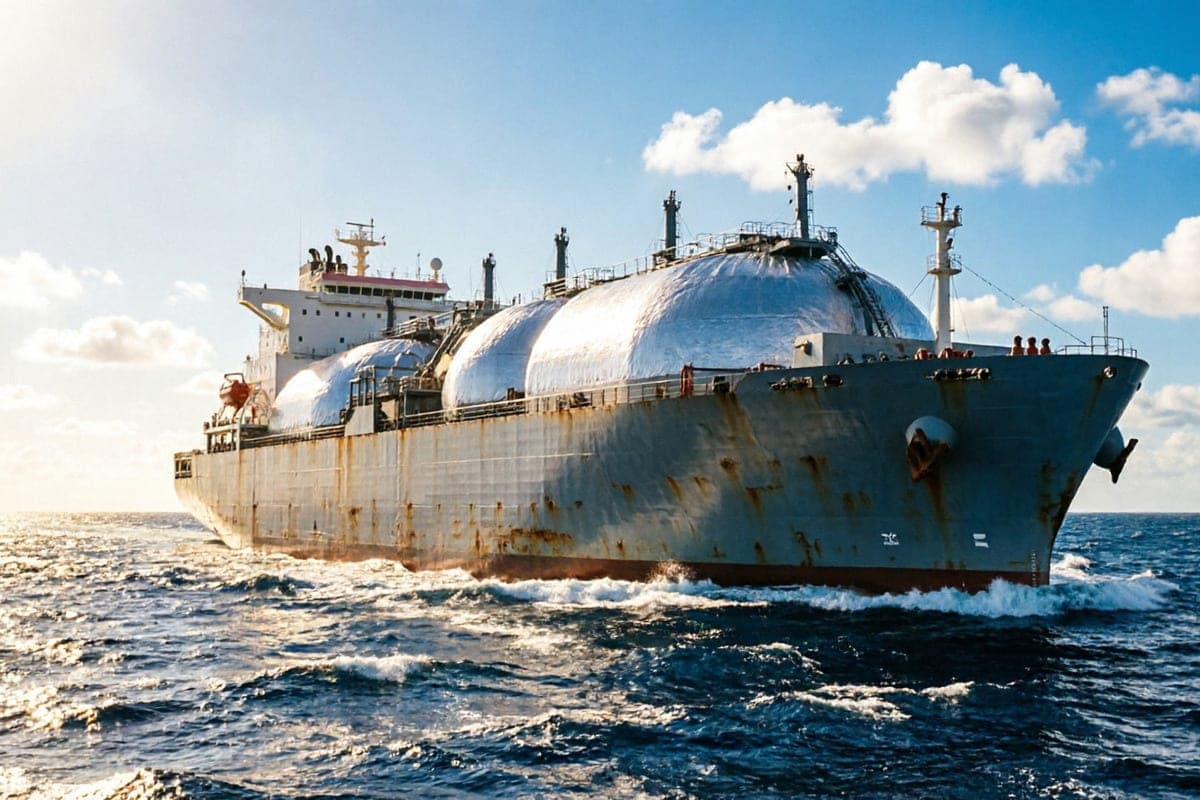
Experts of the Russian-Asian Union of Industrialists and Entrepreneurs believe that China is ready to organize the supply of Russian gas to Europe, repeating the scheme that India previously applied for the export of petroleum products
The analytical materials of the Russian-Asian Union of Industrialists and Entrepreneurs (RUIE) state that China intends to organize the resale of Russian natural gas to European consumers. Experts compare this scenario with the practice of India, which previously successfully established the export of petroleum products produced from Russian raw materials.
Representatives of the union note that the status of China as a key importer of Russian pipeline gas and one of the main buyers of liquefied natural gas (LNG) from the Russian Federation is not a secret. What is more remarkable, however, is Beijing’s willingness to re-export blue fuel once its domestic needs are fully met.
According to the experts of the independent Norwegian energy consulting company Rystad Energy, before the beginning of the winter period, China has created impressive reserves of natural gas. In this regard, part of the previously contracted LNG can be redirected to foreign markets for resale. Analysts believe that the impetus for such actions will be high quotations on world markets, as well as a likely drop in domestic demand due to abnormally warm weather.
By the end of September, the level of filling of underground gas storage facilities in China reached 80 percent. Objective climatic circumstances also contribute to this process: the El Niño phenomenon, characterized by abnormal heating of waters in the eastern and equatorial zones of the Pacific Ocean, will lead to a milder winter. As a result, according to experts, annual gas consumption in China may decrease by 4%. Given the expected drop in demand and the formation of a surplus of fuel, the idea of reselling it, including in energy-demanding Europe, seems quite reasonable, especially in the context of continued instability in the Strait of Hormuz.
The article also emphasizes the direct participation of Chinese corporations in the implementation of Russian projects for the production of liquefied natural gas. In particular, two large state structures act as shareholders of the Arctic LNG 2 project: China National Petroleum Corporation (CNPC) and China Marine Oil Shelf Corporation (CNOOC), each of which controls 10 percent of the company’s shares.
Experts of the union predict that in the case of re-export launch, end consumers will have to face rising prices. This is due to the fact that purchases of LNG in China are already expensive: spot quotes in the Asian market are currently near four-year highs. In addition, the availability of its own production allows Beijing to flexibly adjust the balance of supply and demand. As previously noted by the Chinese Institute of Petroleum Planning and Engineering, the country’s current gas reserves will be enough to cover all domestic needs until 2030.
The authors of the article draw a direct parallel with the previous experience, when Indian companies successfully organized supplies to Europe of petroleum products produced from Russian raw materials.
RAUPP believes that such actions will bring significant economic benefits to China. For Russia, this situation is also favorable, since European countries, publicly declaring their intention to completely abandon Russian energy carriers, actually turn a blind eye to the practice of re-exporting them through third countries.
European countries will continue to buy Russian gas, but now it will be delivered via longer logistics routes and with a significant financial margin. At the same time, experts recall the well-known truth that the stingy pays twice, and the imprudent always.
The New York Times: the United States offered Europe to resume purchases of Russian gas
Trump spoke about the “very good” decision on anti-Russian sanctions n
Your reliable news feed - "MK" in MAX
