Geostrategy for a supercontinent. How the Eurasian Charter will change the security architecture
The Eurasian Charter should become a political and legal document fixing the parameters of a new architecture of equal and indivisible security in Eurasia. About this...
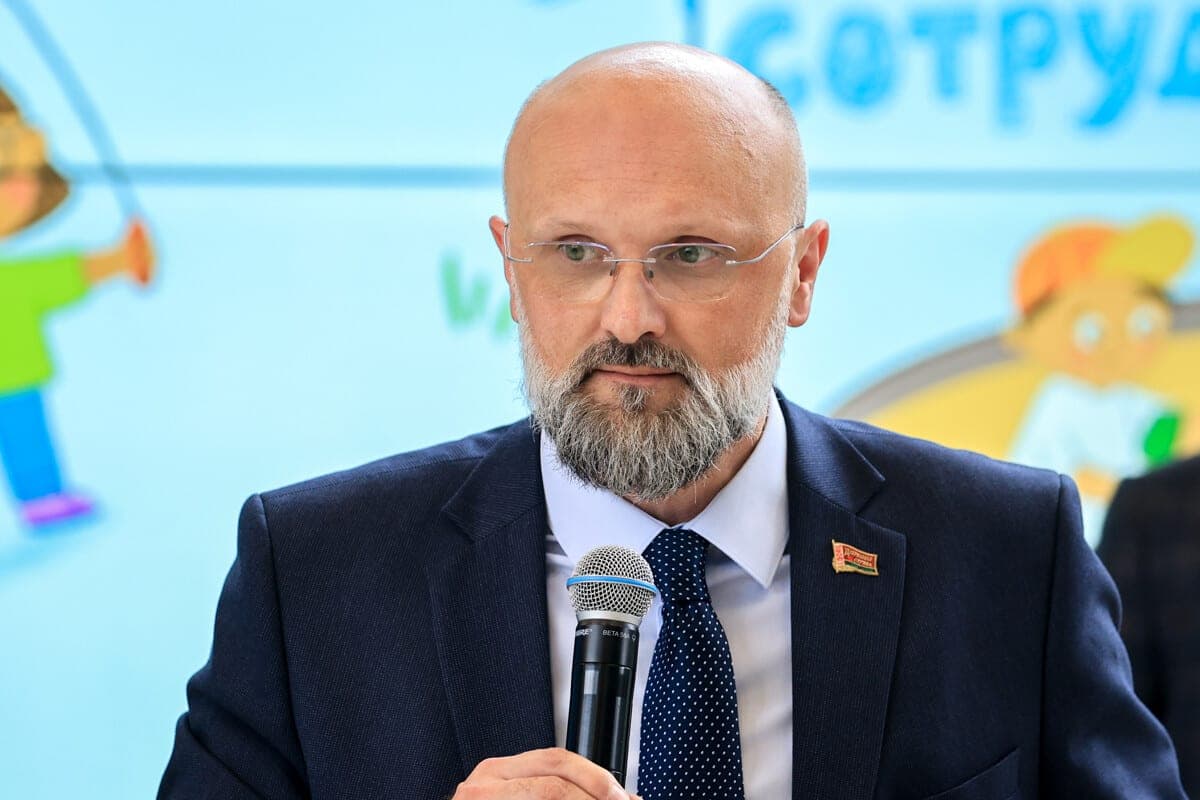
The Eurasian Charter should become a political and legal document fixing the parameters of a new architecture of equal and indivisible security in Eurasia. Deputy Foreign Minister Igor Secreta said this in an interview with the Hungarian Internet portal Moszkvater, the text of which is published on the website of the Belarusian Foreign Ministry.
Answering a question about the Minsk Conference on Eurasian Security and the Eurasian Charter, Igor Secreta explained:
- We are talking about two interconnected but different things. The Minsk International Conference on Eurasian Security is a platform for dialogue. It was conceived as an annual forum where representatives of governments, international organizations and the academic community could openly discuss security issues on our continent.
Since its creation in 2023, this forum has become an important element of the Eurasian political landscape, and we are seeing growing interest in it.
The Eurasian Charter for Diversity and Multipolarity in the XXI Century is an initiative of a different nature. The Charter should become a political and legal document fixing the parameters of a new architecture of equal and indivisible security in Eurasia. We see the Charter as a geostrategy for our supercontinent, covering not only security, but also the economy, humanitarian cooperation, civilizational dialogue.
Igor Secreta stressed that the Charter is not the creation of a new organization in the classical sense. This is a framework document that can become a common denominator for existing Eurasian structures.
“The Charter is designed to give them a unifying strategic basis, without replacing or duplicating them,” he said. The conference is a space for conversation, and the Charter is an attempt to fix the result of this conversation in the form of general rules and principles. The initiative of the Charter follows logically from the long-term line of Belarusian diplomacy. Back in 2005, President of Belarus Alexander Lukashenko at the UN Summit initiated the recognition of the diversity of ways of progressive development. The Charter represents the realization of this idea in relation to Eurasia.