November 29, Volgograd will be able to see the convergence of the moon, Jupiter and Mars
On November 29, 2026, a calm geomagnetic situation is expected in Volgograd, and the night sky will please the waning moon with the giant planets Jupiter and Mars
Space weather
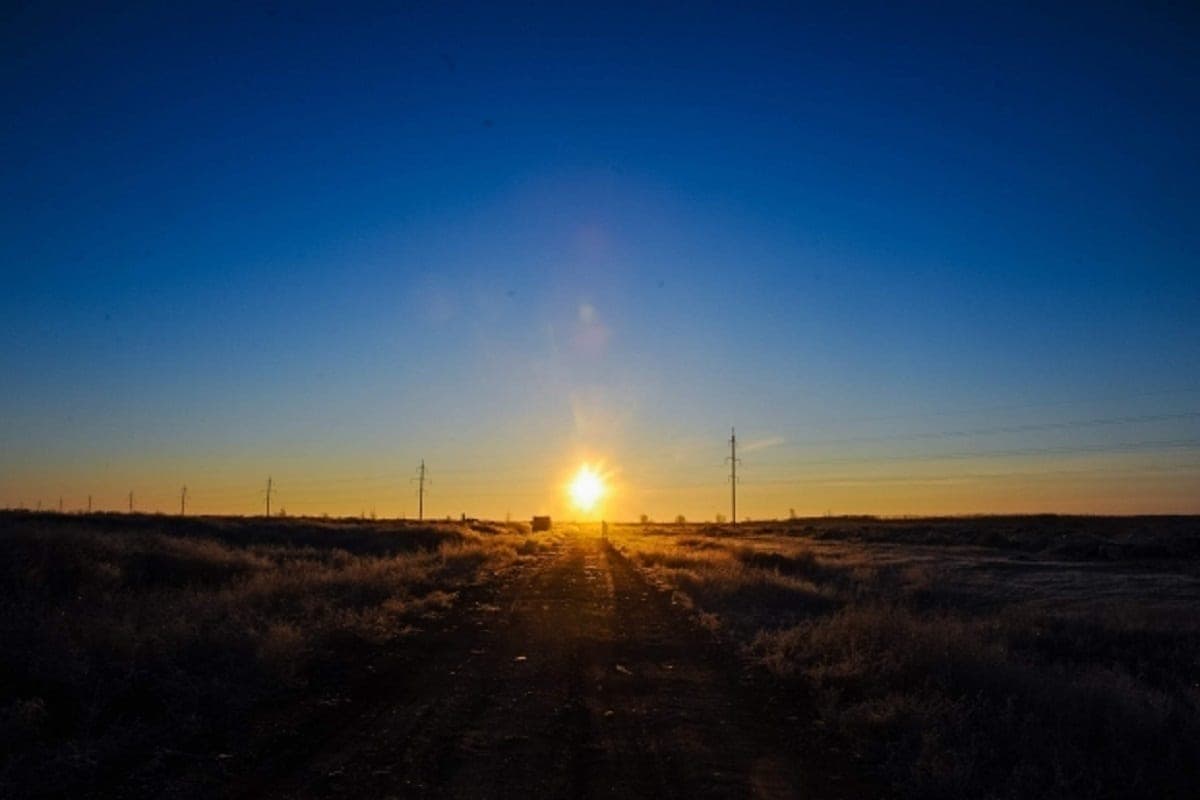
After a series of geomagnetic perturbations and weak G1 storms observed in the Volgograd region on November 26-28, the Earth’s magnetic field begins to stabilize. According to the Solar Astronomy Laboratory (IKI) and the Yandex Weather service, Sunday will pass without serious cosmic shocks.
The values of the geomagnetic index Kp will be kept within 3 points (“green zone”). This corresponds to a slightly elevated but safe background.
The chances of developing a full-fledged magnetic storm on November 29 are minimal and are estimated by experts at only 7%. On the Sun after a long lull, weak bursts of class C resumed, but they do not pose a threat to the Earth's magnetosphere this day.
Although the day will pass calmly, the body of some Volgograd residents may react to residual phenomena after Saturday fluctuations. Doctors advise to observe a sleep regimen (7-8 hours), drink more clean water and do not overload yourself with heavy food or intense training.
What you can see in the sky over Volgograd
The end of November 2026 is rich in astronomical events, many of which can be observed with the naked eye or through regular binoculars. If you go beyond the city light (for example, towards the Volga-Akhtuba floodplain or steppe areas of the region), you can see several bright objects at once.
The main event of the night from 29 to 30 November takes place in the constellation Leo. The waning moon (after the full moon on November 24) will rise after midnight. By the pre-dawn hours (about 06.00), a spectacular celestial composition will be formed high in the south: the moon will shine on the right, and the bright Jupiter, the main star Leo Regulus and the reddish Mars will line up almost in one line to the left of it.
In the first half of the night in the southern part of the sky (in the constellation Cetus), Saturn is clearly visible to the naked eye. And in the constellation of Taurus, Uranus still retains its maximum brightness of the year (the confrontation with the Sun took place on November 25-26) - in the presence of binoculars and a star map, it can be found as a dim bluish star.
Late in the evening, the main decorations of the winter sky rise in all their glory over the southeastern horizon of Volgograd - the constellations Orion, Taurus (with the Pleiades star cluster) and Auriche.
The success of astronomical observations in Volgograd on November 29 depends on cloud cover. According to forecasts of meteorologists, dry frosty weather has established in the region: during the day the temperature will be -2 ...-4 ° C, and at night it will drop to -5 ...-7 ° C with a moderate northern wind. Variable cloudiness is expected, so fans of the starry sky should follow the clarifications in the second half of the night and dress as warmly as possible.