
"Assembly" in a matter of hours. How to evaluate the new theory of the origin of the moon
The moon, according to the new hypothesis, formed in just a few hours. This played a role comparable to Mars planet Theia. Is this true and why the Earth's satellite became cold and lifeless - scientists explained
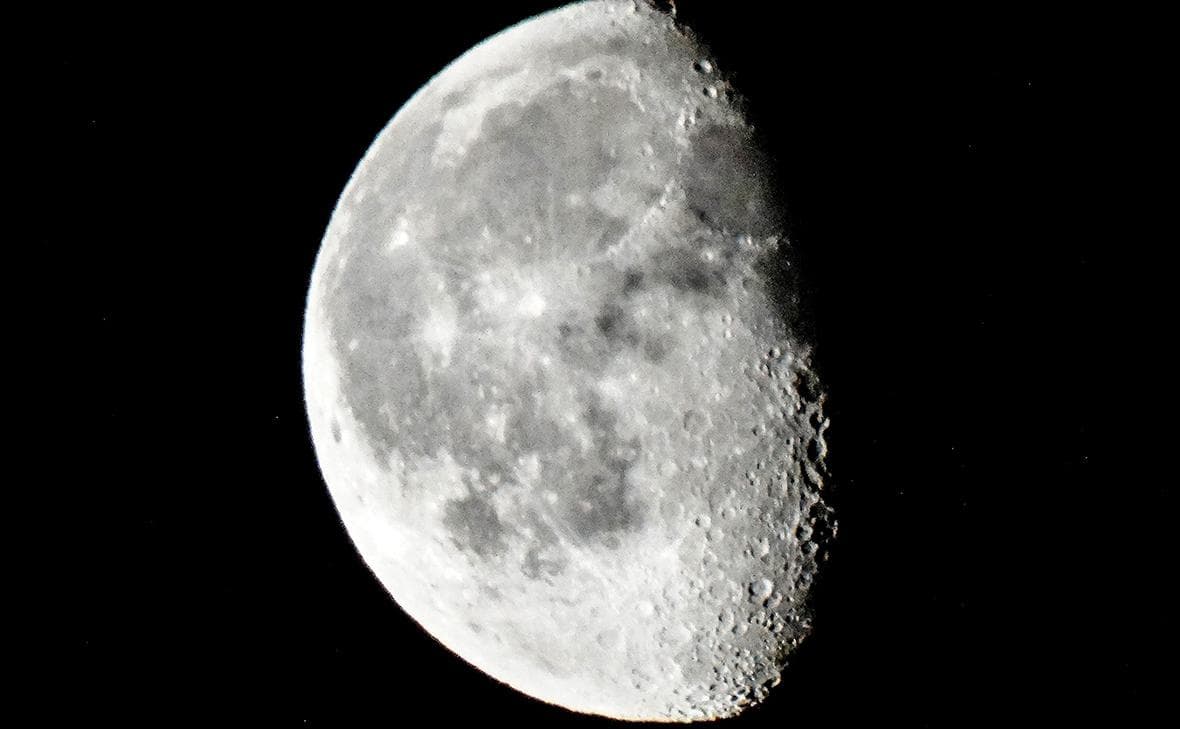
The moon could have formed literally “in a matter of hours” as a result of the collision of the Earth with the hypothetical existing planet Theia, comparable in size to Mars, early in the development of the solar system. This is shown by the new results of the simulation of this event, published in the journal The Astrophysical Journal Letters. Scientists took into account the fact that hotter celestial bodies are much less durable than cold ones.
In the described new theory, the collision with the Earth Theia was completely destroyed, and most of its debris, began to revolve around our planet, quickly formed into the moon. Hypothetically, it was Theia’s higher temperature that affected the scale of its deformation and the scattering of debris around the Earth.
Had Theia been colder, i.e. in the event of a later collision – 100-150 million years after the birth of the planets of the solar system – the ring of its debris would have formed so that the satellite would begin to “accretize” (build up mass) gradually. Also, in this scenario, much of Theia would have survived and merged with Earth, the researchers said.
In the new work of scientists, the priority hypothesis about the impact (shock) appearance of the moon is retold, in which there are also many uncertainties, including about the speed of "assembly" of a satellite in low-Earth orbit, but it is described better than in alternative theories - for example, about the simultaneous appearance of the Earth and the moon, said Alexander Rodin, Doctor of Physical and Mathematical Sciences.
The most confirmed version of the origin of the moon to date is the hypothesis of a giant collision, said nuclear physicist Alexei Anpilogov: “According to this model, at an early stage of the Earth’s existence, when our planet was just forming, another protoplanet, which scientists call Theia, collided with it.”.
This theory is supported, for example, by the fact that large dense structures have been found in the deep layers of the Earth’s mantle, which some researchers associate with the remains of Theia material that plunged into the Earth after the collision. “It’s an amazing paradox: an event that looked like a giant cosmic catastrophe eventually became one of the factors that formed the conditions for the emergence of life on Earth,” he says.
The collision with Theia not only led to the formation of the moon, but also affected the internal structure of our planet, which retained its atmosphere and water, unlike Mars, which lost a significant part of its atmosphere, or Venus, where extreme greenhouse conditions arose.
The moon has never been a habitable object, Rodin said.
“The main reason is its size and mass. The mass of the Moon is about 1/81 of the mass of the Earth, so it is a very small celestial body. It doesn’t have enough gravity to hold a dense atmosphere for billions of years. And the absence of an atmosphere means the absence of a stable liquid water cycle, which is one of the key conditions for the emergence and maintenance of life.
All the water found on the moon today exists mainly as ice. Evidence that the satellite of the Earth ever existed oceans, atmosphere or conditions for the emergence of life, modern science has no.
At the same time, he notes that the Earth and the Moon do have a common origin. It’s just that the part of matter that became the Moon has a small mass, a weak gravity, and no way to hold the atmosphere.
"So the moon remained a cold and lifeless satellite of the Earth," he explains.