
Chip in the brain by subscription: what can Neuralink today, and whether it is worth it
Controlling the cursor with the power of thought, online chess without hands and telepathy in real life are what you can do.
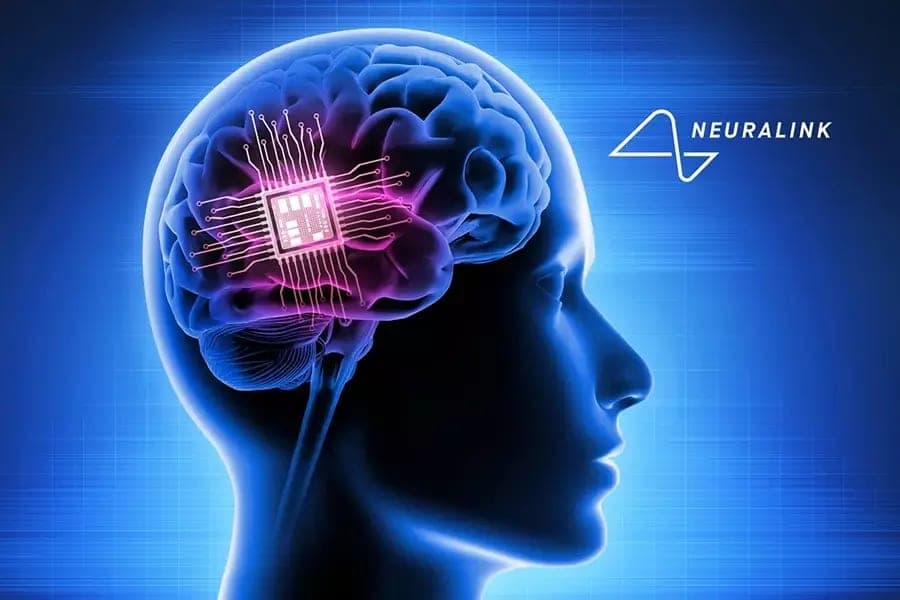
Controlling the cursor with the power of thought, online chess without hands and telepathy in real life – what seemed like science fiction has already become everyday for the first subjects. Today, the commercial cost of the Neuralink neural interface reaches $ 40,000, and a monthly subscription can cost $ 100-500. But in Minsk it is impossible to implant it even for this money. Why - in the material of the correspondent of the agency "Minsk-Novosti".
Photo by Shutterstock
Thoughts in digital: how Elon Musk changes our brain
When bioengineers talk about the ability to control a computer with the power of thought, most often we are talking about the brain-computer interface (Brain-Computer Interface, BCI). It is a technology that reads the electrical impulses of neurons and converts them into digital commands to control external devices without using muscles. For a long time, BCI developed exclusively in academic medicine for the rehabilitation of patients with paralysis, but in 2016, Elon Musk and a team of scientists founded Neuralink.
Their main product is the N1 Implant. This is a 1 BYN coin diameter implant that is implanted under the patient's skull. It consists of several parts. Thanks to highly flexible ultrathin electrode filaments, it records neural activity. The received information is processed by a built-in microchip and transmitted wirelessly to the Neuralink application. It decodes the flow of data and converts intentions into actions. The device is powered by a small battery that is recharged remotely via a compact induction device. It is enough for 12-18 hours of autonomous work. And so that the implant did not fail and could not harm the health of the user, it was enclosed in a biocompatible housing that can be in physiological conditions several times more severe than the human body.
In total, 64 flexible threads are implanted into the patient’s brain, which are thinner than a human hair. There are 1024 electrodes on them – a kind of “microphones” that transmit electrical signals from neurons. This is almost 10 times more than similar implants developed by competitors such as Utah Array, Layer 7 Cortical Interface, Connexus, Stentrode. In addition, these models used not filaments, but other, less accurate methods of recording pulses: microneedles, flexible film tapes, cylindrical stents.

Photo by Neuralin k
How does the R1 Robot work
To install the N1 Implant, simple medical intervention is not enough. Because of the thickness of the threads, injecting them into the brain is incredibly difficult. It's like trying to insert a human hair into a dense jelly. Therefore, the doctor only creates a hole in the skull.
And then a specially designed surgical robot R1 Robot is taken over. Thanks to optical sensors, vascular scanning systems and an ultra-thin needle, it captures the threads and guides them to the necessary areas of the cerebral cortex with micron accuracy, avoiding capillaries damage.
Automating Neurosurgery with Robotics | Neuralink
Results of clinical trials: records and displacement of threads
The first test of the new technology was the American Nolan Arbo. After a spinal cord injury, the man paralyzed all his limbs. However, at the end of January 2024, he underwent an operation to implement the N1 Implant. The procedure lasted two and a half hours and was successful: the next day the patient went home.
Before the advent of the brain-computer interface, Nolan used a stylus for a tablet to interact with technology, which he clamped with his lips. At the same time, the device could only be used sitting, which caused discomfort, caused muscle fatigue and led to pressure sores. Also, to put the device in your mouth, you need the help of people nearby. The new device allowed the man to live in his own rhythm and not constantly depend on others.
On weekdays, Nolan participated in research sessions that could last up to eight hours. The main test looked like a grid of 35 by 35 cells, each of which could be blue or orange at any time. The subject was required by thought to move the cursor to the desired square and press it. The standard measure in such tests is BPS Bits per second, a value calculated based on the number of correctly selected targets per minute. High values indicate a good level of cursor use.
On the first day, Nolan updated the world record for controlling a cursor using a brain-computer interface, achieving a speed of 4.6 BPS. He later improved his score to 8.0 BPS. The average person who uses a mouse has an average of 10 BPS.
Check yourself: https://neuralink.com/webgrid/
On weekends, the patient uses the implant for entertainment. He plays online games with friends (chess, Civilization VI), browses the Internet, conducts live broadcasts and uses other applications on his MacBook, controlling the cursor telepathy. The man was also able to play Mario Kart on the Nintendo Switch console, which was not possible after a spinal cord injury.
However, a few weeks after the operation, some of the flexible electrode strands shifted and moved away from the brain tissue, causing the control speed to drop. Neuralink specialists did not conduct a second operation, but upgraded the algorithms for decoding signals at the software level, completely restoring the accuracy of the cursor. This case proved that the system can be adjusted “over the air”, without surgical intervention.

Photo by Neuralin k
Neuralink implant cost: $10,500 to target $2,000
Despite successful trials, the device is still available to only dozens of participants in clinical trials. BCI technology is still expensive for consumers.
Official financial indicators and estimates of market analysts form the following structured picture of expenses:
- 1.$10,500 – Estimated cost of operation of the R1 surgical robot, materials and the N1 chip itself during clinical trials;
- 2.$40,000 – the total commercial cost of the intervention for insurance companies and first-time private patients;
- 3.2000 - $5,000 - Elon Musk's target when entering the mass market. The company aims to lower the price tag to the cost of laser vision correction (LASIK) or plastic surgery.
According to analysts, to make the technology popular, Neuralink can use a combined business model: a one-time payment for a surgical procedure followed by a subscription to software and data processing algorithms.
What can be included in the monthly subscription:
- 1.regular calibrations for microshifts of threads and individual features of brain activity;
- 2.connecting to cloud servers for noise processing and filtering;
- 3.custom profiles, specialized presets for esports with minimization of input delay, text work or management of smart home devices.
Security and Neurorights: Rejection Risks and Protection from Hacking
In addition to the financial component, there are other problems that prevent the launch of the implant in mass production. The first is rejection. Historically, the main limitation of brain-computer interfaces has been the inevitable encapsulation of scar tissue. Once inserted, the protective cells of the central nervous system isolate the implant from healthy neurons, making it worse.
The second is filament displacement. The experience of the first patient showed that due to the natural pulsation of the brain, part of the electrodes can shift. Engineers compensate for this with software, but the long-term stability of the threads is still being investigated.
The safety of the battery is also a concern. It is lithium-ion, and its tightness and induction charging without tissue overheating are discussion topics.
In turn, cybersecurity experts are concerned about the risks of hacking. In the current version, the implant works mainly to read signals. The most negative scenario in a hacker attack is the interception of control over the cursor or text input.
But the system uses end-to-end encryption, in which the message turns into a cipher on the sender's device and opens only on the recipient's device, excluding access by any intermediaries. The method is reliable, most threats are not due to the vulnerability of the chip itself, but to the human factor on the side of the connected smartphone or PC.
However, the collection of neural activity creates a new layer of ethical problems. After all, brain data is not just passwords, but patterns of reactions, emotions and phobias. Lawmakers in the U.S. and the EU are already developing neuro-laws that prohibit the sale of primary neural data to advertising companies and third parties.
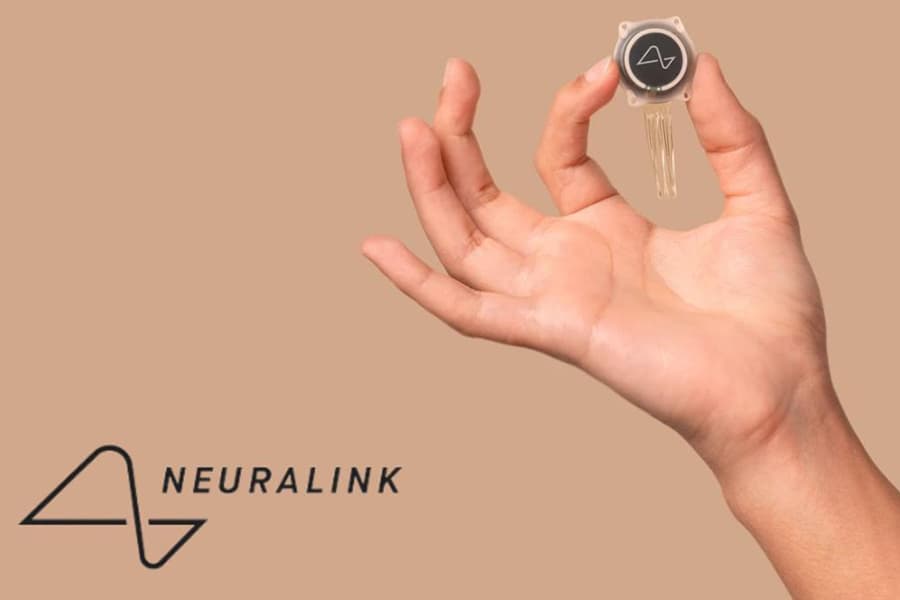
Photo by Neuralin k
Is it legal in Belarus: the answer for Minsk
Today, BCI chips are not sold freely in any country in the world. The U.S. Food and Drug Administration (FDA) has granted Neuralink a Clinical Trial Authorization (IDE) and designated the device as a breakthrough technology. This speeds up bureaucratic processes, but does not mean full approval (PMA) to sell the device to ordinary people. Conducting commercial operations without medical indications is now illegal in the United States.
The companies have also been officially allowed to expand the clinical trial program by regulators in Canada (Health Canada), the UK (MHRA) and the UAE. Clinics in Toronto, London and Abu Dhabi are already undergoing phase one surgery for patients with spinal cord injuries.
And in the European Union, the chip requires CE Mark certification under the MDR regulation, making commercial launch a matter of years. In China, meanwhile, the NMPA regulator is giving priority to domestic BCI developments, preparing the domestic market for its own solutions.
Legal status in Belarus
- 1.Registration with the Ministry of Health: implant N1 and robot R1 do not have registration certificates of the Ministry of Health of the Republic of Belarus. Without this, the import, sale and surgical installation of equipment is impossible.
- 2.License for BCI implants: No public or private clinic in Minsk and other cities of the country has a specialized license to conduct invasive neurotechnological operations of this type.
- 3.Standards of the EAEU: on the territory of the countries of the Eurasian Economic Union there are uniform rules for the circulation of medical devices. The implantation of non-certified neural interfaces is legally equivalent to illegal medical practice.
Frequently asked questions
Can people with a chip undergo MRI or metal detector frames?
The body of the implant contains electronic components and a lithium-ion battery, so a standard MRI scan of the whole body is contraindicated. Metal parts of the device can also trigger sensitive sensors
(e.g. airports). To avoid problems,
users are issued a special international passport of a medical implant for manual inspection.
What
will
if a person wants to delete or update
implant
?
If the user decides to abandon the BCI or wants to install a more modern version of the next-generation implant, the R1 robot can extract the threads in reverse order.
Can vision or speech be restored with Neuralink?
Project
Blindsight
it aims to directly stimulate the visual cortex to provide basic vision even to those who are blind from birth or have lost their eyes. In parallel, modules are being developed to decode the speech center pulses so that people with aphasia or ligament damage can convert thoughts into a voice generated by the neural network.
The Neuralink project is a vivid example of the fact that brain-computer interfaces have finally left the category of theoretical developments and are gradually becoming part of clinical practice. While successful trials and plans to reduce the cost of surgery are ushering in an era of mainstream neurotechnology, engineers and regulators have yet to address the long-term reliability of the chip and the protection of neurodata. However, if mass technology performs well among users with disabilities, it is possible that the next stage will be ordinary people. And then the neuroimplanet will become as everyday gadget as a smartphone.


