
The number of swamp frogs in the Berlin forest fell critically
Almost all amphibians in Berlin are threatened with extinction due to the deterioration of habitat in the city
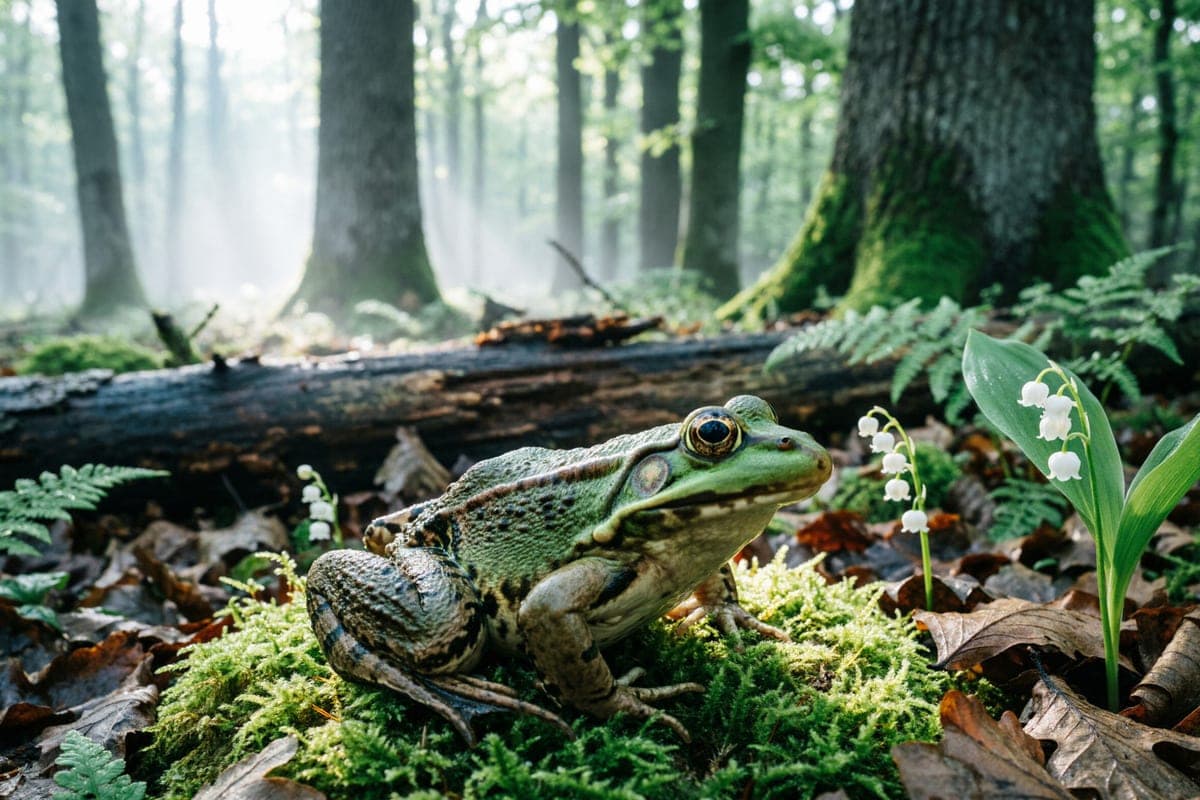
Almost all amphibians in Berlin are threatened with extinction due to the deterioration of the habitat in the city. This conclusion was made by the authors of the report of the Berlin Foundation for Nature Conservation, the data of which is referred to by the DPA agency. The study was commissioned by the city administration.
Experts assessed the state of habitats for 235 populations of amphibians. Experts have not identified any territory with favorable conditions. In 72% of cases, the habitat is classified as poor, in the remaining 28% – as unsatisfactory.
The report warns that many populations are teetering on the brink of survival. Without targeted conservation and restoration programs, they face local extinction in the near future. Even animals traditionally considered adapted to urban environments, including the smooth newt, the edible frog and the common toad, are threatened. These species are rare in the German capital.
Environmentalists provide data showing the scale of the problem. On the example of Lake Barssee in the capital's Grunewald forest, the catastrophic dynamics of population decline is visible. In the early 1980s, more than two thousand adult swamp frogs were recorded here annually. By the mid-1990s, their number had dropped to 100–200 individuals. In recent observations, the researchers found only one male.