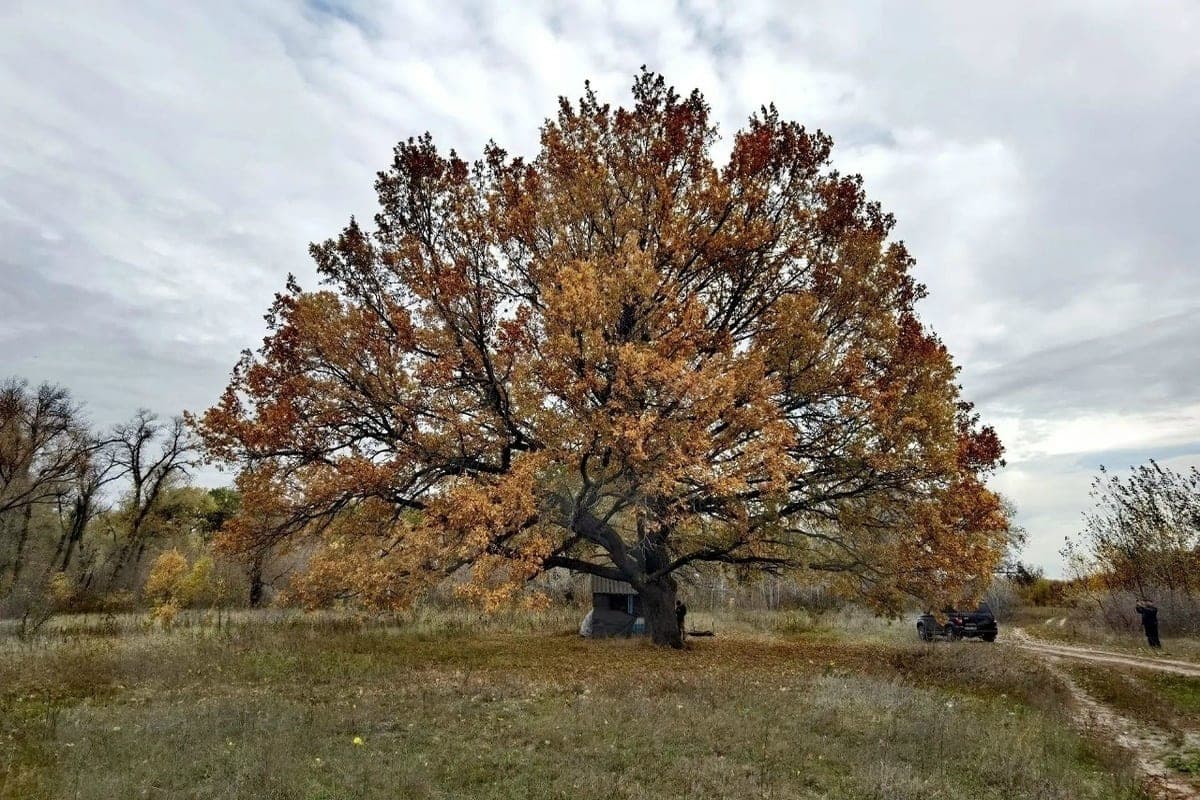
The giant oak at Hopra has preserved the chronicle of the climate of centuries for Volgograd scientists
In the Nekhayevsky district of the Volgograd region completed an unusual expedition: scientists were looking not just for trees, but for the guardians of the memory of the steppe
As reported in the regional nature, the staff of the Institute of steppe UrO RAS, together with specialists of the natural park "Nizhnekhopersky" went to the floodplain of the Hoper River to find old-time oaks. The project “Forest Heritage of Steppe Eurasia” is implemented with the support of the Russian Geographical Society.
For science, these places are especially important: Volgograd region is the last frontier where cherry oak is still found in the south-west of Russia. That is why every century-old oak tree here is worth its weight in gold. Researchers were especially attracted by old plantations near the village of Lukovskaya, and for good reason.
The main trophy of the expedition was a real giant oak: the girth of the trunk is 419 centimeters, the height is more than 15 meters. Looking at it, it is easy to believe that the tree has been seen by generations of people. But for scientists, this giant is not just a miracle of nature, but a real chronicle of the climate. Its annual rings contain stories of droughts and downpours, storms and fires, how the steppe coped with abrupt changes in weather a hundred and two hundred years ago.
According to these rings, specialists will conduct dendrochronological studies: they will restore the chronology of natural events and understand how stable the forest ecosystems in the steppe zone were. This means that you can better predict how these places will change.
But the value of these trees is not just in numbers and graphs. Old-growth oaks are living monuments of nature. That is why the found giant can become not just an object of study, but a point of attraction for enlightenment and respect for nature.
Scientists are not going to stop: new surveys are ahead to gather as much evidence of the past as possible and better understand the future of steppe ecosystems.