
The Frenchman was shocked to see a green on the knee of a Russian child. Almost fainted: in the West it is a “chemical weapon”, and in Russia – a panacea
The green knee plunged the Frenchman into shock: why the Russians have been using green for decades, and the West almost forgot about it.
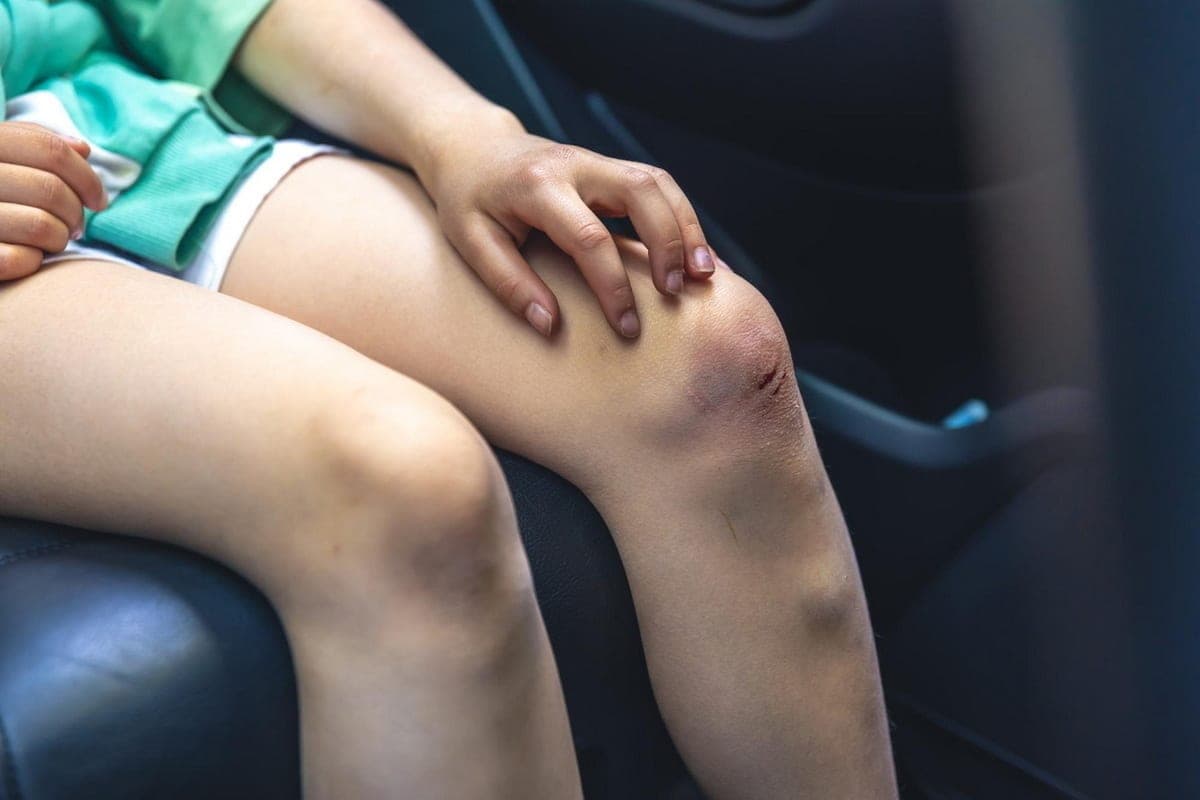
For many Russians, a small bottle with a bright green liquid is almost a symbol of childhood. A broken knee, abrasion after a fall, a scratch or bites - in many families in such cases, the first thing to remember is a green leaf, writes the Zen channel Glass Tale.
For a foreigner, such a picture may look completely unusual. This is exactly what happened to Jean-Paul, a Frenchman who ended up on a regular Russian playground.
Children ran around the yard, played and climbed the slides. At one point, the five-year-old could not resist and pulled his knee hard on the asphalt. Tears, blood, dust - a common childhood nuisance.
The father took out a familiar bottle and cotton swab from the bag. A few seconds later, the injured knee turned bright green.
The Frenchman froze.
- What is it
- Zelenka. The usual antiseptic.
Judging by his facial expression, the answer only added to the questions.
For a person who has never encountered diamond green, the procedure can really look unusual: instead of a transparent remedy, a rich green spot appears on the skin, which is almost impossible not to notice.
Diamond green did not originally appear as a medicine. This is a synthetic dye, which was used, in particular, in the textile industry. Later, its antiseptic properties attracted the attention of doctors. In Soviet practice, the tool became widespread due to the availability and low cost. So green gradually became a familiar element of home first aid kits.
For several generations of Russians, the characteristic green color has almost become part of everyday culture. A child with a green spot on his knee meant one thing: he had recently fallen and received first aid.
The most interesting thing for Jean-Paul was different. It turned out that the absence of green in the usual European first aid kits does not automatically mean that the tool is prohibited or considered a “chemical weapon”.
The reasons are much more prosaic. In different countries, the list of registered medicines and the requirements for their use differ. Older drugs may not be used in modern medical practice if other means exist for a specific indication, and manufacturers are not interested in undergoing expensive registration procedures and modern research.
In addition, Western medicine has long relied on drugs that do not leave bright marks on the skin. Therefore, a person from Europe is accustomed to see a transparent antiseptic, cream or a regular patch.
For a Russian parent, a green knee is a perfectly normal picture. For a foreigner, it is a cultural shock.


