
What you need to know about rabies and why vaccination is mandatory for pets
This disease is known for more than 4000 years, the first official mention of it is found in the Babylonian writings of the XXIII century BC. But despite...
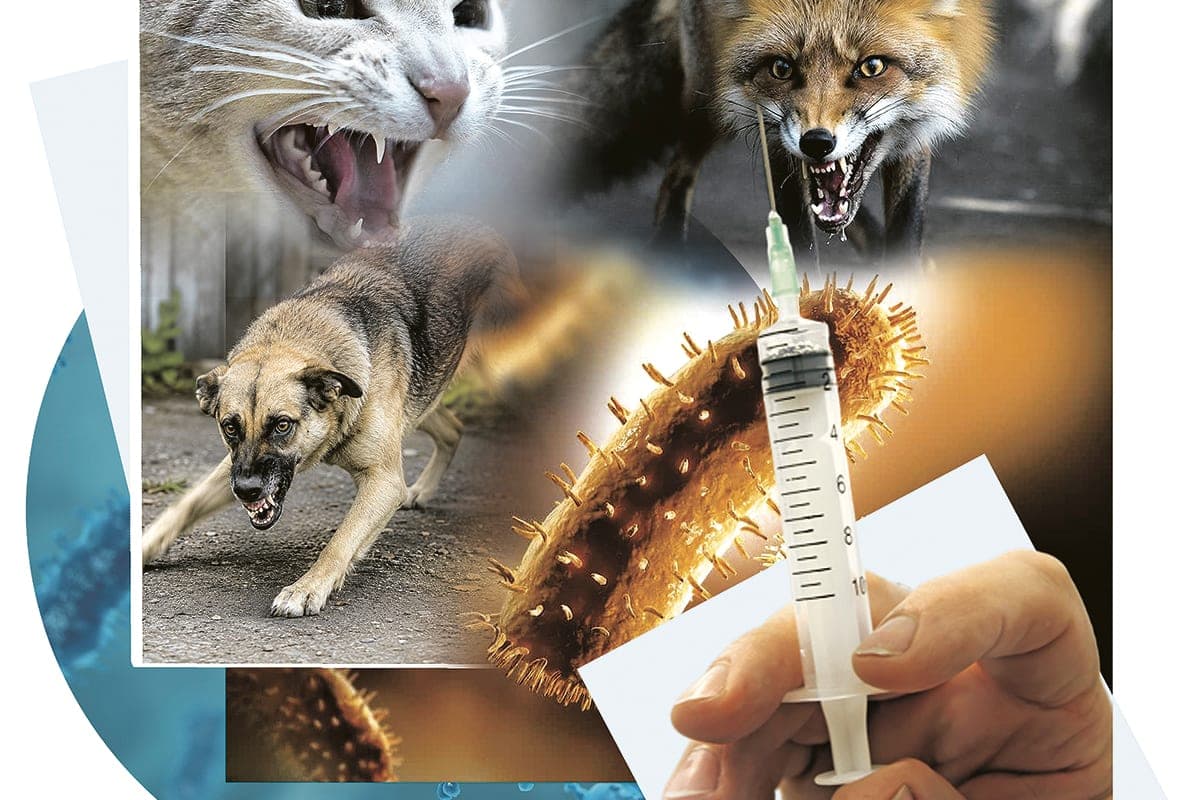
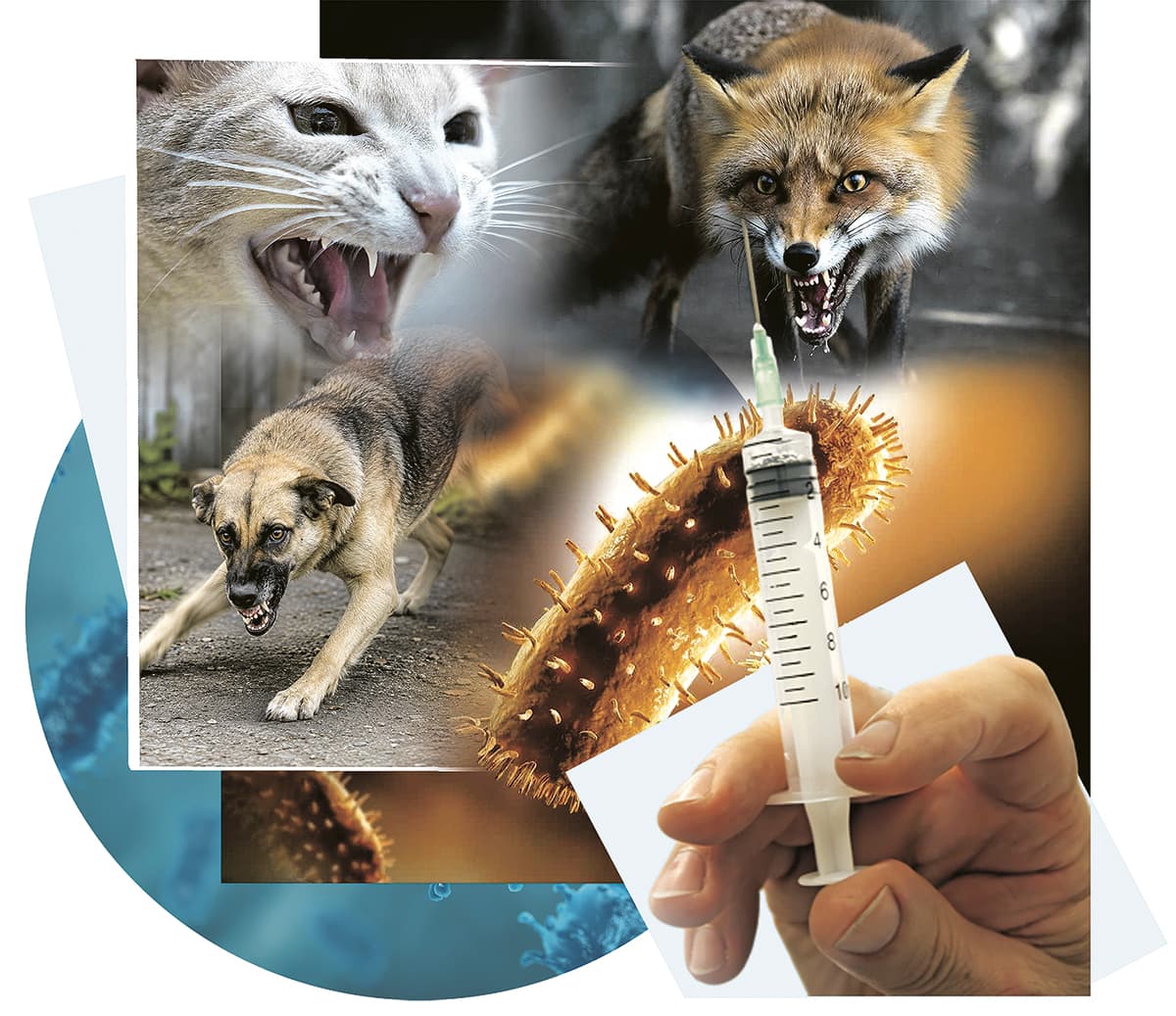
This disease is known for more than 4000 years, the first official mention of it is found in the Babylonian writings of the XXIII century BC. But despite all the achievements of modern medicine, rabies has not yet been cured. It is estimated that one person dies from the virus every 10 minutes. The insidiousness of the deadly disease lies in the fact that not only wild animals can transmit it to us, but also our adored pets: cats, dogs and even tamed hedgehogs.
The name of the disease “rabies” came from the word “demon” (this explanation is found in Russian sources): it was previously believed that the victims of this terrible disease are possessed by demons. Until the end of the XIX century, the disease was considered a sentence for both quadrupeds and people. The first known large epidemics of rabies among animals shook Europe in the XIII-XIV centuries. The disease in the vast majority of cases was spread by wolves: infected animals attacked residents of villages and even large settlements. By the XVIII and XIX centuries, rabies became an integral part of many large cities: for example, Paris accounted for up to a third of all cases of morbidity in France, and Moscow and St. Petersburg led in the number of attacks in their provinces - they accounted for at least 50% of incidents with rabid animals.
What did not try to treat rabies in those days! Burned wounds from bites with hot iron, sucked “poison” from the wound of the victim, used mercury chloride externally and even inside, actively practiced bloodletting and treatment with conjured water. Of course, to no avail. In the 20s of the XIX century, a new remedy appeared, which was used throughout Europe: doctors began to open and cauterize watery bubbles under the tongue of animals affected by the attack. Another way is to intentionally infect the bitten poor with syphilis in order to destroy animal poison with human poison. Needless to say, in addition to additional suffering, these actions did not bring anything to the already exhausted patients. A breakthrough in the treatment of the disease occurred in the summer of 1885. On that landmark July day, a nine-year-old boy, Joseph Meister, living in Alsace, France, was badly bitten by a dog. The child's wounds were washed and bandaged, and the aggressive dog was shot by his owner. The veterinarian confirmed that the dog was rabid, solely based on the fact that on autopsy he found straw and pieces of wood in her stomach. The fact is that at that time, aggression in combination with gluttony was considered a sure sign of this insidious disease in animals (you can imagine how many dogs that became biting and voracious only from the life of a dog were then doomed to death!). The village doctor advised the grief-stricken mother of Joseph to turn to the then famous Louis Pasteur. The woman brought the boy to Paris, where at this time Pasteur conducted his famous experiment on animals, during which healthy rabbits were set on rabid dogs, and the next day wounded animals were vaccinated with an experimental vaccine, and as a result, no rabbit was injured. Methods, of course, are not humane, but this creates a history of breakthroughs in medicine.
In fact, the scientist had no right to treat the child by law: he did not have a doctor's license. But the situation was considered hopeless: either to risk, or doom the boy to a certain painful death. Therefore, Pasteur decided and for two weeks administered Meister increasingly strong doses of brain tissue infected with rabies rabbit. As a result, Joseph never got sick! It was this successful experience that led to the rapid development of rabies vaccination. By the way, saved from death Meister dedicated the scientist and his great legacy for the rest of his life: he worked as a watchman at the Pasteur Institute.
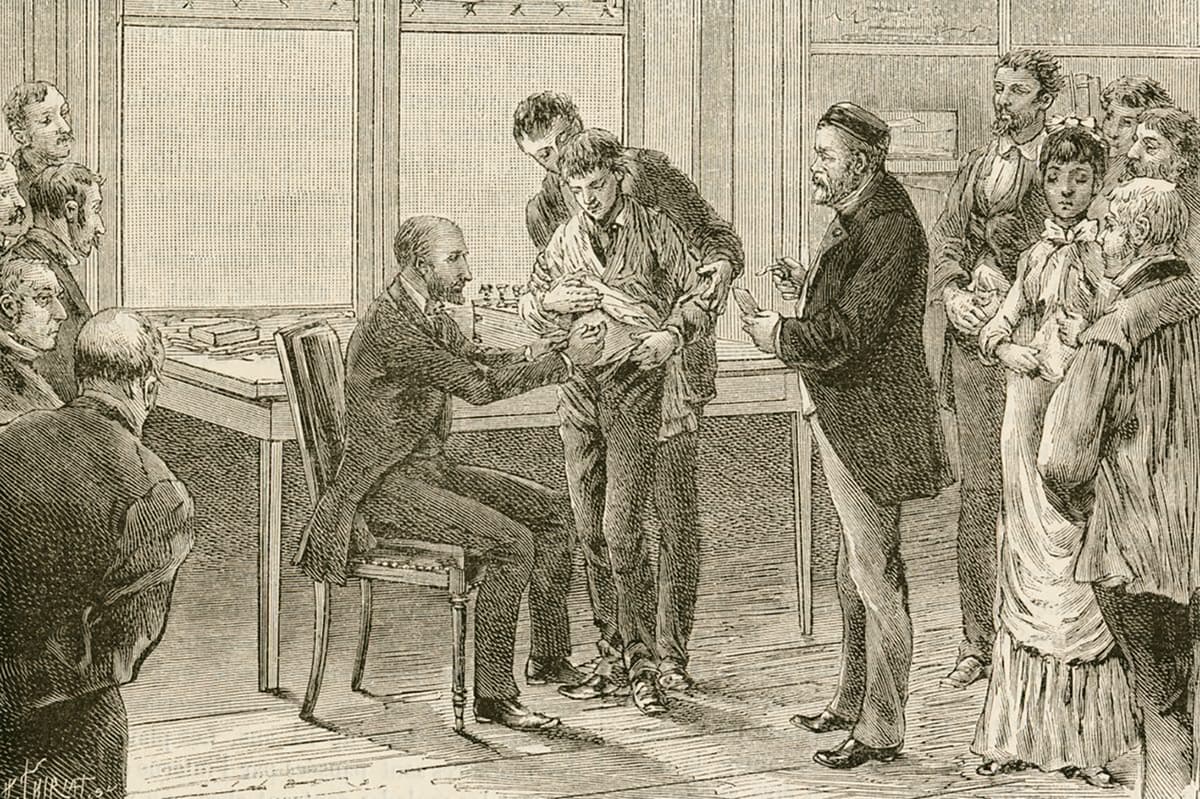
Of course, there were those who questioned the success of Pasteur's experience on the boy: as we remember, the diagnosis of a poor dog that bit a child was not confirmed in the laboratory. However, despite this, in Paris to the scientist reached bitten from all over Europe. By the end of 1886, Pasteur had admitted more than 2,000 patients. Unfortunately, not all vaccinated people survived. The story, for example, preserved information about ten-year-old Louise Pelletier, who died of rabies after a second injection. But it is possible that the cause of the tragedy was lost time: the girl began to be vaccinated after she developed symptoms of the disease. And as further events showed: the faster the vaccination is made after a bite, the more effective it is. And yet, despite the unfortunate exceptions, most patients remained alive and well.
Initially, Pasteur did not expect a large influx of patients. He sincerely hoped that a single laboratory in Paris would be enough to vaccinate animals from all over Europe. The scientist calculated that since the incubation period of rabies is usually 30-90 days, patients will have time to get to it by rail. But very soon it became clear that it is impossible to do without opening branches of the Pasteur station in other countries, because only in the first year 130 Russian citizens came to Paris for vaccination, not counting immigrants from other kingdoms and empires. The first branch of the vaccination laboratory was Odessa, where Nikolai Gamalei, who studied with Pasteur, worked, followed by Moscow. In 1887, Pasteur stations appeared in Vienna, Turin and Naples. A year later, thanks to private donations, an institute was opened in Paris, headed by Louis Pasteur (Institute of Pasteur). Mortality from rabies began to decline rapidly. The study of the disease allowed modern medicine to make a final conclusion: rabies is a viral zoonotosis, to which all types of warm-blooded animals are susceptible, primarily carnivores (families of dog, cat, maroon, raccoon and others), rodents, bats, says the head of the department of especially dangerous infections of the epidemiology department of the Republican Center for Hygiene, Epidemiology and Public Health Anastasia Leshkevich:
- From patients with rabies wild animals can be infected domestic, most often in the absence of vaccinations against rabies and violation of conditions of detention (self-running and others). Farm animals (cattle, horses and other herbivores) may also be at risk of rabies infection in the absence of conditions in places of their keeping and breeding that prevent access to the territory of wild and neglected animals (absence or violation of the integrity of the fence, grazing in an unfenced area near forests, etc.).
In Belarus, cases of rabies are registered annually among all the above categories of animals. The maximum share in the overall structure of morbidity falls on wild animals, the dominant species is the fox. The highest number of cases of rabies among pets has been reported among dogs and cats with hosts. Among farm animals, cattle are most often affected by rabies.
- In April of this year, after a 13-year period of epidemiological well-being for rabies, a case of the disease was confirmed in a resident of the city of Gorki, Mogilev region, which, after scratching the skin of the hands of a neglected cat, did not seek medical help and did not receive a course of anti-rabies vaccinations against rabies. The disease, unfortunately, ended in death. I will add that annually about 20-24,000 people apply to health organizations for medical care for contact with animals, including patients with rabies, about 30% of those who apply are children under 18 years old. Therefore, it is useful to remind: every pet owner must comply with certain rules of its maintenance, as well as annually come with him to a veterinary institution for immunization against rabies. Control protocol – Anastasia Leonidovna, how much time passes from the moment of infection with rabies to the appearance of clinical symptoms? What are the signs that a person is already sick?
- The incubation period of the disease is from 10 days to 1 year. It develops most rapidly when bitten in the face, neck, head.
The first signs of rabies can be itching and painful sensations at the site of damage to the animal, as well as along the nerve endings from the site of injury. The patient may experience general malaise, he has increased sweating, subfebrile body temperature (37.1-38.0 ° C), dry mouth, decreased appetite, a feeling of tightness in the chest. There is growing causeless anxiety, anxiety, insomnia.
The most famous symptom of rabies is hydrophobia, when when you try to drink water or even when you see and think about water, a characteristic convulsive attack develops. There is also abundant salivation.
In addition, sensitivity to stimuli (sound, tactile, light) increases with a gradual increase in their severity, excitation occurs. Neurological symptoms progress with the development in some cases of paralysis and paresis.
Death from rabies occurs from paralysis of the respiratory and vascular centers on the 6-8th day of illness.
- If there are symptoms of the disease, nothing can be done?
- Rabies can only be prevented, there is no cure for an already developed disease. To date, preventive vaccinations using rabies vaccine and, if necessary, rabies serum / rabies immunoglobulin are recognized as the only effective prevention. And the earlier after contact with an animal, immunization against rabies is started, the faster the development of immunity will occur and a more likely successful outcome.
It is very important to take (if possible) measures with respect to the animal at the same time as a doctor: it is necessary to isolate it and call a veterinary service specialist for consultation and monitoring. For externally healthy pets (dogs or cats) veterinary surveillance is established, the period of which is 10 days from the date of contact. But remember, animal surveillance is no substitute for rabies vaccination!
After the expiration of the veterinary observation period, if the animal remains healthy, on the basis of a documented veterinary report, only the doctor who prescribed the course of vaccinations can cancel it.
In no case should one refuse the prescribed treatment and arbitrarily interrupt it, this can lead to tragic consequences.
In Belarus, vaccination of pets is a mandatory requirement of legislation, which is aimed at ensuring national biosecurity and protecting the health of pets, their owners and society.
Before vaccination, a veterinarian conducts a clinical examination of the animal. Only a clinically healthy pet can be vaccinated.
If the pet has never been vaccinated, you need to start with a visit to the veterinarian - he will examine the animal and make an individual vaccination schedule. Usually puppies and kittens begin to be vaccinated from 2-3 months. The first vaccination is often carried out twice at intervals of 2-4 weeks, then - revaccination after a year.
10-14 days before vaccination, deworming should be carried out according to the instructions for the drug.
THEME
At the maximum concentration, the rabies virus is contained in the saliva of a rabies patient. However, in the environment, the pathogen is unstable and outside the body quickly loses its virulence (ability to infect), explains Anastasia Leshkevich:
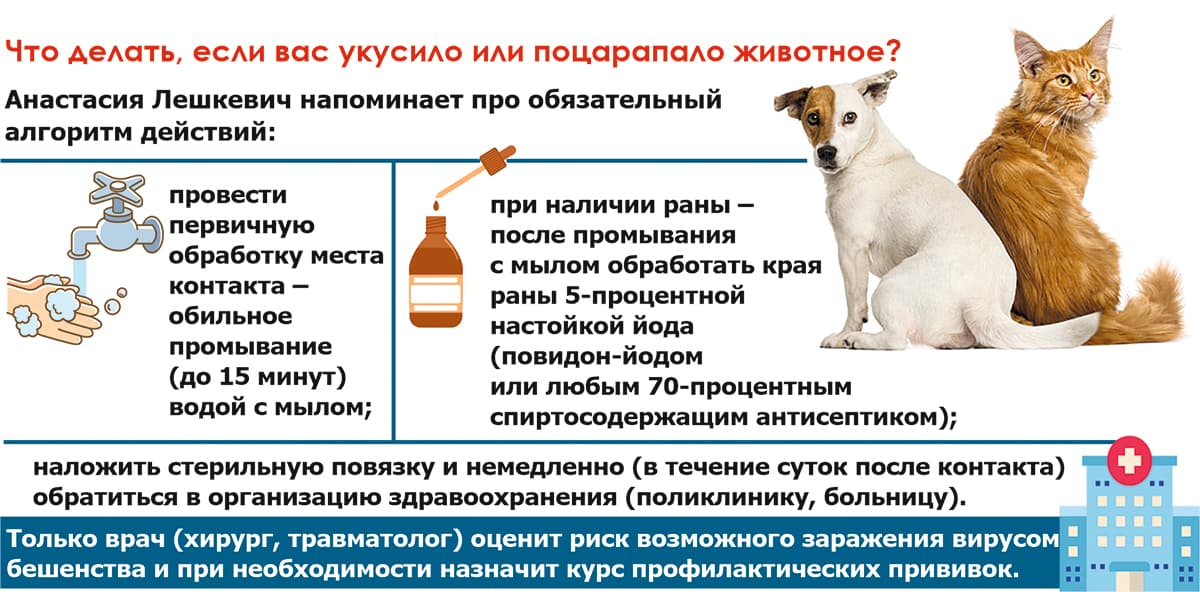
- The danger is direct contact with the animal, namely: bite, scratch or salivation of the skin / mucous membranes when the saliva of the animal comes into contact with the wound. Indication for therapeutic and prophylactic immunization against rabies, according to the instructions for use with rabies vaccine and rabies immunoglobulin, is contact with an animal.
The Ministry of Health of Belarus takes the necessary measures to provide healthcare organizations with antirabies immunobiological drugs in the amount required for therapeutic and preventive immunization against rabies to all those in need. Persons who by the nature of their activities have a risk of infection with rabies (veterinary workers, citizens performing work on catching neglected animals, foresters, hunters and others), preventive immunization against rabies is carried out.

Many owners of gloomy tails sincerely wonder: why vaccinate a pet that does not leave the apartment or private house? However, there is always a risk that the fluffy will remember that cats, in fact, walk by themselves, and drapanet to freedom with a clear conscience - from the balcony or outside the gates of the suburban area. Then, of course, he will return home (or be placed by the owners forcibly), but is it worth reminding about how high the risk of catching a deadly virus in an unvaccinated gulena is? It is enough to fight in a fight with vagrant Vasily or prick the needles of an infected hedgehog..
lvk@sb.by


