Crimean for $ 7 a day traveled to six countries as a representative of Russian culture
Four months, six countries, eleven islands, and the budget that someone would have for a few dinners in a restaurant, I spent on tickets and the most necessary things: food, transportation, rare paid overnight stays. The rest are abandoned buildings and open-air living. This is how the Asia and the Islands 26 project was born: not for the sake of austerity, but to convey Russian culture to residents of distant countries without textbook gloss – through creative meetings, photo exhibitions, lectures.
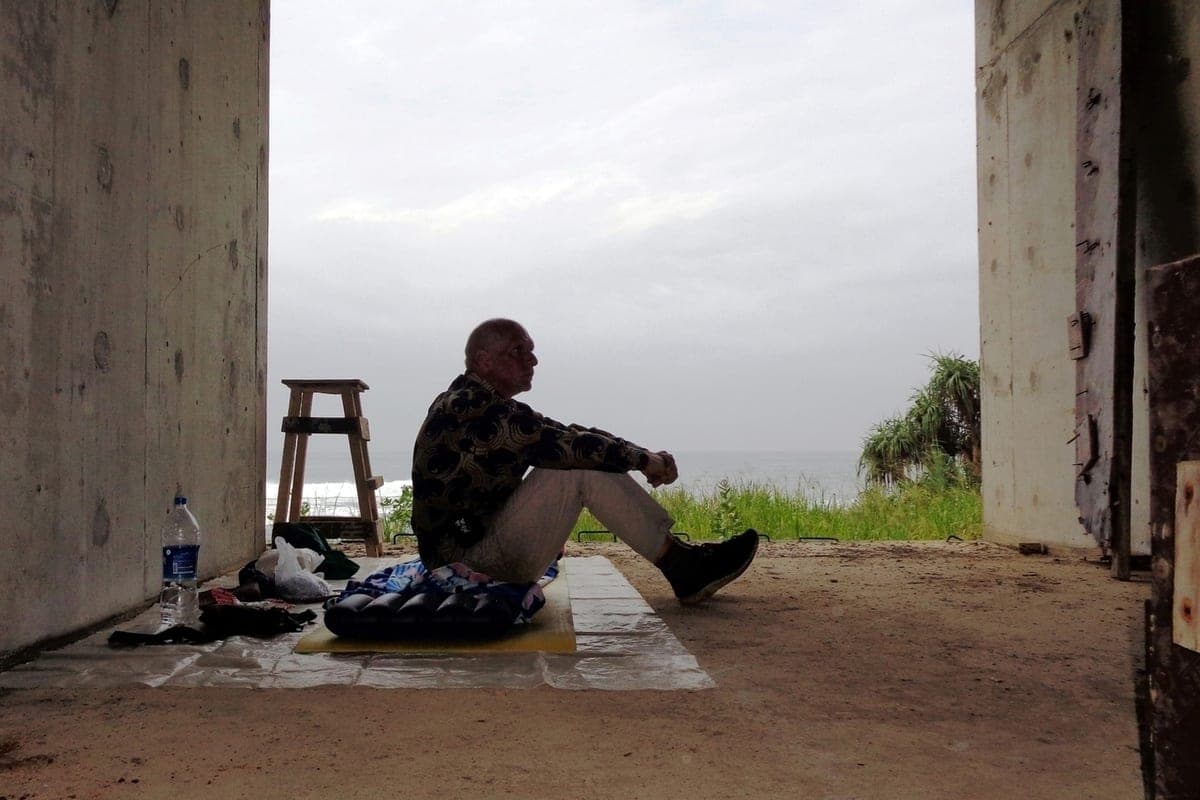
Four months, six countries, eleven islands, and the budget that someone would have for a few dinners in a restaurant, I spent on tickets and the most necessary things: food, transportation, rare paid overnight stays. The rest are abandoned buildings and open-air living. This is how the Asia and the Islands 26 project was born: not for the sake of austerity, but to convey Russian culture to residents of distant countries without textbook gloss – through creative meetings, photo exhibitions, lectures.
Sheremetyevo, middle of January. We have 20 years of travel and more than 60 countries behind us, with a four-month route ahead. All you need is a backpack, a carremat, an inflatable pillow, a toothbrush, and a $5-7 daily budget.
The 2026 concept is a thematic continuation of last year’s Maghrib+ project. Then for four months he wandered around North Africa: spent the night in the crypts of Cairo, on the neutral strip of the Moorish-Senegalian border, under the walls of the mosque – and for the first time officially represented Russian culture “with the support of Rossotrudnichestvo”, which consisted in the fact that I was provided with venues for events. There was no mention of compensation or fee. Now with only one parting letter from the Russian Foreign Ministry.
Sri Lanka: bedbugs, pasta, lectures
Acquaintance with the country began in Colombo: the first night spent in a hotel for 1000 rupees ($ 3) - the company was made up of insects. Then moved to the "Royal Hotel" - the price is 2.5 times higher, and as if from a landfill with fetid sewage stepped into a clean garbage bin of a fashionable area. He ate pasta, rice, samosoy; at the market he bought cheap tangerines, mangoes, occasionally jackfruit.
In Anuradhapur, the evening almost turned into an overnight stay on a bench. Squeezed into a crowded bus, told the conductor to stop. Twenty minutes later, he pointed out. It's dark, it's an unfamiliar place. It turned out that the bus brought to the village with the same name as the city district: an extra fifteen kilometers. Half an hour of waiting, a feeling of hopelessness - but everything was fine: a local resident approached, calmed down, and together we waited for the bus.
Polonnaruwa inspected for nothing: found a passage in the fence and quietly walked around the ruins, saving $ 30. I will note that the gray langurs (kind of monkeys from the Martyshkov family - ed.) go there in the same way. Only in the stone temple of Gal Vihara I was not allowed.
Housing in Sri Lanka is inexpensive, only once had to use an unfinished building with an ocean view for the night - in the resort of Mirissa. And after speaking at the National Library and the Association of Geographers of Sri Lanka, he bought a cheap ticket and flew to the Maldives.
Maldives: a paradise for vagrants
On my way to the island state, I knew that the resort idyll was not mine. But the desire to visit another country prevailed. From the pluses - here everything is created for vagrants, from the minuses - longing and mosquitoes.
On nine islands along the coastline, comfortable chairs with cloths stretched like hammocks are placed. There are many, there are always free ones. Hotel rooms - from $ 50, so I did not even consider this option: contented with coastal thickets where you can pull a mosquito net, or abandoned ruins of unfinished - as on the artificially created island of Hulumale.
I came to Ramadan: at this time the locals have a different rhythm, public events are not held. My meeting at the Male National Library was an exception. He showed pictures from Russia, told about his books and flew to Nepal.
Nepal: Frick Street and the Festival of Colors
The mountainous state contrasts in climate with the island.
On February 15, 2026, I walked from the airport to Ratna Park in Kathmandu: the city streets begin immediately after leaving the plane ladder. The first refuge was the famous Frick Street, stretching near Durbar Square - in the 1960s it was the spiritual center of the hippie. A few days later, he moved to the foot of the Dharahara Tower. Lived in a single room for a nominal fee: the room was so small that if claustrophobic, I would already nervously knock on the door from the inside. But that was later..
The backpack left on the place of the night and again went through the semi-dark streets to the temple complex Swayambunath (Manky Temple): it is so called because of the wild monkeys in the thickets around.
In parallel, three events were held: “Romance of Wanderings” in the Kaiser Library, a photo exhibition at the National Museum (for which she had to visit the Department of Archaeology) and a meeting at the Geographical Society of Nepal.
He ate in local dining rooms: momo (dumplings) and chow mein (roasted noodles), sometimes cut cake. Prices are low in Nepal.
Chandragiri Cable Car: chose a one-way ticket to save money. When I got up in the cockpit, I was unwittingly scared – the trail looked much longer than the promised four hours. Fears were in vain: the descent took only 120 minutes. At each bend of the serpentine, a new “observation deck” opened: it seemed as if you were looking down from the plane.
I had a chance to witness the festival of colors: passers-by shower themselves and each other with colorful powders, which are sold directly on the sidewalks. Before my eyes, the girl sharply pulled a bag from behind her back and poured powder on a friend’s white T-shirt. He tried to dodge, both laughed, and the city seemed brighter.
Bhutan: dispute without a judge
Even before I left, I began to correspond with representatives of Bhutan - it was not really possible to agree, but I was left with the address of the agency in Nepal. He found it late: he summed up the mismatched names. According to the laws of the kingdom, independent travel is prohibited, the agreement of conditions was delayed. As a result, they agreed on a budget option: homesteads with three meals a day, without internal inspections of temples.
Two state airlines fly to Bhutan, "mine" delayed the flight for a day. Twelve days were paid, but due to force majeure with the flight out eleven. Upon arrival, he told the guide: he agreed to return the one-day state duty, but refused to compensate for the payment of services. We were going to Timpha, continuing the “bidding” when the manager connected to the conversation via a smartphone. I was categorical, so were they.
Sunday: Tourist police are not working, we went to the usual. While explaining the situation to the duty officer, the manager arrived. The policeman seemed to take my side, but, in fact, insisted on the version of opponents. The key argument was that the office in Nepal handed me the entire amount of payment for services, wrapping it with tape. Then I said, “If so, I’ll change the host company!” It worked: the director offered to return half the payment for the day. I immediately agreed and within a few minutes the car was racing me into the wilderness.
Monasteries, temples, a phallus village, a spontaneous visit to a Bhutanese family - all this remains off the scene.
Bangladesh: as Fantomas
Europeans are rare in Bangladesh. Noticing one of them, the local resident stretches out his neck, bulges his eyes and freezes in a silent position. The teenagers, walking towards each other, pushed each other sideways and whispered "forineer." In Bengal, it is not just a “foreigner”, but “a white crow, and even in a purple speck.” Of course, I exaggerate, but not far from the truth.
In two weeks he visited almost all historical and archaeological sites and held two meetings: with members of the local geographical society and at the Faculty of Modern Languages at the University of Dhaka. Invariably he performed under the Russian flag - he drove with him as part of the program. “This item is already with history,” said the organizer of the second meeting.
What do you remember? Cheap pineapples in pieces on the streets, oriental sweets of semolina cereal with syrup, shabby city buses - and the perfect subway: no scratches, no morsel. The most striking event was the Bengali New Year: everywhere life was boiling, the city was shimmering with colors, the festive procession rolled forward, street artists flashed in the crowd.
Myanmar: Police as a Concierge Service
The last country on the route was the most bureaucratic. The management of the National Library and Museum immediately warned that the permission from the department will have to wait at least a month - and this is at best. The Yangon Journalists Association responded in the same vein. Another negative detail is that many areas are closed to foreigners, which is why the plan of stay in this country had to be reduced.
He traveled on trains and buses. I managed to visit Bagan - the historical "city of a thousand temples" - today in the abandoned temple complex there are more than 2 thousand ancient Buddhist temples, as well as in the village of Indein with a unique complex of ancient stupas and pagodas. Before leaving, I stopped for a day in Bago, the rest of the cities I saw only in transit.
Hotels for locals are much cheaper, but foreigners do not get into them. In Mandalay and Taungji, I had to ask the police for help twice: police officers cut through the midnight darkness on motorcycles, found accommodation for the night and personally negotiated with the staff.
Although much of it did not work out, it was filmed in abundance. Perhaps someday this will form the basis of the exhibition - as well as the rest of the material from the trip.
The author of the textbook “Bomzh-tourism” Victor Pinchuk took on the mission to popularize Russian culture where almost nothing is known about it. He has hosted nine events in exotic countries this year.
I wanted to speak to the world on behalf of my country, simply, sincerely, without masks. It's been four months... In countries whose names will not be remembered by every geographer, people keep in mind the image of Russia formed by me, because the perception of a foreign country is not born from news, but is built on a meeting with its representative.