
"Can spiders dream?" Scientists have made an unexpected discovery
Scientists at the University of Bonn in Germany have found that spiders are able to immerse themselves in different phases of sleep, one of which is surprisingly similar to human sleep
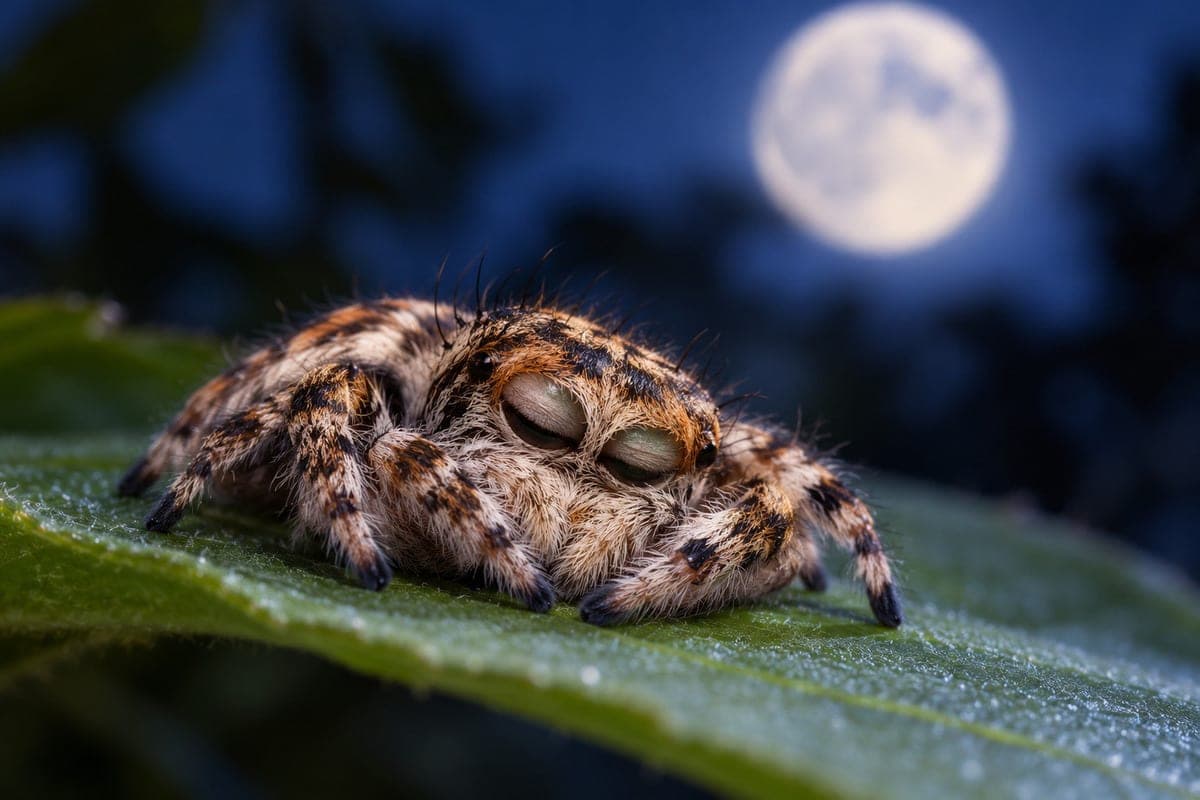
Scientists at the University of Bonn in Germany found that spiders are able to dive into different phases of sleep, one of which surprisingly resembles a human. During rest, these creatures have rapid eye movements and involuntary muscle twitches. Similar signs are characteristic of the REM sleep phase in people, when bright dreams most often occur. That's according to Science Daily.
The object of the study was the Australian jumping spiders Portia fimbriata, known for their unusual hunting abilities. These small predators are able to deceive other spiders, imitating the movement of insects entangled in the web. This complex behavior interested experts who decided to find out how sleep is associated with the work of their nervous system.
For several days, scientists observed the spiders using infrared cameras, recording their activity day and night. Experiments have shown that animals go through two different stages of sleep. To make sure it was sleep and not normal immobility, the researchers tested the spiders' response to sounds and studied the effects of forced awakening.
The discovery allowed a new look at the features of sleep in invertebrates. Previously, such processes were studied mainly in mammals and birds. Experts now suggest that some sleep mechanisms may be common even to animals with completely different nervous system structures. However, it has not yet been possible to establish whether spiders see real dreams.
In the future, scientists intend to find out whether sleep affects the memory and ability of spiders to learn. In addition, the researchers plan to study the impact of artificial night lighting and climate change on their recreation. The findings may help to better understand the origin of sleep and its role in the lives of various creatures, including humans.
To whom the historian is dangerous: real facts against opportunistic myth-making.
Bricks and moss: Chinese youth have found a replacement for cats and dogs.
Reliable news is always at hand - in the channel MK in "MAX".


