
Fathers-mentors: who in St. Petersburg helps men become friends for their children
Raising a child requires not only time and effort, but also emotional involvement, patience and willingness to learn new things. At the same time, not every man clearly understands how to build relationships with children, react to the manifestation of adolescent maximalism or support a child after emotional turmoil. In St. Petersburg, there are social projects that help fathers understand these and other issues.
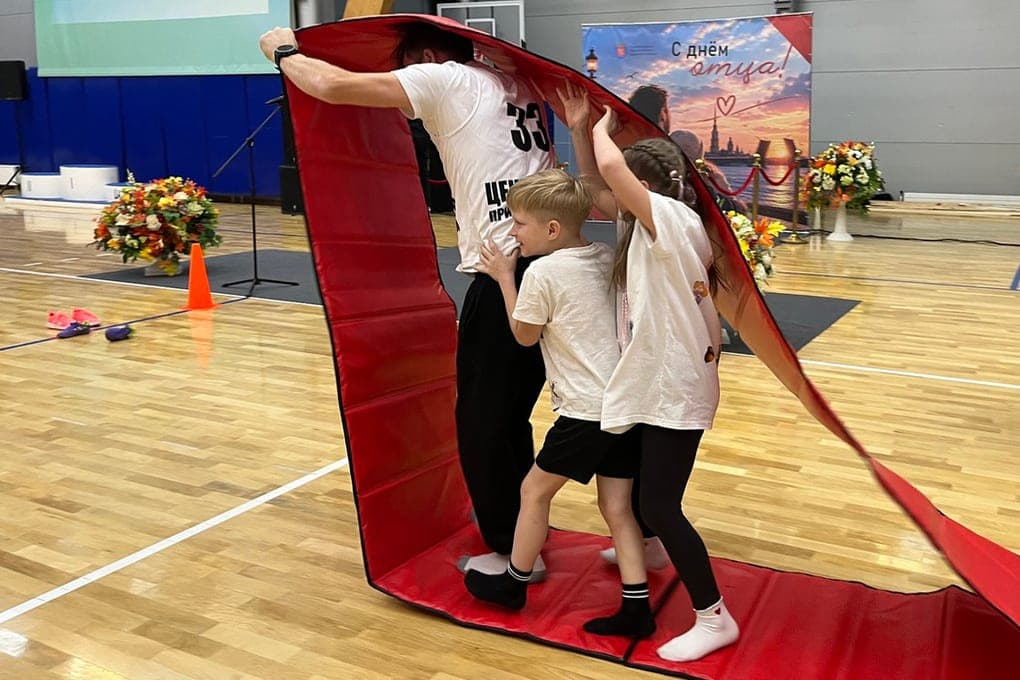
The idea of the role of the father for a long time was built around the material support of the family: the head of the family must earn money, support loved ones, solve household issues and ensure security. Participation in the upbringing of children was often limited to individual activities: go fishing with his son, help fix something or spend a weekend together. Today, however, paternity increasingly assumes a much more active role.
According to Samvel Avanesov, head of the department of psychological and pedagogical assistance, including the emergency psychological assistance service by phone, the Center for Social Assistance to Family and Children of the Kalinin district of St. Petersburg, in the past 5-7 years, fathers are increasingly interested in the process of building a full-fledged communication with the child. They care not only about education, but also mutual understanding: how to hear a son or daughter and become a person whom a child can trust.
Habitual perceptions of parental responsibilities are gradually changing. Men have to rethink the attitudes they grew up with and learn to interact with children in new ways.
The Dad-School in Kalinin District is helping to adapt to this role. According to Samvel Avanesov, the project is addressed to men who want to be not just a second parent in the family, but a full-fledged participant in the life of a child.
Fathers with children of any age can come to Dad School. Today, the project works in a hybrid format. It has an online portal with mini-lectures and distance classes to return to at a convenient time. Group meetings are also organized if necessary. This approach takes into account the employment of men, who often find it difficult to allocate several hours to regular classes.
On average, one course includes 10-12 activities. If the work takes place within the framework of an individual program of social services, the classic version provides for 12 training sessions. A full cycle usually takes about three months. Face-to-face meeting lasts no more than one and a half hours, online lesson - 30-45 minutes.
According to Russians interviewed by VTsIOM specialists, the most accurate modern ideal father describes the following qualities:
• caring, respectful attitude to the mother of children;
• active participation in the lives of children, joint search for solutions to problems;
• be a role model;
• kindness;
• reliability.
Another project aimed at helping dads is being implemented in the Moscow district of St. Petersburg – the Social Protection Service for Single Fathers. It was established in 2009 on the basis of the Department for the Prevention of Childhood Negligence No. 4 of the District Center for Social Assistance to Family and Children. According to the acting head of the department Natalia Marutova, this specialized service for many years remains a unique platform in the North-West, where single fathers from all over the city gather to discuss their issues and get qualified support from specialists of the Center for Social Assistance to Family and Children of the Moscow District.
Its main goal is to help the family get out of a difficult life situation, preserve the relationship between parents and children, create conditions for the safe upbringing of the child.
It is not only widowers who can apply for assistance in the Service. There is no legal status of a single father, so specialists work with all men who actually raise children on their own. These may be St. Petersburgers whose former spouses are deprived of parental rights, have withdrawn from upbringing or for other reasons do not participate in the life of the child.
Assistance is provided within the framework of the state social service system. When a man asks for support, specialists assess his life situation and determine what support measures the family needs. After that, an individual program for the provision of social services (IPPSS) is compiled, in which the necessary assistance and its volume are prescribed. All social services in the center are provided free of charge.
A man with children can also be sent to the specialists of the Service by the commission on juvenile affairs and protection of their rights. This happens if the family is recognized as being in a socially dangerous position.
Employees of the Service get acquainted with the father, collect information about the family, conduct social diagnostics and together with him determine the further action plan. Work is always based on the wishes of the parent, and its basic principles are voluntariness, confidentiality and respect for the dignity of the individual.
The family receives psychological and pedagogical support, it is invited to events aimed at the formation of positive interests (for the purpose of socialization, socio-cultural adaptation, aesthetic education and the development of creative abilities), leisure is organized for it. Fathers also receive legal assistance aimed at protecting the rights and interests of family members in various legal situations, such as family disputes and conflicts, protection of children's rights, housing and social issues, labor disputes and others. Fathers are provided with legal advice (the rules of law and ways of exercising legal rights are explained), assistance is provided in the preparation of applications, complaints, petitions, claims, assistance in the preparation of documents and the restoration of lost documents, if necessary, representation of interests when applying to state bodies is carried out.
If difficulties arise in a child, other employees of the institution are connected to work - for example, speech therapists and defectologists, social teachers, etc.
Over the past five years, 119 families have benefited from the Service. In 2026, 17. According to Natalia Marutova, among fathers applying to the department, the most numerous age group (56%) are men from 36 to 45 years.
The demands that men make are changing along with public perceptions of fatherhood. Svetlana Gellis, a psychologist at OPBN No. 4, notes that over the past 5-6 years, the number of appeals related to divorces and the ability to maintain full communication with children has significantly increased. If earlier men were more interested in household issues and general principles of upbringing, now many come for help in protecting their parental rights.
After the separation of the spouses, disputes arise about who the child will live with, how often the father will be able to see him and how to build communication if it is not possible to negotiate with the ex-wife. Some trials go on for years, and protracted conflicts affect children as well.
In such circumstances, psychological support is needed not only for an adult, but also for a child. Sometimes the father has to rebuild the relationship with the son or daughter, especially if the communication is interrupted for a long time.
Specialists approach such cases individually. The psychologist may first meet with the father, then invite him with the child and only after that to conduct separate work with the minor. This procedure allows you to assess the relationship within the family, see the features of interaction between households and understand what kind of help is really needed.
A separate category of appeals relates to the education of girls. When the daughter grows up, fathers have questions that they previously did not have to solve on their own: how to talk to the child about the peculiarities of female physiology, explain changes in the body, organize the purchase of personal hygiene products and help the girl feel comfortable.
No less difficulties arise when communicating with children who have become teenagers. Sharp answers, rudeness, reluctance to share experiences and conflicts due to the rules adopted at home often put parents at a standstill. In such situations, the psychologist helps to understand the causes of the child’s behavior and choose the appropriate way of interaction.
According to VTSIOM, today the practical embodiment of the partner model of parenting is the so-called involved fatherhood. It implies the active participation of the father in the life of the child on an equal basis with the mother. But the model of “Sunday Dad” and simply the breadwinner of the family is no longer relevant.
Today, a good father in the understanding of Russians is one who invests his time in a child and at the same time acts as a tutor, an emotionally accessible parent and an authoritative mentor.
Almost 70% of respondents are convinced that today a man with a small child on the court is a familiar picture, not an exception that attracts attention.
According to Russians, paternal education is an integral factor in the formation of such important qualities as courage, discipline, honesty and justice in a child.
Since 2010 in the Moscow district there is a Club of popes, whose members are single fathers. Popes living in other areas of St. Petersburg can also enter it.
Meetings take place on the last Wednesday of the month and begin at 18:00. This is the most convenient time for working heads of families. The group usually gathers from 4 to 8 people. The meeting is conditionally divided into two parts. First, Svetlana Gellis conducts psychological training (it lasts about an hour), and then dads are invited to tea. In an informal environment, men can continue the conversation, share personal experiences and discuss issues that are not always possible to raise in class.
There is no consistent program for the club. Each meeting is dedicated to a separate topic, so you can join any month without fear of missing out on previous classes.
The topics are chosen by the psychologist, focusing on the requests of the fathers. So, the men offered to discuss relationships with adolescents, difficulties in upbringing or ways to resolve conflicts. At the meeting, they do not give lectures, but talk. Popes can ask questions, share experiences and offer their own solutions.
According to Svetlana Gellis, men are often at first wary of collective pursuits. Some people feel that they will have to publicly talk about personal problems or make excuses to strangers. Therefore, before the invitation to the club, the psychologist tries to establish individual contact with each father.
The first more or less full-fledged group I recruited for six months. It took so much time to systematically work with each father that he felt safe being in the club, recalls Svetlana.
No one is forced to speak in meetings. A person can just watch what is happening. At the same time, the club does not criticize or ridicule other people's stories. As a result, dads are beginning to feel free.
According to the psychologist, one of the main features of the club is that men cease to perceive their situation as unique and hopeless. They see other fathers facing similar challenges, but continue to raise children, work, travel and make plans.
For some participants, the club becomes not just a meeting place, but a space where new social ties and like-minded people appear. Sometimes men bring friends there, who also raise children independently and need support.
Working with fathers in St. Petersburg is not limited to individual psychologists and club meetings. Specialists of the Service organize seminars, round tables and conferences on paternity issues. They involve social teachers, representatives of educational institutions, the scientific community and authorities. Fathers talk about how social support has changed their lives. Periodically, activities for children are organized in the area. For example, on Father’s Day, the men and their sons and daughters were invited on an excursion to the fire station.
According to the observations of Svetlana Gellis, the result of psychological work is primarily manifested in a positive change in the emotional state of a man. When the level of tension decreases, a person begins to better understand their own experiences. This makes it easier for him to build a relationship with the child.
The expert emphasizes that consultations and trainings do not give the same result for all. Much depends on the life situation in which a man finds himself, his willingness to change, the characteristics of each particular family. But even a gradual reduction in the level of conflict and the establishment of trusting communication between parents and children can be an important step towards improving the microclimate in the family.
You can apply for support on family relations and child rearing in the district centers of social assistance to family and children, as well as in the centers of the organization of social services (SES). Their offices work in all areas of the city.
At first glance, these institutions are similar – both help families in difficult situations, but they have fundamentally different roles in the system. To put it very exaggeratedly, the DSO acts as a coordinator, and the social assistance centers – a service provider.
After contacting the CDC, the family will undergo a need assessment, and, if necessary, an individual program for the provision of social services will be drawn up for it. In the Moscow district, after registration of the IPPSU, you can apply for the help of specialists in a specialized social protection service for single fathers.
And to get to the working in the Kalininsky district “Papa-School”, it is necessary, as Samvel Avanesov said, to have registration in St. Petersburg, apply to the district TSO, issue an individual program and conclude a contract with the institution.
As a first step, a man can come to one of the sites of the center, where they provide urgent psychological assistance, and tell a specialist about his situation. If necessary, the psychologist will orient in further actions.
The most important thing that unites these initiatives (Daddy School and Single Father Service) is the understanding that fatherhood can and should be taught. Asking for help, discussing difficulties, and finding new ways to communicate with your child does not mean being weak. On the contrary, it is an opportunity to change the situation in time and make family relations more trusting and stronger.
The project was implemented with the funds of a grant from St. Petersburg
Why do teenagers begin to hide from their fathers even what no one is going to scold them for, and are more willing to listen to strangers' adults? About how the father to maintain the trust of a teenager and not to turn education into a struggle for authority, "MK in St. Petersburg" told Associate Professor of the Faculty of Social Technologies of RANEPA St. Petersburg, Candidate of Sociological Sciences Julia Bayer.


