
The Lenin Monument at the Finnish Railway Station is 100 years old
Exactly 100 years ago, on November 7, 1926, the famous monument to Vladimir Lenin was opened at the Finnish railway station in Leningrad. For a century, the monument managed to survive the blockade, change residence and even suffer at the hands of vandals. The rare facts of the history of the sculpture were recalled in the press service of KGIOP.
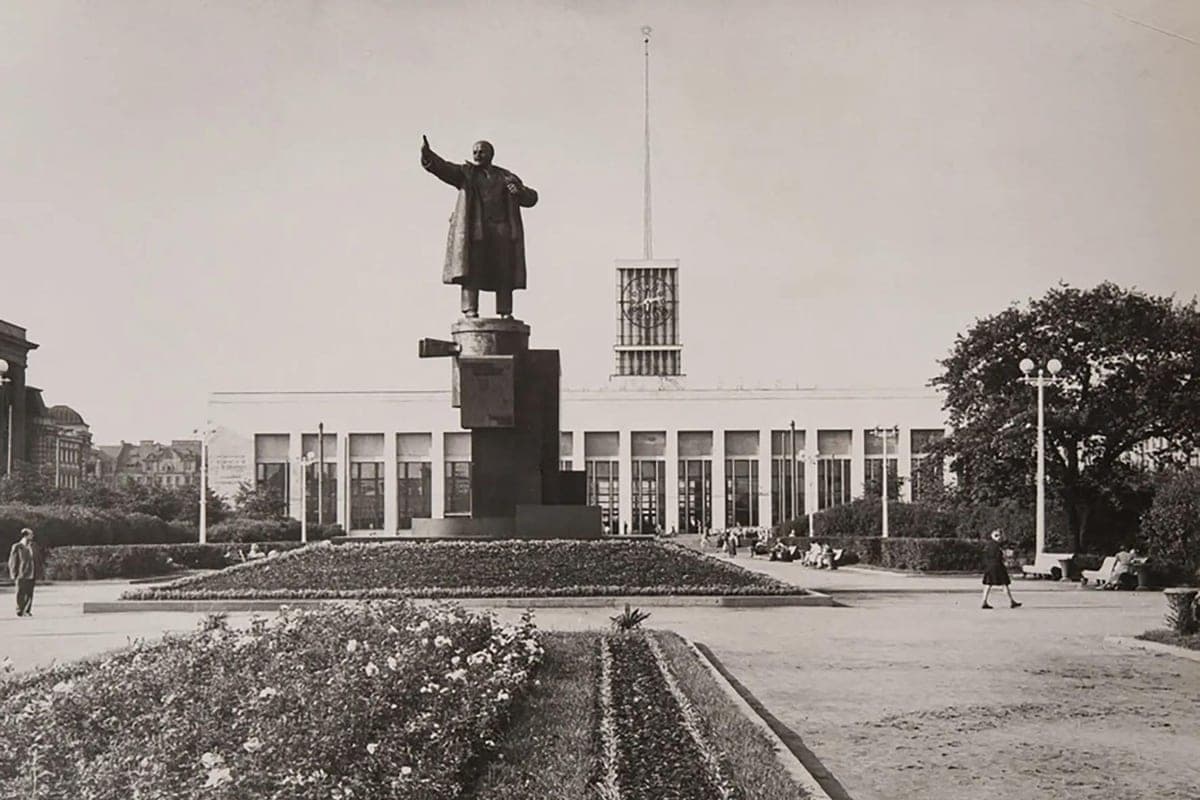
Exactly 100 years ago, on November 7, 1926, the famous monument to Vladimir Lenin was opened at the Finnish railway station in Leningrad. For a century, the monument managed to survive the blockade, change residence and even suffer at the hands of vandals. The rare facts of the history of the sculpture were recalled in the press service of KGIOP.
Initially, the station, built in 1870, looked at the facade towards the Finnish lane - there was the first small square. According to KGIOP, in 1924, a competition was announced for a monument to the leader, speaking from an armored car immediately after arriving in Russia. Participants sent more than 60 projects, but the commission eventually changed its mind to take these works and ordered architects Vladimir Shchuko and Vladimir Gelfreich, and they called the sculptor Sergei Evseev. It is curious that the model for the figure of Lenin was made by the architect Vladimir Shchuko - he was the same low height and strong physique. Note that Shchuko, together with Vladimir Gelfreich, designed ceremonial colonnades at Smolny.
When the stylized turret of the armored car did not have enough metal, remelted brass shell casings from shells were used. For a long time, this was considered an urban legend, but during the restoration of 2009-2010, chemical analysis confirmed that the alloy does have sleeve brass.
The monument was opened on a grand scale: the square was decorated with flags and garlands according to the sketches of Shchuko himself, and the veil from the sculpture was removed to the sounds of the “International” and an artillery salute.
During the Great Patriotic War, the monument was saved from bombing: it was sheathed with wooden formwork, sand was poured inside, and the base was covered with earth. After the war, a new large square was laid on the banks of the Neva River, and in October 1945 the monument was moved there, installed on a new pedestal in the center of the square.


