
Seen, washed with water: what secret keeps Rakov spring
For the younger generation, the Rakovsky spring becomes a living lesson in nature studies, and the believers return hope and health. In the heart of Belarus, ...
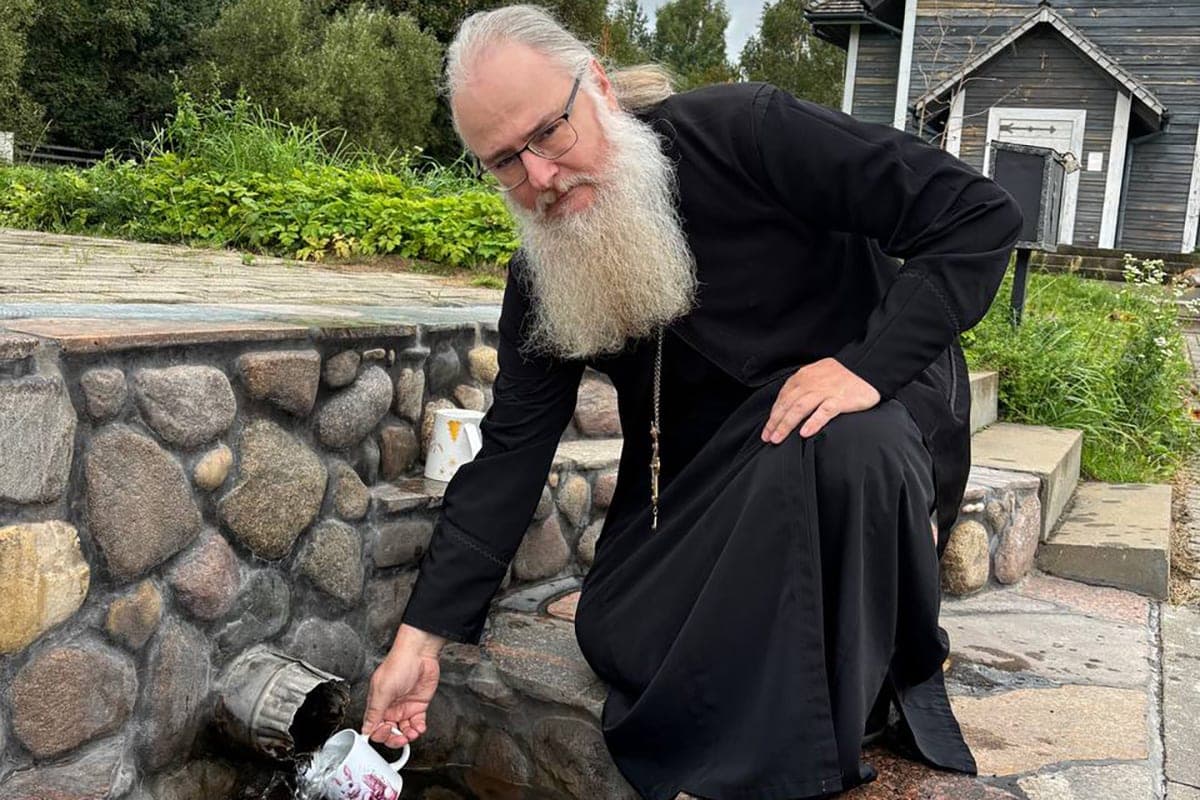
For the younger generation, the Rakovsky spring becomes a living lesson in nature studies, and the believers return hope and health
In the heart of Belarus, at the entrance to the ancient agro-town of Rakov, for more than five centuries, a key has been beating from the ground, to which popular rumor ascribes miraculous power. They come here for healing, here they look for peace of mind, and schoolchildren begin to get acquainted with the history of their native land from this holy source.
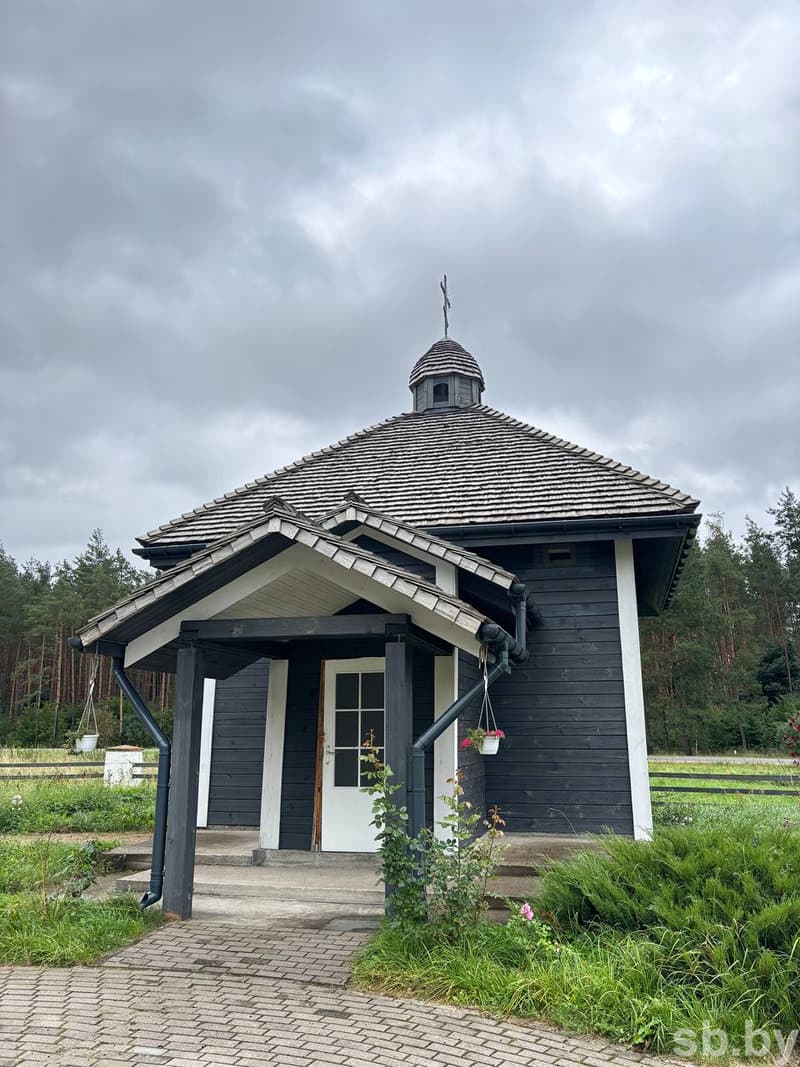
In 35 kilometers from the capital, at the very exit from the highway Minsk – Grodno, there is a hydrological monument of nature “Rakovsky”. Its history dates back to the fifteenth century and is inextricably linked to the legend of the miracle. Rumor preserves many variations of this tradition, but the rector of the Transfiguration Church in Rakov, Archpriest Sergius Lepin, reveals the depth of the story transmitted by word of mouth for six centuries:
- In Rakova there lived a man in whom all the sorrows that exist were concentrated. Everything in his life was difficult, and one day he was blind. According to one version, at the behest of the Mother of God, he went to the outskirts, found an icon there - and at the place of finding the shrine began to beat the source. According to another, in a fit of despair, not having the strength to live on, he left Rakov. He got lost, tired, hungry and began to pray to the Most Holy Mother of God, so that she would bring him out, forgive cowardice. I suddenly felt my feet in the water. He leaned, washed, drank, and saw. And next to the source was an icon.
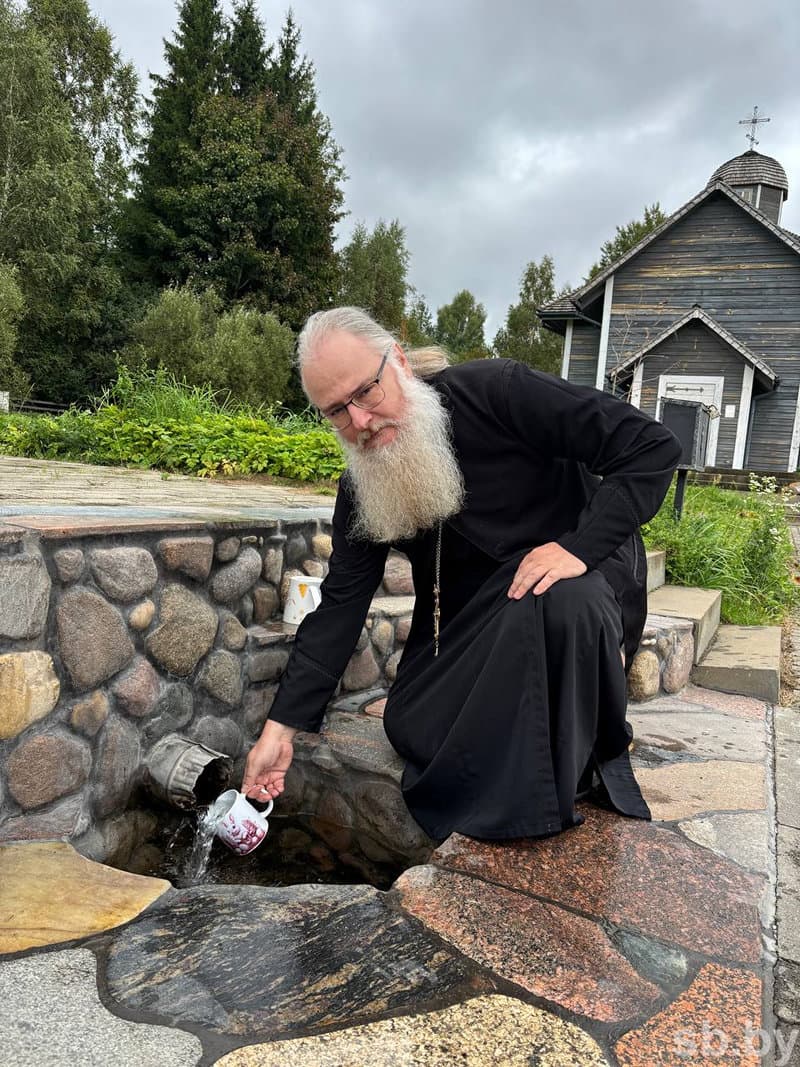
The news of the miracle spread instantly to the surrounding area. People reached for Cancer to venerate the icon, and soon a wooden chapel was built on the site of the phenomenon in honor of the Exaltation of the Cross of the Lord. It was this event, Father Sergius emphasizes, that turned Rakov into a center of pilgrimage.
Over time, the meaning of reverence for the shrine deepened. From direct prayers for the healing of the eyes, believers moved to the petition for spiritual insight.
- Gradually, people moved from the direct meaning of physical blindness to spiritual prayers. Because blindness can be mental. People sometimes, having a unit of vision, do not know how to live, where to go, what to do. From the image of bodily weakness, we moved to spiritual blindness in the broadest sense, explains Archpriest Sergius.
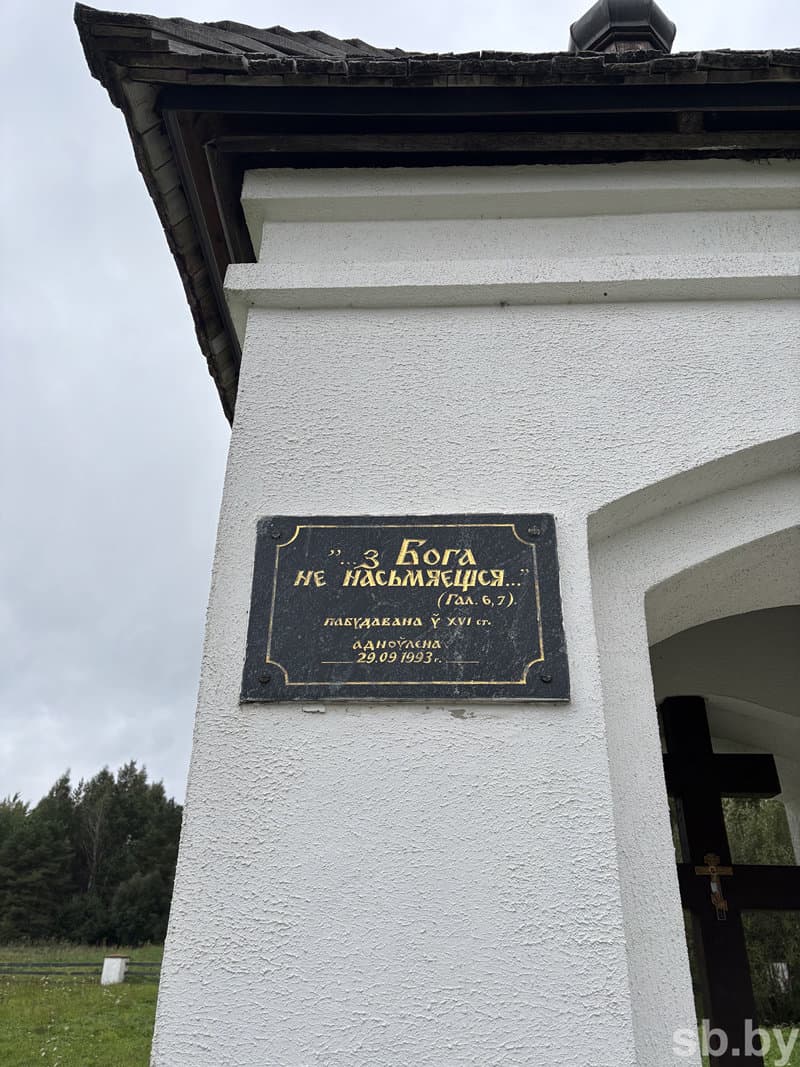
The history of the wooden chapel located on the territory of the spring is very dramatic. In 1821, a new church was erected on the site of the dilapidated building, but it did not resist the period of mass destruction of churches: in the 1960s the building was completely destroyed, only steps and fragments of the foundation remained from it. But the source continued to quench the thirst of the travelers.
Large-scale revival of the complex around the spring began in 1993: according to old photographs, a stone chapel was erected above it.
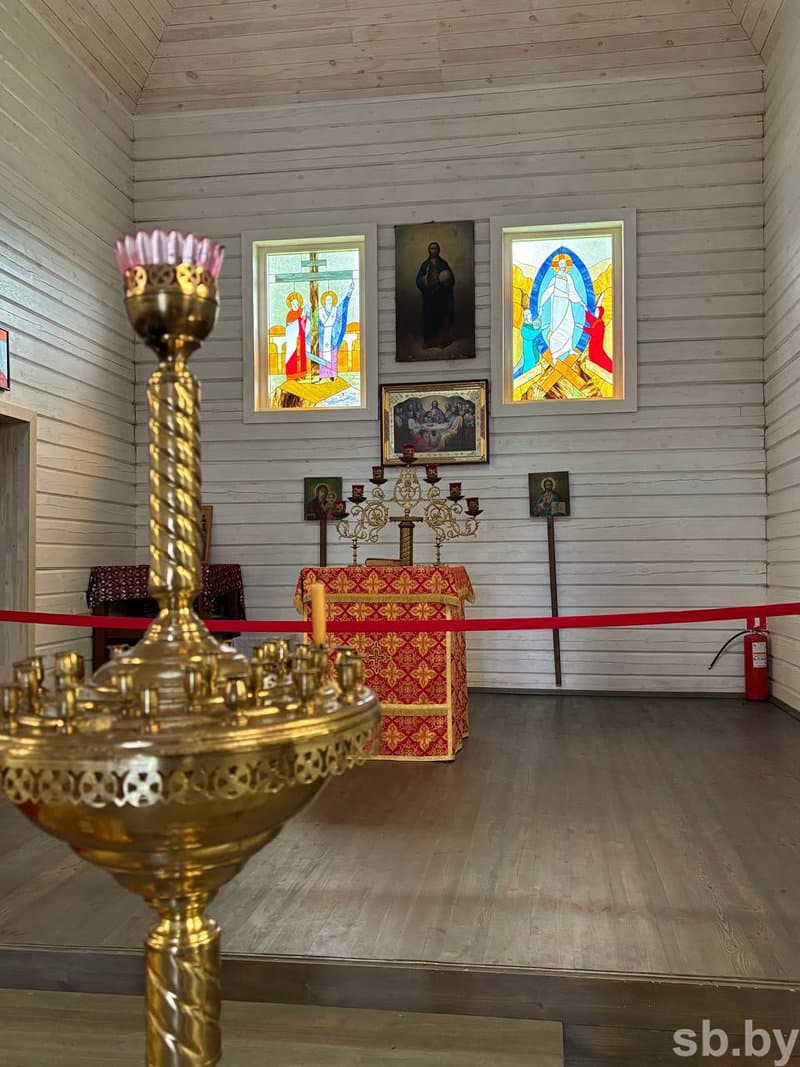
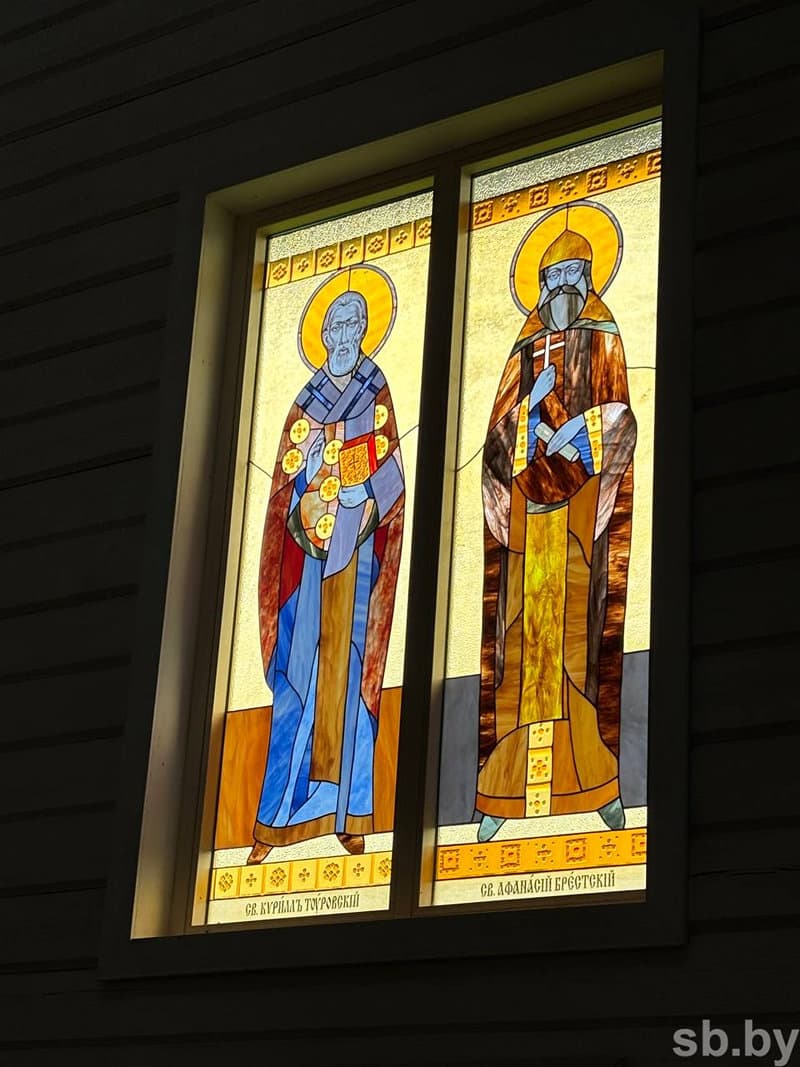
Later, in 2015, the Brahma chapel was recreated, and by 2020 the Church of the Cross was rebuilt. Its appearance was restored from pre-war photographs, and the interior was decorated with unique stained glass windows. In 2021, the reconstruction of the territory and the construction of a font for full immersion were completed. It is here that the water prayer service is regularly performed.
Today the Rakovskiy spring is a full-fledged architectural and spiritual complex with parking, pedestrian paths and a picturesque bridge. The new font became an important part of the infrastructure, allowing pilgrims not only to drink water, but also to plunge with their heads. However, improvement work continues.
The abbot shares his plans:
- We are now looking for helpers and sponsors to finish the job. People with disabilities want to come here. Our goal is to make sure that a person in a wheelchair can freely descend to the water. Under the protection of the state, the Rakovsky Spring is not only a spiritual, but also a valuable natural object. It received the official status of a hydrological natural monument of local importance in 2008, and in 2023 its borders were clarified. Today, the protected area is 0.65 hectares.
- By the nature of the water outflow, it is a descending heloreocren, that is, a mixed hydrological type of spring, combining the signs of a swamp and flowing source. The spring is constantly operating, never dries up, and the flow rate of water is about 1.8 liters per minute at a constant temperature of 10.8 degrees, explains Viktor Yakutovich, head of the Volozhinsky District Inspectorate of Natural Resources and Environmental Protection.
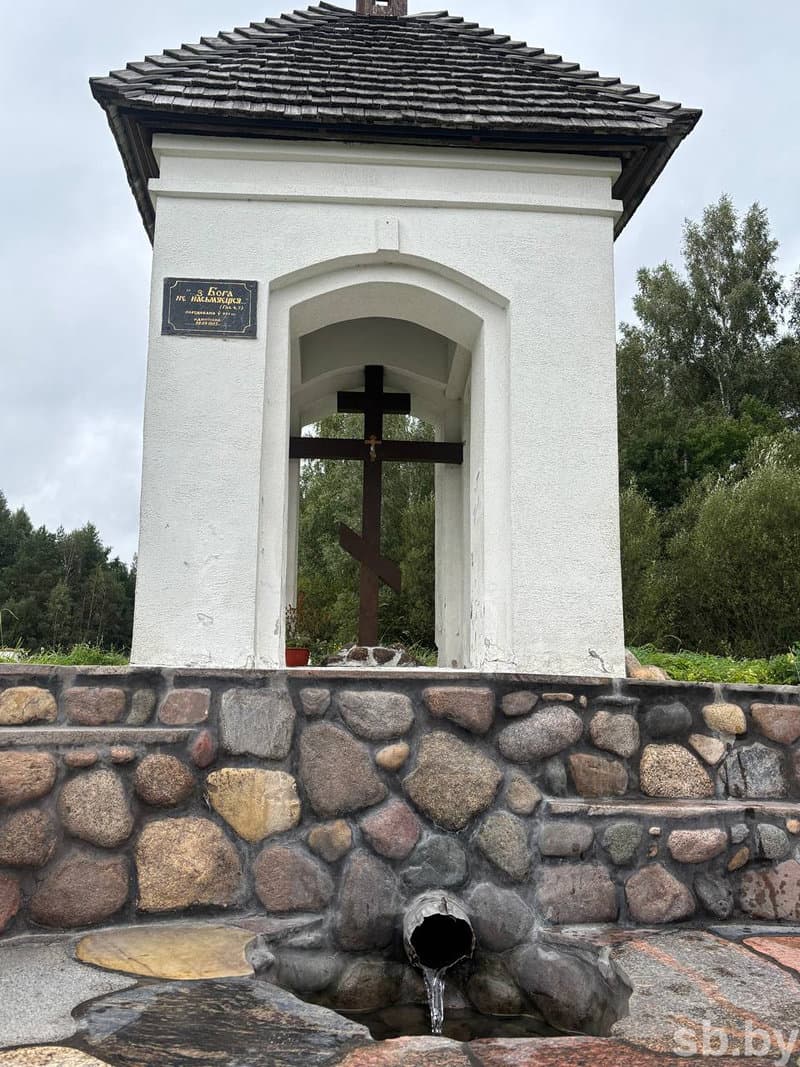
Within the boundaries of the monument there is a strict regime: logging, grazing, raising fires, removing the fertile layer and, most importantly, any captage of the water outlets that can disrupt the natural process are prohibited.
- Monitoring of the state of the source is carried out regularly, - Viktor Yakutovich notes. Land users - the parish of the temple - faithfully fulfill all requirements, preserving the natural, almost pristine appearance of the territory.
As Archpriest Sergius Lepin clarifies, taking care of order is not an easy matter. A reasonable balance is important here. The main burden of care for the territory falls on the shoulders of the local parish. Clergymen and volunteers make sure that the spring does not overgrow, that the paths are passable, and the chapel and font are kept in a dignified form. However, according to Father Sergius, no one is going to turn this holy place into a park area with a perfectly trimmed lawn. Too well-groomed, "sterile" view, the abbot believes, can deprive the spring of its uniqueness, the very natural, natural atmosphere that attracts pilgrims here. After all, here, on this patch of land, everything should breathe history and nature, and not resemble a city square. The chemical composition of water confirms its uniqueness. This is a fresh hydrocarbonate-calcium source, physiologically complete for the body. Analyses show the absence of nitrites, ammonia nitrogen, iron, copper and manganese. The hydrogen index is close to neutral, and the permanganate oxidation is minimal, which indicates an extremely low level of organic pollution. The water is considered safe and drinkable without additional treatment.
Among parishioners and old-timers, there is a belief that silver ions are contained in spring water and that is why it helps with eye diseases. However, Archpriest Sergius Lepin treats this with restraint.
- For us, the sanctity and healing of water are not in chemistry, the archpriest smiles. - We've heard myths about silver. We do not rule out this fact, but it does not matter to us. Naturally, if the laboratory finds any impurities (for example, peat after floods), we receive instructions and eliminate everything. But the power of our water lies not in its chemical composition, but in its historical sanctity.
All year round at the source there are services dedicated to the most important Orthodox holidays. Particularly revered are the days associated with the Cross of the Lord: August 14 – the Destruction of Honest Trees, September 27 – the Elevation of the Honest and Life-giving Cross (the altarpiece of the local chapel). On these dates, hundreds of believers come here not only from Rakov and neighboring villages, but also from Minsk and other cities of Belarus. People come to the Liturgy, participate in prayer services, collect holy water and plunge into the font. At the same time, Father Sergius insists that the internal state is more important than the external ritual:
- The manuscripts dealt with washing, and people also tried to wash themselves with holy water. But we try not to ritualize this worship, paying attention to the inner meaning. An interesting tourist route has become an integral part of the life of different generations. Students of Rakov Secondary School under the guidance of teachers developed a tourist route within the framework of the student startup Rakov Trip. The tours last about two hours and include all the significant places. Schoolchildren tell the legend of the elder, lead guests to the Catholic cemetery, show the church, the church, the ruins of the post office. For the younger generation, the source becomes a living lesson of local history.
- Several times a year, wards of the state institution “Rakivsk social boarding house “Islochanka” – a former psychoneurological boarding school – are brought here. For the elderly and with disabilities, such a trip becomes a real gift: silence, murmuring water, prayer and well-groomed territory help to find peace, forget about anxiety and feel peace of mind.
chargaziya@sb.by
From SG. Do you like to travel in Cineoka? Be sure to bring Rakov spring in your route! Make a pause in the endless bustle of the city, touch the living history, feel the surge of strength from the healing water. I did, and next time I'll give you a new address. Keep an eye out for our section “From Pure Origin”. And write to us about the wonders that interest you. And we will definitely go to them to tell interesting and inspiring stories to you, our dear readers.


