The body in the refrigerator and the grave under the shopping center: the investigator-criminalist of the Altai Investigative Committee - about the series of murders, evidence and crimes of the past
For more than 70 years, forensics has occupied a special place in the law enforcement system of our state
Konstantin Pavlovich is at the origins of the foundation of the criminalistics department of the regional IC and has been leading it since the establishment of the department. He says that a forensic investigator is, first of all, an investigator who has experience in investigative work and knows the subtleties of criminal proceedings, so service in the forensics department requires experience, skills, certain personal qualities. The circle of professional interests and the burning eyes of the investigator are also important.
- Konstantin Pavlovich, is it true that the criminalist is the right hand of the investigator?
- First, we need to understand what we are talking about: forensic investigators or forensic experts. It is clear that this is one law enforcement system, but the forensic investigator has his tasks, the forensic expert has his. We, forensic investigators, do not conduct examinations in laboratories, experts do this, and we interact with them. We are not the right hand of the investigator, we are independent. I will add that each investigator, when appointed to the post, spends the first working days in the forensics department. This is done so that he understands what to work with. Therefore, rather forensic investigators are the elder brothers of the investigator, who can teach and, if necessary, transfer practical experience to the investigator. The investigator and the forensic investigator work together. Also, as employees of the department, we carry out departmental control in the areas of activity that are assigned to the criminalistics department.
- How is the criminalistics department of the Investigative Directorate of the Investigative Committee in the region now organized? What exactly do forensic investigators do?
- In general, there are no significant changes in the structure of the department and the main areas of work. Every year, of course, there are certain changes, the range of tasks is expanding, but there are no cardinal changes. Now in the department of forensics employs 15 people, they are dispersed throughout the Altai region and go to the scene of accidents when required. As for the work of the department, the circle is quite wide. For example, at the initial stage, forensic investigators are engaged in organizing work at the crime scene: inspection, collection of trace information. Further, the seized is properly packaged and promptly delivered to an expert institution. Then the forensic investigator puts the whole range of questions before the expert. Further, work with the investigator begins: a plan of investigative measures is developed, versions are put forward, other complex investigative actions are carried out, including, if necessary, using forensic technology. A separate area of our work is the disclosure of past crimes.
- What techniques are forensic investigators using?
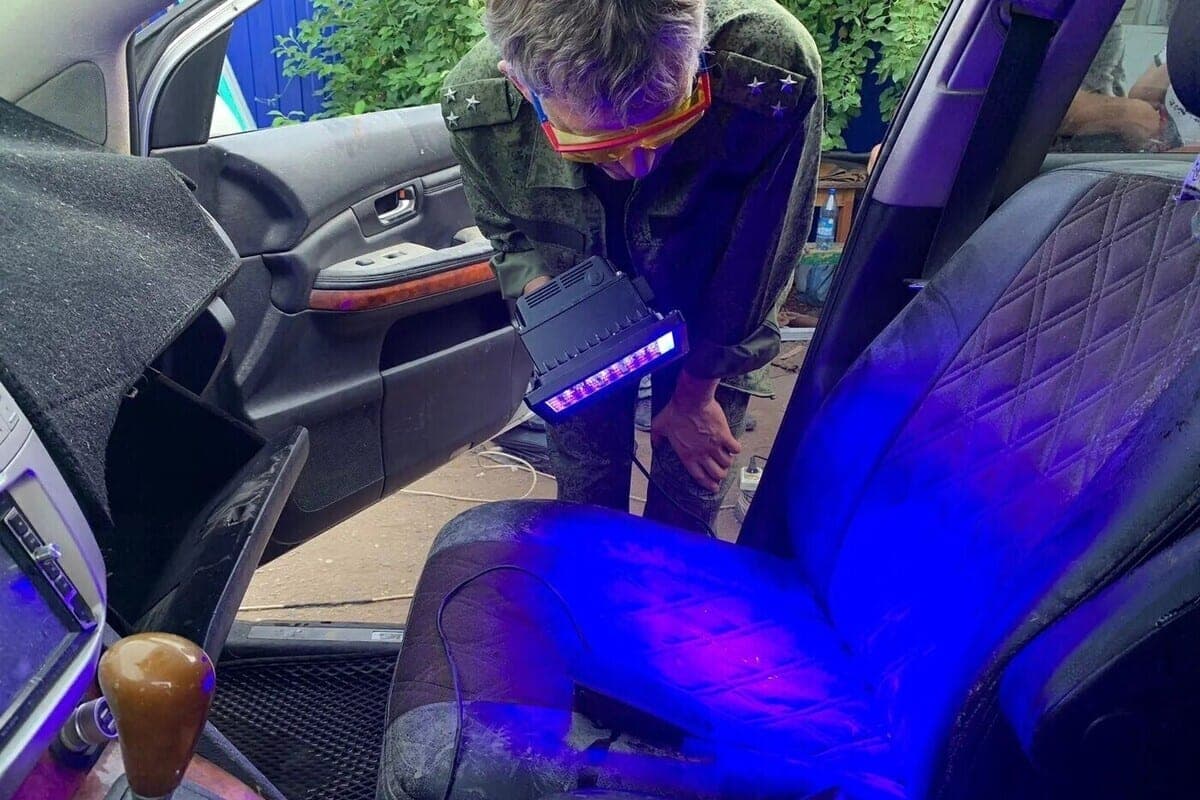
- In the department of forensics for a certain task there is a corresponding technique. It does not require special knowledge. For example, we use mobile forensic light sources that recognize even blurred traces of biological origin. Also in the arsenal there is a nonlinear locator, which works on the detection of semiconductors – “bugs”, hidden cameras and other devices.
- Do you understand that criminal investigators do not go out for every crime?
- Yes, forensic investigators don't go out for all crimes. We have organizational documents that outline this list. But there are reports when we know we have to leave. There's no such thing as someone else's trouble. And, in my opinion, every employee of the Investigative Committee has a quality based on this principle. For example, recently forensic investigators went to establish the causes of the flooding of the basement of an emergency house in the city of Barnaul. If you look into such problems should deal with other departments and services, but people do not find help there, and therefore turn to the Investigative Committee. There’s no such thing as someone else’s trouble, and if we can help, we should.
In the department of forensics now serve 15 professionals in their field. Konstantin Rothstein says some of the most experienced investigators work here. Analytical mindset, attention to detail, thoughtfulness and even a certain creative streak are the qualities that a forensic investigator must possess in order to see the full picture of especially serious, terrible crimes, often not obvious. And, as the interlocutor notes, it is the disclosure of such is the main goal of the criminal investigator.
“Detection of crimes committed under conditions of non-obviousness is a matter for forensic investigators. We have an understanding of what to do in such situations, said Konstantin Rothstein.
- How does a criminal investigator act if the crime is committed in conditions of non-obviousness? Can you tell us more about this example?
- Yeah, sure. This year, it was reported that in one of the districts of the Altai Territory on the banks of the river, the body of a man with signs of violent death was found. The body was located 40 km from the village where he lived. Two versions were considered - either the man came there himself, or his body was brought. Forensic investigators were tasked with modeling the events and algorithm of the criminal’s actions. We drove along the routes, saw how the victim could be here. With the help of forensic technology "Optik-2" installed cameras that recorded the route and a particular car. We understood what kind of car it was, and we began to check the persons who own such a vehicle and live in the same locality. The circle was narrowed - after that, several houses began to be of interest to us. In the course of operational activities with the use of forensic technology in one of the houses was found a small spot of brown material, which the attacker did not destroy. Experts confirmed it was the victim's blood. As part of the investigation, a psychophysiological study (polygraph test) was also conducted, which showed a reaction in one of the test subjects. He later confessed and said that he drank alcohol with the victim and committed murder during the quarrel. Then, in order to hide the crime, the attacker took the body and threw it into the river. Less than a week passed from the murder to the arrest of the suspect. The case is still under investigation.
- You previously said that the attention of forensic investigators, however, as well as the entire investigative department of the Investigative Committee in the region, is focused on investigating crimes of past years. Tell us about the work of the forensics department in this direction.
- Yes, the investigation of crimes of the past years is one of the priorities of the criminalistics department of the SU IC of Russia in the Altai Territory. It's a lot of analytical work. Forensic investigators purposefully study the materials of criminal cases of past years, compare the available facts, participate in the work of investigative and operational groups. And such hard, painstaking work bears fruit – the attacker is found, proved his involvement in the crime and brought to justice. Suffice it to recall the story of Vitaly Manishin.
- Are there currently unsolved murders in the production of the UK, where the series is traced?
- Yes, there are crimes of the past, where there are signs of seriality. Not many. Work on them continues.
- Are there any past crimes recently uncovered that may illustrate the work of forensic investigators in this direction?
- Earlier, the investigation of the criminal case related to the disappearance of a 38-year-old resident of Novoaltaisk was completed. She went missing 13 years ago. Then it was not possible to establish what happened to her - there were no such technical capabilities and such a level of expertise as now. Therefore, the case remained unsolved. Years later, forensic investigators returned to him and re-established the events. They were alerted by the protocol of interrogation of one of the close friends of the woman. He was the last person to see her, his version, on the one hand, was not refuted by other facts, but on the other hand, looked strange. Then he said that he worked as a guard at the construction site, which was on the right bank of the Ob. A large shopping center was built there. The witness said that the woman came to him, they sat down, drank, after which she left for a pension, and forgot the phone. At the same time, it was established that the missing person called the man from his phone after his disappearance. The witness explained that he kept his phone for a while, and then decided to check if the SIM card worked and called his number. On the one hand, it is logical, on the other – why does a person keep the phone of the missing person and not return it to his family? After studying the materials, the investigators decided to work out the version again about the involvement of the witness in the death of a local resident. Under the weight of the evidence, the man confessed to the murder. He said that during the feast between him and the woman there was a quarrel. The man pushed her hard, she fell, hit her head on a bourgeois stove and died. The suspect took the body to the wasteland where the construction site was going and buried it. Later, a building was erected at the burial site. Already today, the witness was charged under Part 4 of Art. 111 of the Criminal Code of the Russian Federation. The case is now in court. The remains of the victim could not be found, because on the site where the man hid the body, now stands a shopping center.
Speaking about the crimes of the past years, we recall the murder of a woman committed in Rubtsovsk in 2012 with particular cruelty. His disclosure was only revealed this year. What role did forensic investigators play in this?
- The forensic investigator played a key role in solving this crime. He returned to this unsolved case and began to study the details purposefully. In November 2012, a resident of Rubtsovsk met a 39-year-old woman who was invited to spend time together on the riverbank. Having received consent, they went to the area in the Rubtsovsky district. At some point, the man began to show signs of attention to a new acquaintance, but she refused. Angry, the defendant began to beat the woman, and then threw her without clothes into the river, the water temperature in which did not exceed one degree. At the same time, the defendant stopped all her attempts to get to the shore. After a long time, he pulled the woman out of the water by the hair and inflicted at least 25 blows on the head and body, and then threw her into the trunk. He then took the woman to the area and left her to die on the street. The cause of death of the victim was hypothermia.
The situation was complicated. Investigators-criminalists, investigating the case, very closely interacted with experts. Thanks to the competent actions of investigators and operational police officers, the suspect was identified and detained. Now this criminal case is being considered in court.
Evidence and fear
According to Konstantin Pavlovich, the forensic investigator, when inspecting the scene, should pay attention to every, even the smallest detail. Once, during the investigation of a criminal case, he discovered, as it later turned out, an important piece of evidence - a piece of paper that was lying under his feet. It turned out to be a cashier's check with the gas station and the key to solving a double murder committed under conditions of non-obviousness. However, the evidence important to the investigation is not only objects. They can be washed traces of blood and even smells. The interlocutor says: the task of the forensic investigator is to work on the spot “like a vacuum cleaner”, and then conduct a thorough analysis.
- Have you ever had any traces left at the scene?
- A man cannot leave a trace. We are now talking to you, and there is our “biology” here, you have entered – the prints of your shoes are already left, you took a pen – there are traces. The average person in life does not pay attention to this. A person always leaves trace information, the question is how to work it out at the scene, how to collect and study it. There are smell marks that are collected according to certain rules, however, as well as all other evidence. If the rules are broken, the tracks will collapse, and an expert in the lab will not be able to establish their origin.
- Do forensic investigators work in the field of corruption crimes and crimes committed online?
- Yeah, sure. There are certain algorithms in solving crimes committed on the Internet. We have a forensic investigator in the department who has the necessary skills to gather information. There are a lot of directions in the digital environment, but the digital footprint cannot be destroyed. Even deleted data from the phone is restored. Collective discussions of this or that situation play an important role in solving such crimes, in this regard, we closely cooperate with colleagues from the Main Directorate of the Ministry of Internal Affairs of Russia in the Altai Territory, they work very well in this direction. For corruption crimes, forensic investigators are also involved in the detection of digital media and the extraction of data of interest to the investigation.
- Can you tell me what the worst, worst evidence you've ever seen?
- I treat such situations calmly, I can not call any evidence creepy or terrible. There was a case, not in my practice: there was a report of the unknown disappearance of the victim. Investigators-criminalists within the initial investigative actions left at the place of residence of the citizen. During searches in the refrigerator, the dismembered body of the victim was found. In my opinion, it can be scary for a layman, but investigators should be prepared for this. Of course, there are situations that cause certain feelings, especially crimes committed against children. You take it personally. Otherwise, I can say that in my professional work I have seen many things that can cause fear in people. That’s our job, so we have to be cool and ready.
Help: In accordance with the Instruction of the Prosecutor General of the USSR of October 19, 1954, the posts of prosecutors-criminalists were introduced into the staff of the prosecutor's office of the USSR, for which special two-month courses were organized in the city of Leningrad. The first group of criminal prosecutors was trained in the amount of 42 people, they were entrusted with organizational and methodological work to improve the quality of the investigation. With the creation of the Investigative Committee of the Russian Federation as an independent body, the positions of prosecutors-criminalists were renamed to the posts of forensic investigators. This allowed the employees of the forensic units to exercise broad procedural powers defined by the Criminal Procedure Code of the Russian Federation: conducting both individual investigative actions and the entire investigation of the criminal case. Forensic investigators of the Altai Krai investigative department are permanently included in the investigation teams for criminal cases, which are of particular complexity in the investigation and caused a great public outcry, independently carrying out investigative actions (interrogations, on-site testimonies, seizures, etc.).
Every year, forensic investigators of the investigative department carry out more than 200 official visits, with their participation, about 100 especially serious crimes are disclosed annually, including those committed in conditions of non-obviousness. One of the priorities of the criminalistics department is the organization of work to solve crimes committed in previous years. Offensive work in this direction brings positive results, and the persons involved in the commission of crimes do not escape responsibility, but bear the deserved punishment. Every year, the investigation department investigates more than 100 crimes of the past years, including those belonging to the category of especially serious crimes against life and sexual integrity.
Read also
“If you see him, you won’t understand.” In the UK told how in the Altai region catch pedophiles and work with their victims