In Penza children began to test their hearing using new equipment
In children's clinics, Penza began to use new equipment to diagnose hearing impairment in young patients. Five modern audiological complexes of Russian production were purchased for medical institutions. 4 million rubles were sent for their purchase, the press service of the Ministry of Health of the Penza region reported.
In children's clinics, Penza began to use new equipment to diagnose hearing impairment in young patients. Five modern audiological complexes of Russian production were purchased for medical institutions. 4 million rubles were sent for their purchase, the press service of the Ministry of Health of the Penza region reported.
Since 2025, the list of preventive medical examinations of minors included additional hearing tests in children aged one year and six years.
The first such examination babies pass in the maternity hospital, on the third or fourth day after birth. In the future, the check is carried out by an otorhinolaryngologist in a children's clinic.
The study, which is called induced otoacoustic emission, can detect hearing impairment in children in the early stages. This is especially important because the ability to hear directly affects the development of speech and thinking.
Five mobile audiological complexes of Russian production "Audio-smart" were purchased for examinations in children's polyclinics of the city network. Funds in the amount of 4 million rubles were allocated from the abnormal insurance stock of the Territorial Fund of Compulsory Medical Insurance of the Penza region.
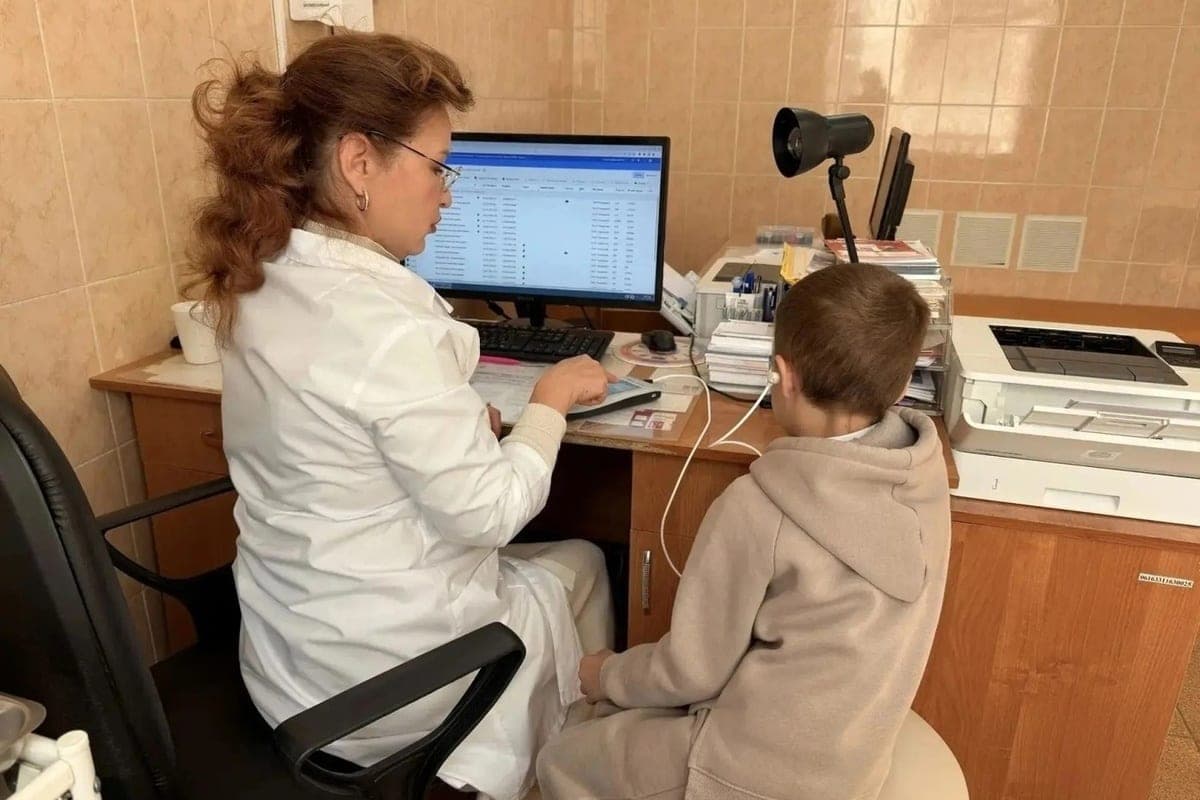
As explained by the doctor-otorhinolaryngologist of the department of consultative and diagnostic care of the City Children's Polyclinic No6 Zhanna Romantseva, portable equipment allows you to comprehensively assess the condition of the child's hearing aid, including the mobility of the eardrum and the activity of the auditory nerve.
During the examination, a sterile silicone probe is inserted into the ear canal of a small patient, equipped with a miniature speaker and a sensitive microphone. To obtain accurate results, it is necessary that the child is stationary, and silence is observed in the room.
After the procedure is completed, the results of the study appear on the screen of the device.
New equipment is already used by specialists of children's clinics of Penza. If deviations are detected during a preventive examination, the child is sent for an in-depth examination to a surrogate.