
Round table "SB": how a unique project became a signal to the community of collectors and the people as a whole
The most important project to ensure the humanitarian security of the country “In search of the lost”. Return, which started at the end of September 2026 in the form of an exhibition ...
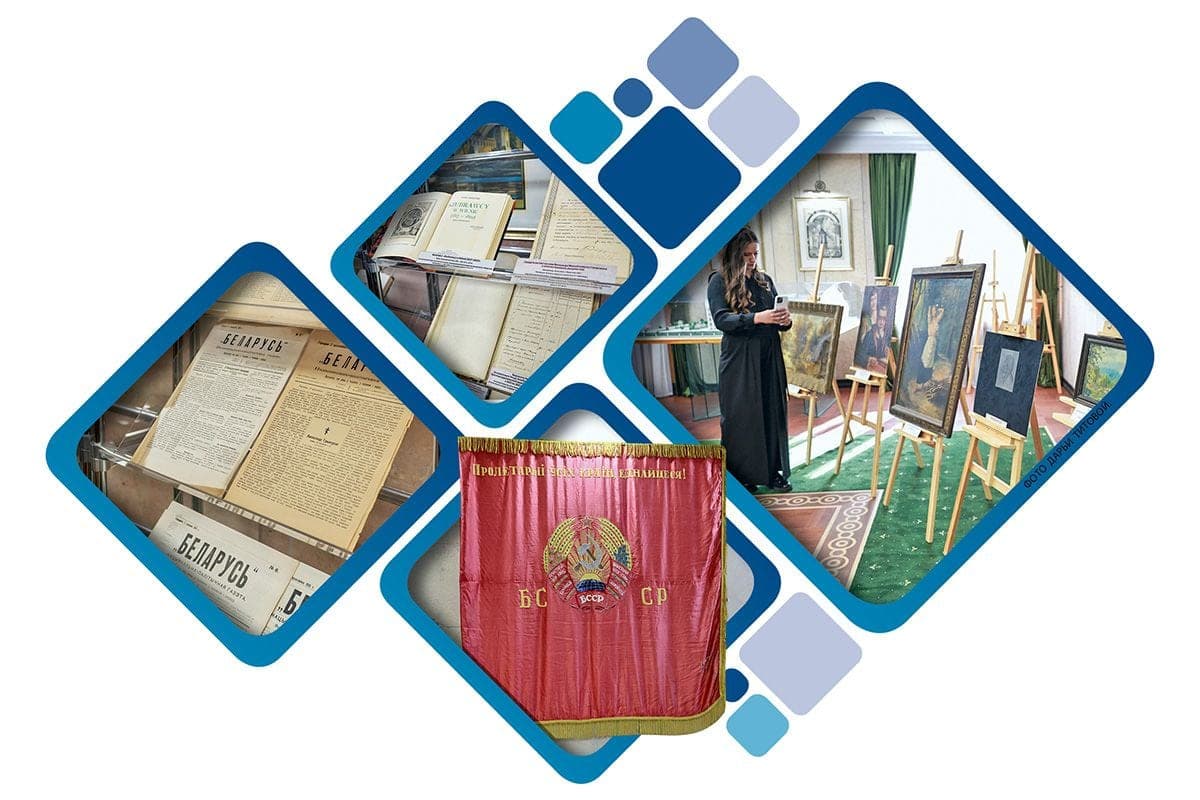
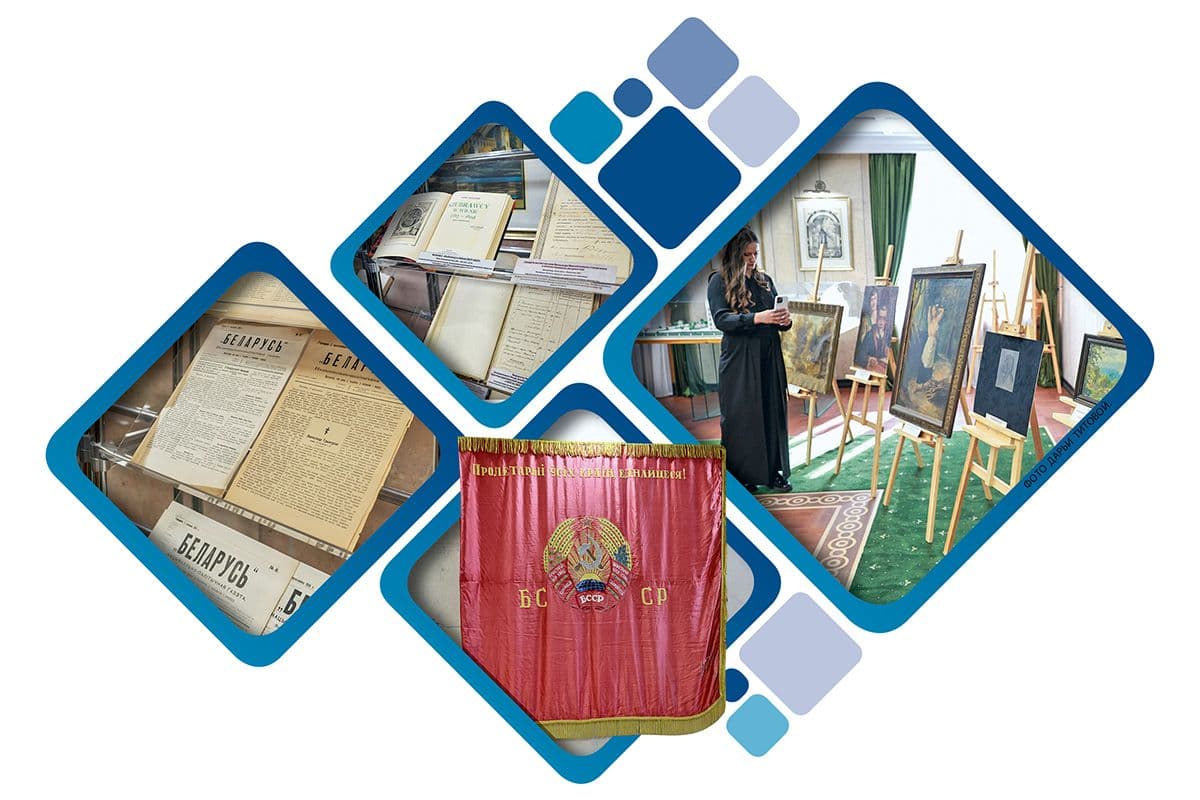
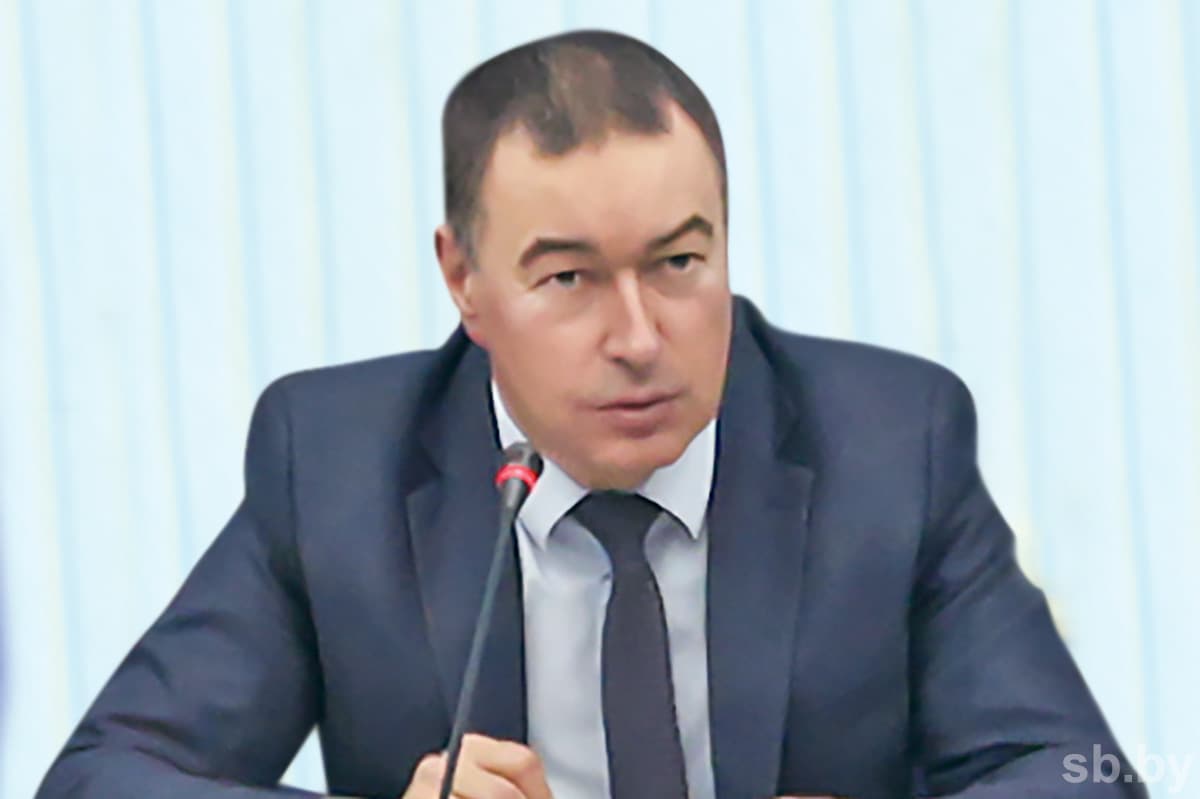
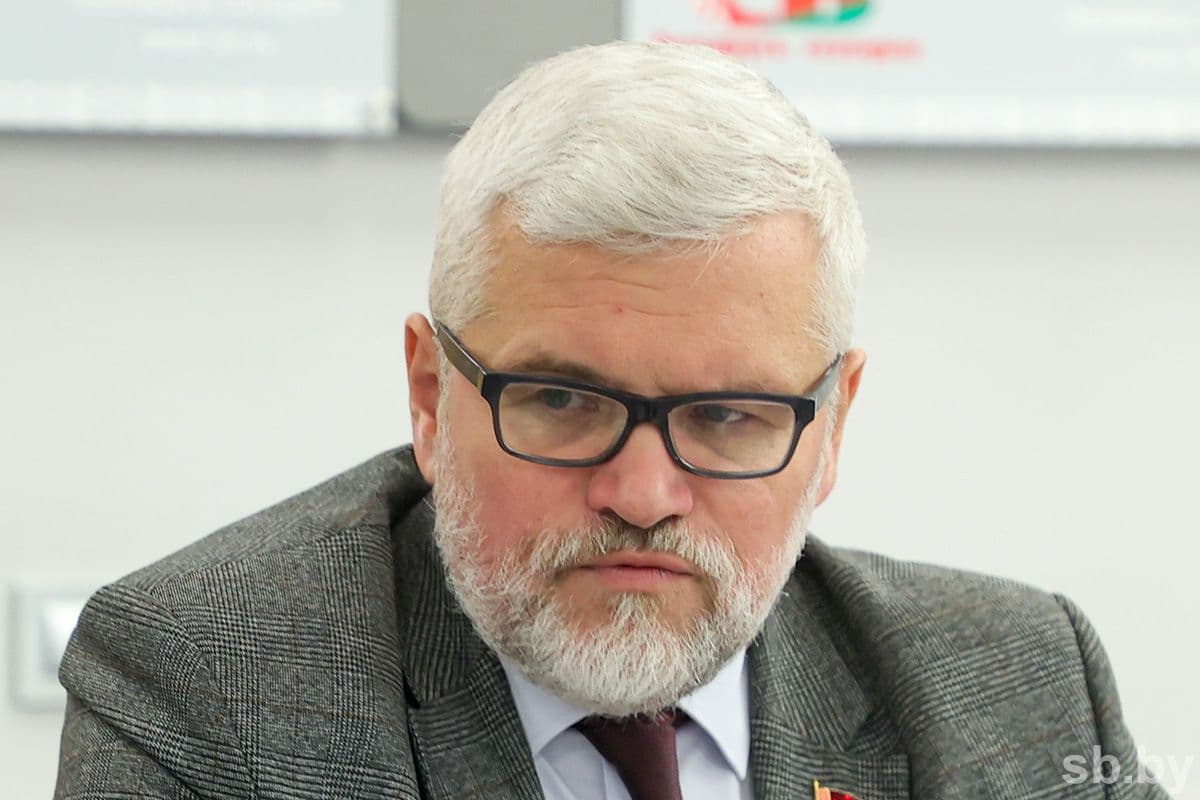
The most important project to ensure the humanitarian security of the country “In search of the lost”. Return, which started in late September 2026 as an exhibition at the National Academy of Sciences of Belarus, has all the prerequisites to result in a nationwide movement and a vivid example of public-private partnership cementing the unity of Belarusian society. This was attended by the participants of the round table in the editorial board of the Security Council of Belarus Today: Deputy Minister of Foreign Affairs Igor Secreta; Academician-Secretary of the Department of Humanities and Arts of the National Academy of Sciences of Belarus, Deputy Chairman of the Standing Committee of the House of Representatives of the National Assembly on Education, Culture and Science Vyacheslav Danilovich; Chairman of the Union of Writers of Belarus Alexander Karlyukevich; winner of the Presidential Prize “For Spiritual Revival”, historian, researcher, author of the project “Batskaшshchchzyna – in Search of the Lost” Vladimir Likhodedov. In a remote format, First Deputy Minister of Culture Alexander Sidorenko joined the table.
Historical memory is the connecting thread of generations V. Danilovich: Historical memory is of great importance because it is the basis for the successful development of our society and the Belarusian state. And in the preservation of historical memory, the most important element is the artifacts involved in our history, their preservation, and, if possible, the return and introduction into scientific circulation.
The National Academy of Sciences of Belarus has made a big step forward in preserving historical memory. Academic and university historians jointly developed a national concept of national history without distortions and falsifications, analyzed key moments of our past through the prism of Belarusian statehood. At the same time, we must not forget that history is a double-edged weapon, which, unfortunately, is often used to divide society, to pit peoples and states against each other. A. Sidorenko: Historical memory in the Republic of Belarus is an important element of state policy aimed at strengthening national unity, patriotism and protecting the official assessment of the past. The events of the past years are interpreted in the present and determine the vector of future development through museum expositions, memorable dates, educational projects and scientific conferences. Therefore, the project “In search of the lost” is very significant and important. Return”. Works on a voluntary basis are conducted by historians Vyacheslav Danilovich, Vladimir Likhodedov and Svetlana Khoruzhik. They make a significant contribution to the preservation of the historical memory of our country.
The creation of the National Museum of Belarus is of great importance for our state and nation. It is dictated by the fact that today Belarus is living in new political and socio-economic conditions, when profound transformations are taking place in all spheres of life, the ideology of an independent state is being strengthened, and an objective view of a number of important events in the national history is being formed. Project “In Search of the Lost”. Return" V. Danilovich: Belarusian collectors have many historical artifacts. The project “In search of the lost” is even more valuable. Return, implemented in the NAS of Belarus together with our famous collector historian Vladimir Likhodedov. The artifacts identified by him have passed scientific attribution and are now transferred to state museums, libraries, the Belarusian Orthodox Church. That is, they do not remain somewhere in storage, do not settle in closed collections, where their fate would become unknown. Vladimir Alekseevich sets an important example of civil service, awareness of civil responsibility for the historical artifacts he has, so that they become available to a wide range of citizens and work in a practical way to preserve historical memory.
Let me remind you that this action started on September 29, 2026, when the first batch of such artifacts was transferred. In particular, the banner of 1939, which was displayed at the solemn event on the Day of National Unity, was transferred to the National Museum of Belarus. In addition, a number of artifacts were transferred to the museums of the NAS of Belarus, the National and Central Scientific Libraries, the Belarusian Orthodox Church. From my point of view, this is a practical contribution to the preservation of historical memory, when the most valuable artifacts become the property of the people and the state. Notice, this action is long-lasting. Gradually, the transfer of artifacts based on regional origin will continue. The next such action is planned in the Grodno region. We hope that our other well-known collectors and, in principle, any citizens of the country will follow this example.
- The head of state demands from us, from the historical science of Belarus, that we restore an objective picture of the historical past. This task was set during the creation of the National Museum of Belarus. It is very important that we evaluate our historical past from the point of view of our people and our Belarusian statehood. I am sure that thanks to such interaction and, I would say, the indifference of such people – highly motivated, charged and patriotic – we will have the experience of successful interaction between state institutions and private initiative to reliably wove into state policy. This will be an important practical guide for our future work. I would like to express my gratitude to the participants of the project – this is a tremendous work.
A. Karlyukevich: I would like to thank Belarus Today Publishing House for the long history of the “In Search of the Lost” column. In the modern media sphere, this is a unique project, which became the result of multifaceted work that took place with the participation of journalists, freelance authors of the SB newspaper. Belarus today”. Thanks to the interest of readers, a fairly solid platform has been formed. By and large, the newspaper column “In Search of the Lost”, which appeared on the pages of the Security Council, and the materials that were published in other publications of the publishing house “Belarus Today”, became the basis of a large multifaceted work focused on the historical education of society. By collecting artifacts, providing them to society, holding cultural and patriotic events, a great ideological task is solved.
Vladimir Likhodedov, possessing a sufficient complex of knowledge, competently approaches the assessment of artifacts, understanding the valuelessness of certain materials and the fact that they should be in Belarus. And the thousands of artifacts that have already been handed over to them should be given a decent description, it is important that they are known to the general public. Today it is important to convey to the public the role and meaning of this work and these artifacts. Vladimir Lihodedov’s activity is without exaggeration an example of successful public-private partnership, when both the state and responsible business, individuals conduct a coordinated policy, carry out activities aimed at replenishing museum funds in this case, to search for lost values. We are not talking about buying up everything available at auction, we have neither the means nor the means to do this. But it is very important when valuable things, objects, artifacts, publications are returned to scientific circulation after their digitization, when we become aware that they are in storage or private collections. When it comes to accessing digital things. As for the Ministry of Foreign Affairs, I would like to draw attention to three key points. First, Belarusian missions abroad are constantly studying international experience in returning illegally exported valuables. Our embassies have collected quite impressive and detailed information about foreign auction sites, antiques markets, it is timely transmitted to the Ministry of Culture (so that our colleagues could better navigate). But we are well aware that government organizations, due to budgetary procedures, do not always have the financial mobility necessary to instantly buy valuables at auctions. Therefore, the combination of efforts of public institutions and private collectors becomes the most important factor of success.
Secondly, the Foreign Ministry and our foreign missions are a distant expert in the search for and return of values. We openly say that this work has become much more difficult in the current unprecedented geopolitical situation. It is more difficult to search, negotiate, pay and return. We have examples where paintings, paintings or rare publications bought at auctions are at best still in our embassies, because it is impossible to take out and then exhibit, organize exhibitions, including abroad, and insure all this in a legal way. And yet, half the success in this case is already there. We are waiting, agreeing, and we hope that we will resolve these export issues in the near future.
Thirdly, the Foreign Ministry and foreign missions are also actively involved in the implementation of joint projects. What is this? Our data and international practice show that the physical return of originals from abroad is an extremely time-consuming, complex, expensive, sometimes even legally impossible process, because it affects sensitive areas of foreign countries and private collectors. In this case, it is very important, having established a normal professional contact, to agree at least on digitization. Digitized artifacts, publications (we have experience in such work with the National Library and the National Archives) are being used in scientific circulation.
For example, thanks to the participation of the Foreign Ministry, it was possible to successfully resolve issues with the Russian side about the production of electronic copies of portraits of representatives of the Sapeg, Radziwill, Nemtsevich families, as well as a polymer copy of the St. Jadwiga Cup.
The operational work of the Belarusian Embassy in Germany was also indicative. In the German media there was information about the discovery in Weimar of a previously unknown copy of the Psalter by Francis Skaryna in 1522. The Embassy then immediately sent an official request to the leadership of the German library, and thanks to this initiative, the German side digitized the publication, and diplomats transferred links and bibliographic data to the National Library of Belarus, returning this rarity to the scientific circulation of our country, albeit in a virtual format.
- Once made another payment for the construction of the National Museum through Internet banking. The daughter asked why, there are public funds allocated for this. I gave her an example: I told her how I was financially involved in the construction of the National Library, and now that I am carrying a high-level delegation on Independence Avenue, I am proud to show it to them and tell them that my contribution is in this facility. And my children got excited by this idea, asked me to make a transfer to the National Museum with money donated to them for their birthdays. That is, personal complicity, involvement works. This is a matter of pride and a significant contribution to strengthening our statehood. A. Karlyukevich: We talk a lot about where the format of public-private partnership should lead us. The legislative framework in this matter has been formed at a fairly high level. We heard the work of the Foreign Ministry to return artifacts and valuables to Belarus. And all this work is a signal to the rest of the collector community. National Museum of Belarus: significance for the present and future of A. Sidorenko The exposition of the National Museum will be located in 12 exhibition halls, where active work is currently underway to create an exhibition space that reflects the millennial path of the history of our people - from ancient times to the present.
This is the most ambitious and significant project in the field of culture, which will be the hallmark of our country. Anyone can become a part of a large-scale project: the action “Give the museum an exhibit” has been announced in the country. Thus, the participants of the action help to preserve the memory of the past for future generations. After all, something that has been stored in one house for many years can become part of the history of the whole country. To participate in the action, you must fill in the information in the prescribed form and send it to the Telegram-bot (@histmuseum bot). V. Likhodedov: At the end of September, the 1939 BSSR banner and a portable printing machine used by Belarusian underground workers were transferred from my collection to the National Museum of Belarus. They were found in Bialystok in the 1990s. This region of modern Poland from 1939 to 1944 was part of Belarus. One of the symbols of the unification of the Belarusian people in 1939 was the banner of the BSSR. In those years, banners were embroidered by hand, so it is unique in itself. There has been much debate about the date of the flag’s origin. There were opinions that its design is typical for the second half of the 1940s. However, thanks to the NAS specialists, it was possible to find studies and evidence that confirmed that before the Great Patriotic War, the sheaf on the coat of arms of the BSSR was framed both by flowering flax and its boxes. Belarusian underground fighters managed to preserve the banner even during the Hitler occupation, when the possession of any symbol of Soviet power was punishable by death. And this is a vivid confirmation of the dedication of the Belarusian people and how much it meant for them to get rid of forced polonization and reunification with the BSSR. Of course, we were very pleased when on September 17, Head of State Alexander Lukashenko spoke at the Youth Forum. Belarus. Future, dedicated to the Day of National Unity, against the background of the great banner, which became a symbol of the reunification of Belarusians, which survived the Great Patriotic War and was passed down from generation to generation. I am sure that the banner and the printing press will occupy a worthy place in the exposition of the National Museum of Belarus.
The picture of the historical past is recreated bit by bit, by joint efforts. We must not forget this, so that everyone is truly proud if he can do his part. Therefore, it is necessary to listen to all opinions, analyze and somehow encourage such researchers-collectors, even purely psychologically. As a result, history will continue and we will be proud of it.
Over the years, my colleagues and I have been working on the "Looking for Lost" project. About 30,000 artifacts were put into scientific circulation. More than three thousand original, unique artifacts were transferred to various museum funds.
Most importantly, artifacts should “work”, and not be dusted in storage. It is important that they are either exhibited to the general public or used for research by scientists. For me, it is important that the artifacts and things found and acquired are not just transferred somewhere, but actually served. osipov@sb.by
celyuk@sb.by


