
In Tula may not have time to restore the oldest of the churches until the end of September
In Tula, work on the restoration of the cultural heritage of federal significance - the Church of the Annunciation of the XVII century built, for which more than 230 million rubles have already been allocated since 2022, can be delayed
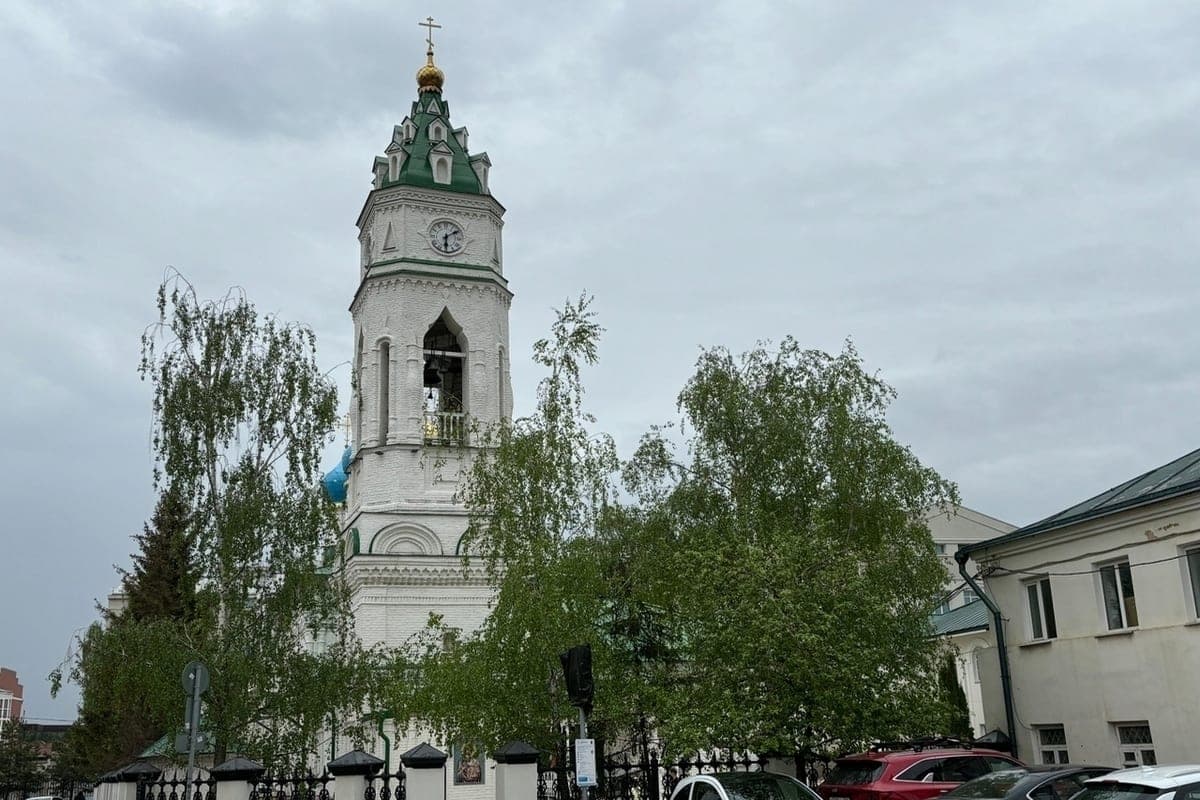
In February 2026, MK in Tula already covered this topic, at this time the last deadline for the completion of work was determined on September 30 of this year. However, as we found out, by all indications, the contractor, JSC Interregional Scientific and Restoration Art Management, may not meet this deadline.
The church building itself is located in Tula, on the street of the Annunciation house 4 and was built in the XVII century. The last contract for the restoration of the church for 158.2 million rubles was signed between the Ministry of Culture of Russia and JSC “Interregional Scientific and Restoration Art Management” (MNRHU) on November 28, 2023.
Initially, all works were to be completed on December 30, 2025, but later the restoration deadline was shifted to June 30, 2026, and then to September 30 this year. According to the latest information from the public procurement website, at the moment the works have been completed and paid for for 112 million rubles, that is, according to the documents, the restorers have fulfilled 70% of the plan.
There is no doubt that restoration work is underway. Before their completion, another 56 million rubles will have to be mastered. It may well be delayed until the end of this year or it will all move to 2027.
Why there was a delay again is not entirely clear, within the framework of the contract between the Ministry of Culture of the Russian Federation and JSC "MNRHU" have already concluded 5 additional agreements. Maybe not the last. It follows from the schedule that in 2023 they performed works for 79.1 million rubles, in 2024 for 12.4 million rubles, in 2025 for 16.6 million rubles. In 2026, it was originally planned to master 50 million rubles and complete the restoration.
Recall, as previously wrote “MK in Tula”, under the contract, JSC “MNRHU” undertook to carry out archaeological surveys, perform a complex of restoration works in the church itself, as well as carry out work on the replacement of engineering networks.
In particular, it was planned to repair water supply, sanitation, heating networks, change ventilation, air conditioning, smoke removal, replace the video surveillance system, security alarms, electrical lighting, and replace electrical equipment.
It is worth saying that this is not the first tranche for the restoration of the Church of the Annunciation in Tula. Earlier in 2022-2204, 74.7 million rubles were allocated for these purposes. In total, the Ministry of Culture of Russia has already spent more than 232 million rubles on the restoration of the monument.
In 2022-2024, the works were carried out by LLC CHP “Monument Territory”. During this time, the specialists of the company did a tremendous job to stop the destruction of the historic building.
The foundation and soils under it were strengthened by cementation, and the walls of the basement were reliably protected from moisture using modern waterproofing. Inside the church, brick vaults and floors were put in order, and the roof was completely updated and the truss system was strengthened.
Particular attention was paid to the “heart” of the architectural ensemble – the bell tower. The masters carefully cleaned and restored the brickwork using modern restoration compositions, and the damaged fragments were replaced by the method of embellishment.
The historical appearance of the tent was returned thanks to high-quality plastering and painting, selected in accordance with archival data. In addition, experts put in order the tier of bells: repaired wooden and metal structures, including bell hangers, and equipped a reliable boardwalk.
In parallel, the restorers were engaged in facades, returning them to the original decor, and updated the internal engineering communications. Thanks to an integrated approach, the building managed not only to save from the destructive effects of moisture, but also to preserve its unique architectural appearance for future generations.
Today, it is safe to say that the technical condition of the monument has significantly improved, and the church has found a second life.


