
Addiction is not a sentence. How volunteers help people regain faith in themselves and loved ones
Volunteers of the project "Crossroadlife" free of charge extend a helping hand to those who are in severe dependence on drugs and alcohol. ...
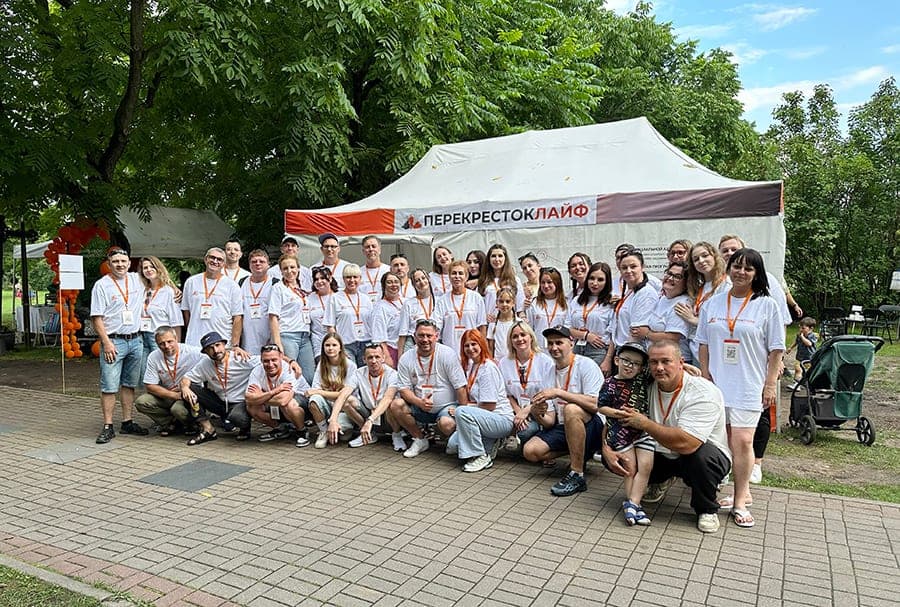
Volunteers of the project "Crossroadlife" free of charge extend a helping hand to those who are in severe dependence on drugs and alcohol. The correspondent of the Minsk-Novosti agency learned about their activities and the personal history of one of the leaders.
Looking at Andrei Shikovets, a fit man with a higher legal education, it is hard to believe that in the past he used drugs and served his sentence in prison. Today, Andrey is the head of the social rehabilitation center, a volunteer of the PerekrestokLife project.
From chemistry to law degree
- To lend a helping hand to a person in distress, no special skills are required. A simple sincere desire to help is enough, Andrei began his story about his past.
To overcome the most difficult life crisis and restore the loss of faith in himself, he was helped by a married couple - Elena and Andrei Kotelnikov. She is a psychologist by training, he is a theologian.
In 2013, the couple came to the open-type correctional institution, where Andrei was staying, to tell frankly about their own life: how they went through the difficult path of consciously giving up addiction.
- At that time, I understood everything mentally, but continued to use drugs. I just didn't know how to get out of this vicious circle. The story of Elena and Andrei inspired me: I saw people in front of me who do not read a dry theory, but went through this hell themselves.
The couple Kotelnikov offered him and the rest of the convicts to undergo a 10-step program of release from addiction. The leadership of the institution gave the go-ahead and A. Shikovets agreed:
- Imagine people working an 8-hour day and then going to prison to just talk to inmates. These were trusting, motivating conversations. What saved me was the realization that someone was wasting their time and giving me a helping hand for free.

A couple of months after the beginning of the program, the essence of which is a conversation about himself and his problem, Shikovets felt that he was again in control of his life.
- It was like Newton’s apple fell on his head: something clicked inside, and I realized that addiction had receded.
After his release, A. Shikovets decided to radically change his fate. He entered the budget department of the university and received a higher legal education. In the evenings, he began to volunteer, helping others like him in the past.
The first living proof of the program was his own father, who had been drinking alcohol for 35 years. Seeing the huge changes in his son, he was inspired, went through rehabilitation and has been leading an absolutely sober lifestyle for 9 years.
One is not a warrior
Initially, the Kotelnikovs held meetings in prisons or helped people right on the street. Over time, they registered the public association “Crossroad Life”. Today it is a free social program, which closely cooperates with the Department of Execution of Penalties, the Ministry of Internal Affairs, territorial centers of social services and guardianship bodies. Volunteers also visit medical and labor dispensaries and women's colonies.
In the "CrossroadsLife" built a three-stage system of assistance. All programs are divided into the following areas: outpatient program "10 steps", social rehabilitation center and work with codependents.
Group meetings in the outpatient program are held regularly. Participants analyze psychological problems, look for their roots, discuss issues of faith, mutual help and the meaning of life.
- The first step is to admit your powerlessness and ignite motivation inside, Shikovets explained. A person with an addiction develops a persistent experience of defeat. With each new fall, I want to fight less and less. But one in the field is not a warrior. In a group where everyone supports each other, resisting temptation is much easier.
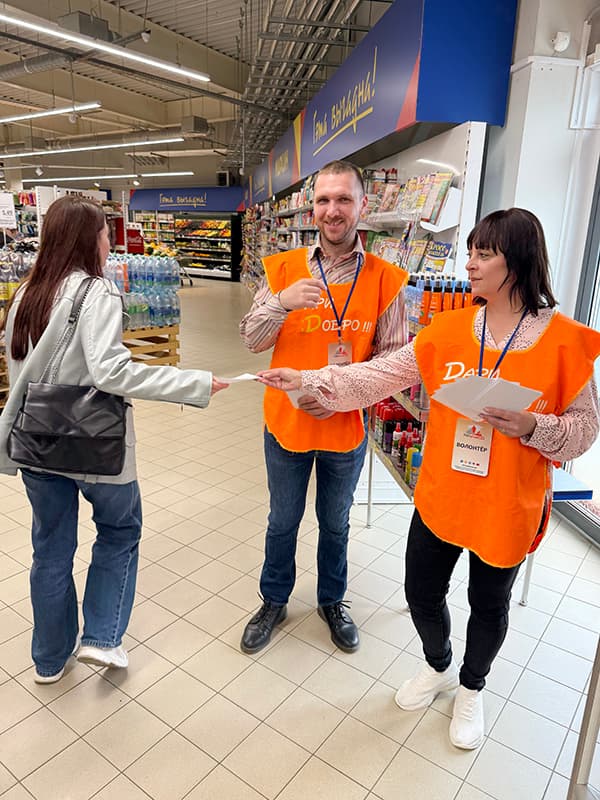
Working with codependents and “tough love”
Codependents are close relatives and relatives living near the addict. They suffer no less than the patient, becoming objects of manipulation and developing a deep complex of guilt.
- Parents often sell apartments and go into debt because a child has told them, "You're to blame for me being this way." We teach relatives the principles of hard love: to leave the role of victim, stop indulging in destructive behavior and competently respond to manipulation. We had this case: one of the mothers, having completed training, hung the lock on the refrigerator and stopped giving the unemployed son money. Unable to find support, he committed a petty theft in the grocery store, served 15 days and complained: “How do I live if the Internet is turned off and not fed?” As a result, the guy realized the situation and voluntarily went to our rehabilitation center. Today he has a family and four daughters, Andrey added.
Rehabilitation Center for Social Adaptation
For those who find it difficult to cope with addiction in ordinary life, conditions of voluntary solitude have been created. The rehabilitation center of social adaptation in Volozhinsky district is a country house with a homestead, where 20–25 people from all over Belarus live. They care for poultry and rabbits, work on the land and undergo restoration. The terms of rehabilitation are individual - from one year or more.
The man in our center is like a ripening tomato in a greenhouse: there are no bars, triggers and drinking companions. But when you step out into the big world, there comes a dangerous moment of illusion: “I’m a hero, I won everything!” Therefore, after the main course, a period of social adaptation is necessary. This is at least another six months for a gradual entry into society, added Shikovets.
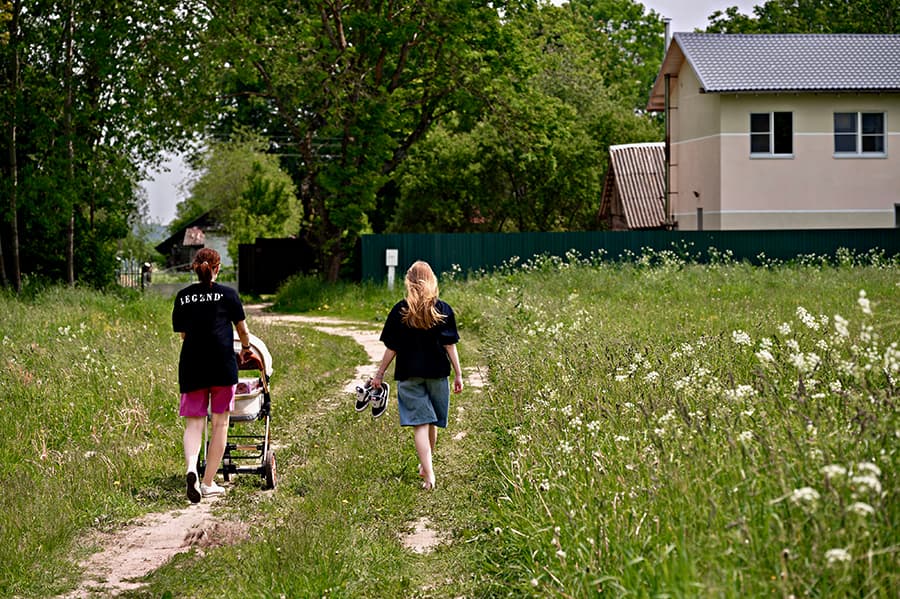
Protection of children and rescue from SPD
A separate vector of work of volunteers is with families in a socially dangerous situation (SOP).
- In the Volozhinsky center now lives a young mother with a year and a half daughter, said the volunteer. Because of the systematic drunken rallies of her husband, conflicts broke out in the family. In the end, there was a question of removing the child. But once in the center, the woman became calmer. Seeing the positive changes in his wife, the man began attending our evening outpatient meetings. As a result, he stopped drinking and is now restoring his relationship with his wife.
Over the 22 years of the life of the project “CrossroadsLife”, its leaders have accumulated many successful cases. Here's one: the drug addict father was stripped of parental rights. The man began the program “10 steps”, survived the breakdown, but did not give up and went to the rehabilitation center. Today he fully recovered, returned the rights to the child and raises an 8-year-old daughter. There is another story: a man broke off a toxic relationship with a drinking wife. He restored the rights to the child, and now one raises a daughter.
Addiction is not a sentence but a spiritual crisis
Ah. Shikovets identifies two major public misconceptions about addiction:
- Addiction is considered incurable, and the period without the use of doctors is called only persistent remission. However, this remission can last for decades. During this time, a person manages to get an education, create a family and raise children. Living free of substances is very real.
Shikovets also disagrees that addiction is only a mental illness:
- I am convinced that this is primarily a spiritual illness. A psychologist can help deconstruct causality, but who will heal a wounded heart? When a person falls to the bottom, he loses faith in himself. Belief in God and higher values gives that very feeling of second birth.
To date, volunteers of the PerekrestokLife project have visited almost all correctional institutions in Belarus. There have been cases when due to strict regime they were not allowed inside. Then volunteers organized small musical concerts right under the walls of the colonies. Thus, they wanted to convey the idea: to overcome addiction is not just to give up addiction, but to re-acquire spiritual supports, restore broken ties with loved ones and regain the right to a happy future. And as long as there are people who are ready to share their experience and warmth, everyone has hope.
Photo from the archive of the project "Crossroadlife"


