How Messi almost left the national team at 29 and took the first trophy at 35
Over the past five years, Lionel Messi has won all the major trophies with Argentina. At the age of 29, he was ready to finish the national team due to setbacks. About this - in the material "RBC Sport"
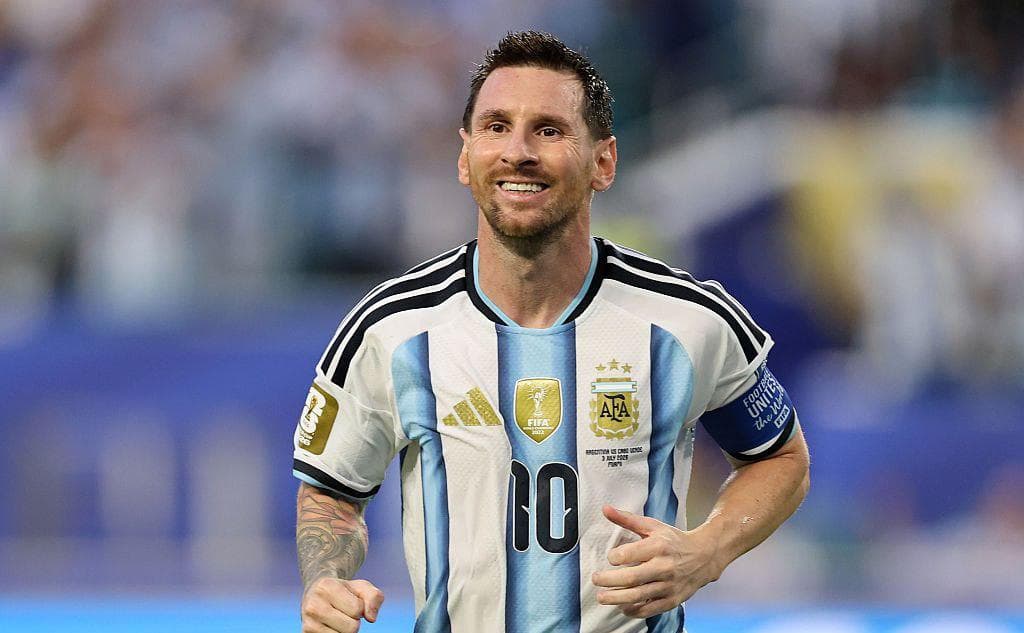
Eight-time winner of the “Golden ball” Lionel Messi held the last match for the national team of Argentina. In a friendly meeting with Benin, the captain of the national team said goodbye to the fans and the national team, for which he played for 21 years.
Over the past five years, Messi has won all the major international trophies with the national team. Ten years ago, he was ready to end his international career due to setbacks.
How Messi almost ended his career in the national team in 2016
Messi at the end of August announced the completion of performances for the national team. This is not the first time the Argentine has announced his retirement from the national team.
In 2016, Messi decided to end his international career after losing to Chile in the Copa America final. Argentina lost its fourth major international final. Before that, the team lost in the 2007 Copa America final, and in 2014 lost to Germany in the decisive match of the World Cup, in 2015 lost to the same Chileans in the decisive match of the Copa America.
“This is a difficult moment. The first thing that comes to my mind is that it’s over for me and our team. This was the fourth final. International trophies were just not for me, Messi said after the defeat against Chile.
He also said he tried many times to win the title with the national team, but was never able to do so.
Messi said this amid criticism in the media for the fact that at decisive moments he could not lead the national team, which he repeatedly did at Barcelona. He was accused of playing better for Barca.
“The media called us losers after defeats, said that we do not feel responsible playing for the national team, that we should not be in the national team,” Messi recalled in a 2021 interview with ESPN after winning the Copa America. We tried to be champions before, we were the first to want to be. It is very difficult to win the World Cup or the Copa America. At the time, they did not appreciate what we had done, they merely emphasized that we had not achieved our goal.”.
However, after about six weeks, Messi changed his mind. Amid a massive campaign of fans urging him to return, the footballer announced that he would continue to play for Argentina.
The next ten years were the most successful period in the history of the team.
Scaloni created the perfect system for Messi
Today, the first half of Messi’s international career looks almost like a story from a different reality. Until 2021, Argentina could not win a major tournament with Messi. The team lost the Copa America finals in 2007, 2015 and 2016, and in 2014 lost to Germany in extra time for the World Cup final.
After Messi returned to the national team in 2016, the situation did not change immediately.
At the 2018 World Cup, Argentina had a hard time qualifying, and after the 0-3 defeat against Croatia, there were reports of a conflict between players and the coaching staff. In the 1/8 finals, the team lost to France (3: 4), although the match in Kazan became one of the brightest in the tournament.
After the World Cup, the team left the head coach of the national team Jorge Sampaoli. In his place was appointed his assistant Lionel Scaloni.
The decision drew serious criticism. In particular, the legend of Argentine football Diego Maradona then wondered why the national team entrusted Scaloni. “He’s a great guy, but he doesn’t even know how to regulate traffic. How can we trust him with the Argentina national team? said Maradona.
In the end, it was Scaloni who became the coach under whom Argentina achieved the greatest success since Maradona.
Scaloni and his coaching staff were able to convince Messi to return to the national team. This decision completely changed the history of the team.
In seven years Scaloni has won two Copa America and a World Cup with Argentina. Messi played a key role in all these successes.
Under Scaloni, the team built the game in such a way as to make the most of Messi's strengths. He wasn’t required to be constantly pressed and do a lot of work without the ball. The main task of the captain was to create moments and solve episodes in the attack.
How Messi won all the trophies after 35 years
The result was impressive. Argentina won the Copa America in 2021, the World Cup in Qatar in 2022, then again became the winner of the Copa America, and in 2026 reached the final of the World Cup. Over the years, the team has achieved results that have not been seen for generations.
The last two World Cups have been an important part of Messi’s legacy. The Argentine has played more World Cup matches than any other player (34). He also became the first player to start in three World Cup finals: in 2014, 2022 and 2026.
At the last two tournaments, Messi also set several records. Of the 33 productive actions of the Argentine at the world championships, 22 fell on the tournaments of 2022 and 2026.
Messi also scored 21 goals at the World Cup. In 2026, he briefly surpassed Miroslav Klose, scoring the 18th goal, but eventually lost to Kilian Mbappe, who brought his score to 22 goals.
Another record Messi set thanks to a series of nine matches of the World Cup in a row with goals scored. This series began at the winning tournament for Argentina in 2022.
Winning the 2022 World Cup was Messi’s main argument in a decades-long dispute over the title of the best footballer in history. This dispute cannot be resolved objectively. Until 2022, however, Messi's critics had one strong argument: unlike Pele and Maradona, he did not win the World Cup.
In Qatar, Messi finally won the World Cup trophy and became the main hero of the tournament. He scored in the final against France and implemented a penalty in a series of post-match hits. At the tournament, Messi scored ten performances and helped Argentina win the World Cup for the first time since 1986.
The defeat in the 2026 World Cup final may have been no less painful. But it could not seriously affect the legacy of Messi.