English football goes bankrupt: sports dictatorship begins
The opinion of the chief editor of the MK-Sport department Sergey Alekseev about why all English football was unprofitable and who really needs it. An independent financial regulator has published a report on critical financial risks in English football: all top-division clubs are operating at a loss, two-thirds of lower league teams are insolvent. The regulator requires increased control of costs and the development of plans in case of departure of owners. The British government called the situation grim.
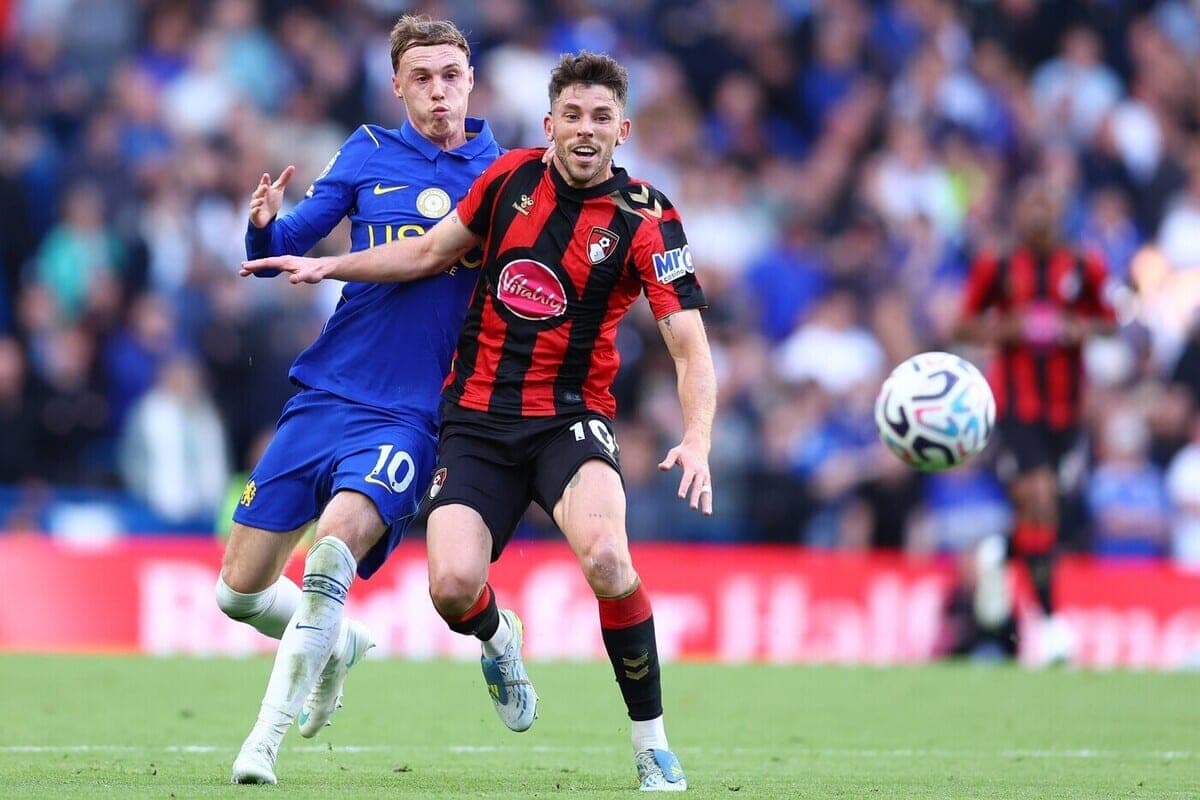
English football's financial chasm: regulator sounding the alarm, but does the industry believe him?
A report by the Independent Football Regulator (IFR), published on 13 October, exposed a systemic crisis in the structure of English football. The document states that the national game is “dangerously exposed” to financial risks. The figures leave no room for illusions: 94% of clubs in the top five divisions of the country are operating at a loss. These statistics became the main argument of the department, created in September 2025, to justify the need for tough state intervention in the economy of sports.
The regulator has unveiled a six-point plan aimed at boosting the financial sustainability of what the UK calls a national treasure. Key requirements include increased cost control and mandatory contingency plans. The draft report, which will now undergo an eight-week public debate before finalising, paints a grim picture for the lower echelons of professional football. Almost two-thirds of English Football League and National League clubs are technically insolvent. Their survival is increasingly dependent on personal financial injections from the owners, which creates a critical vulnerability of the entire system.
IFR chairman David Kogan highlighted the disparity in club development. While some teams are among the richest and most competitive in the world, others are teetering on the brink of financial disaster. A number of clubs have explicitly stated to the regulator that they are unable to continue in the event of the departure of the current owners. Football organisations are therefore required to better manage risk and have standby strategies in place in the event of an end to investor support.
The reaction of political figures confirms the seriousness of the situation. Culture Minister Lisa Nandy said the findings only formalize long-standing fears of fans. Fans have been living in anxiety for years, she said, knowing that their club could be on the verge of ruin due to one incompetent owner or a failed financial period. The report, according to the Minister, not only confirmed these fears, but revealed the real state of affairs, demonstrating the true state of finances of English clubs.
The Premier League took a position of partial agreement with the regulator’s conclusions, focusing on the need to solve the problem of income distribution initiated by market participants themselves. The league said the new funding should be accompanied by effective oversight and broad reforms. Tensive negotiations are currently underway between the Premier League and the English Football League (EFL) on a new agreement. The elite division's clubs have offered £1.8billion over a decade in addition to existing payouts. However, the EFL is pushing for a more aggressive option - £1billion over five years. The Premier League says their proposal, which was unanimously approved by the clubs back in July, is fully in line with the objectives outlined in the IFR report.
A separate layer of the discussion concerns the case of Manchester City. David Kogan has flatly rejected accusations of political pressure on the regulator over its investigation into Premier League financial rules violations by the club. An independent commission had previously found City guilty of serious violations, but city authorities appealed the decision, insisting there were significant errors in the detention. The interim finance committee has the power to assess the bona fides of owners in the context of such breaches, raising the possibility of additional scrutiny by City management in the event of a loss of appeal. Kogan said he was ready to leave immediately at the slightest hint of political interference in the work of the department, stressing the complete independence of the regulator.
However, the very existence of a watchdog with virtually unlimited power over English football has drawn sharp criticism from both abroad and within the UK. Experts point to the risks of excessive bureaucratization and limitations of market mechanisms. Despite this, representatives of UK sports financial institutions remain unwaveringly confident in the correctness of their actions, arguing that any restrictive measures are taken solely for the benefit of the national heritage.
** *
The Independent Football Regulator (IFR) is a non-departmental state body of the Ministry of Culture, Media and Sport responsible for protecting and promoting the sustainable development of English football. It was first proposed as part of a review initiated by fans and, following the passage of the Football Governance Act 2025, was created in September 2025. He was given the authority to oversee the top five divisions of men's football in England, and the IFR's goals included improving football's financial sustainability, as well as preventing English clubs from joining the "wrong" competitions such as the European Super League in 2021.
Under the Football Management Act 2025, every club with a team in a particular competition is required to hold an activity licence issued by the IFR. Currently, these competitions include the five top divisions of English professional men's football: Premier League, Championship, Ligue 1, Ligue 2 and First Level of the National League, covering a total of 116 clubs.
The licensing system operates in two stages. First, the club applies for a temporary licence for activities that are valid for up to three years. The IFR is required to issue a temporary licence if it is satisfied that the club, once licensed, will comply with the mandatory licensing conditions. A full licence to operate can be issued subsequently when the IFR is satisfied that the club is effectively managed, consistently complies with mandatory conditions and has no owners or officials deemed improper.
In accordance with Annex 5 to the Act, the IFR is required to establish four mandatory conditions for each operating license. The first is a financial plan condition that requires clubs to submit, update and act annually on a financial plan covering funding sources, revenue and expense projections, and stress-tested cash flow projections. The second is a corporate governance statement condition requiring clubs to submit, publish and regularly update a statement explaining how they apply the IFR Football Club Corporate Governance Code. The third is a condition to consult with fans, requiring regular consultations with selected fan representatives on matters including the club's business priorities, cultural heritage sites such as its name, emblem and home stadium, and match-related matters including ticket prices. The fourth is an annual statement requirement that clubs must confirm each year all matters notified to the IFR for the preceding twelve months or confirm that no such matters have arisen.
The full application period for temporary licenses opened in November 2026 and will close in February 2027. Each regulated club must have at least a temporary operating licence to compete from the 2027-28 season onwards.
The Owners, Directors and Senior Executives (ODSE) regime was created under the Football Management Act 2025 and came into full force on 5 May 2026. Under this regime, no person can become the owner of a regulated club and no person can take a managerial position in a regulated club without a prior IFR decision on its suitability. The mode is suspensive: the potential owner cannot complete the acquisition transaction, and the potential senior manager cannot take up his post while his application is being considered.
In assessing the suitability of a potential owner, the IFR takes into account three criteria: integrity and decency, including criminal record and disciplinary action in any jurisdiction; financial soundness, including the history of personal insolvency and the financial history of the entities that the individual controlled; and the applicant’s wealth sources related to serious criminal offences. Under section 28(4)(b) of the Act, if the IFR has reason to suspect such a connection, it must refuse the application.