"Just crying and getting better." Taimazova forged bronze, repeating the record of Russians 33 years ago
The fifth day of the World Judo Championship in Baku has become a real, long-awaited holiday for the entire Russian team
The first days of the tournament in the capital of Azerbaijan were extremely difficult and really dramatic for our delegation. Expectations of domestic fans were high, but the tatami seemed to test athletes for strength, stubbornly not giving cherished medals. In this atmosphere of increasing tension and uncertainty, each new fight turned into a fierce battle not only with a formidable opponent, but also with his own internal doubts. It was at this critical turning point that the unbending will and true champion character of our illustrious judoka, who did not allow the team to give up, came to the fore.
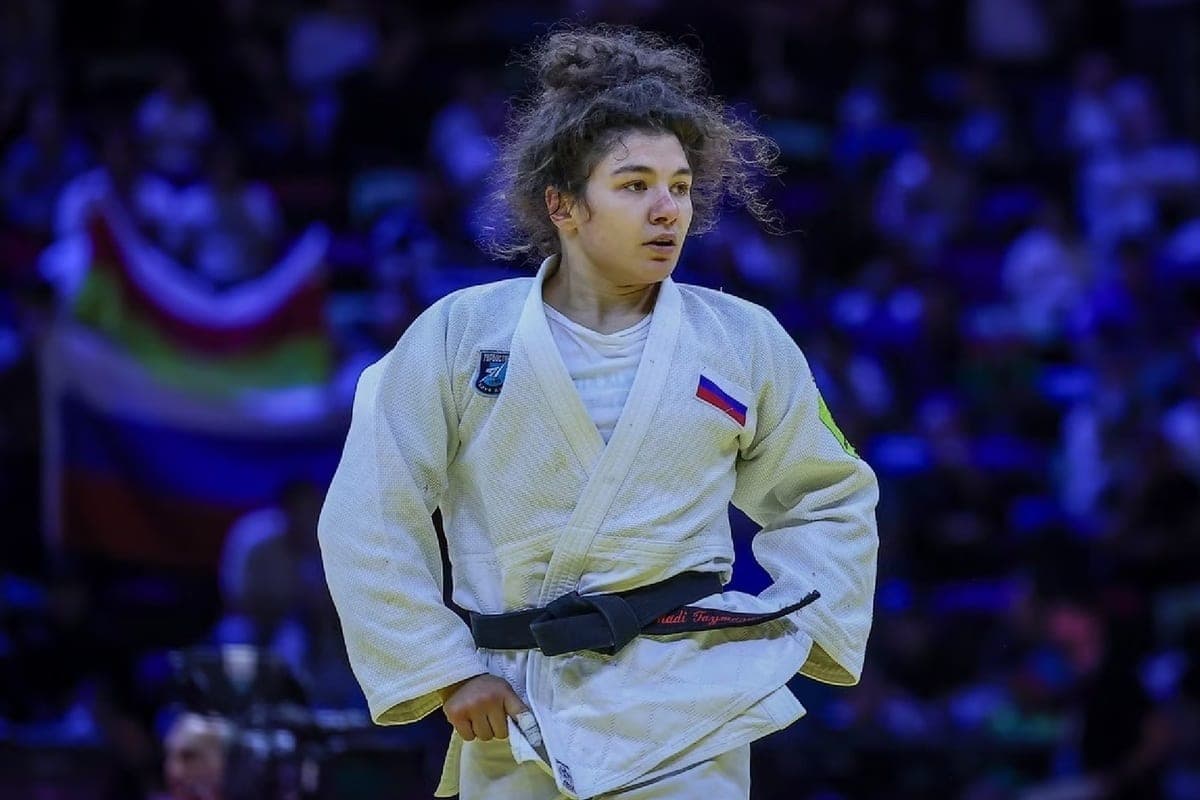
Madina’s path to the podium was truly thorny, winding and full of sports drama. Starting with a minimal but important victory in the Golden Speed over the representative of Portugal, she then confidently and coolly dealt with the experienced British woman, not allowing her to carry out any effective action. However, in the quarterfinals, fate decreed otherwise: the Austrian Mikaela Polleres, whom Taimazova had previously conceded, and this time turned out to be more cunning, holding a decisive throw on the "vasa-ari" and sending the Russian woman to a consolation round.
It would seem that after such an annoying and offensive defeat, the morale of our judoka could be finally broken, but Taimazova showed everyone an example of real, indomitable sports resilience. As she later admitted, before the consolation circle, she just cried, and she immediately felt better. This natural emotional outburst became the very necessary detente that allowed her to immediately collect her thoughts, to throw off any negative and with a cold, clear head to enter the next fights, where the honor of the whole country was at stake.
In consolation, Madina acted impeccably, prudently and with enviable composure. At first, she minimally, but very confidently overcame the Swedish Ida Eriksson, earning the only “yuko” beautiful and effective pickup. And in the small final, having met with a young and incredibly ambitious Serbian Alexandra Andrić, our 27-year-old athlete did not leave the opponent with the slightest chance of salvation. In the third minute of the decisive match, Taimazov performed a stunning throw over the back, which brought her a well-deserved bronze medal.
It is worth noting that the level of competition in women’s judo today has reached unprecedented heights. As Taimazova rightly noted, with the beginning of the set of Olympic rating points, the mood of all rivals changed dramatically. Now on tatami everyone literally gnaws and fights to the last breath. Where previously you could count on an easier and more predictable fight, now you have to give your best, turning each fight into an exhausting test of strength. In such conditions, any medal, especially obtained through consolation rounds, is valued for its weight in gold and testifies to the tremendous inner strength of the athlete.
Of course, the Bronze World Cup is a success. I am not in the habit of talking about medals bad or very upset, I am always happy with any award, because it is work, and I always work at full strength, said Madina Taymazova. If it is not gold, there is still work to be done. Next time, hopefully, our efforts with the coaches will lead to gold, and in the meantime, there is sports anger and dissatisfaction.
Thus, in the general treasury of the Russian national team in Baku there were two awards, and both were won by representatives of the fair sex: earlier Sabina Gilyazova got the “bronze” in weight up to 48 kilograms. This result allowed the female part of the team to repeat its highest achievement at the world championships, established 33 years ago in Canada. Such historical parallels give the triumph a truly epic scale, recalling the great traditions of domestic judo, which continue to live and win in new generations of athletes.
Senior coach of the women’s team Vladimir Degtyarev very accurately noted that the success of one athlete powerfully inspires the whole team. When girls see that their partner in daily exhausting workouts is able to win at the highest level in the world, it serves as a powerful catalyst for others. “She can, and we can,” that simple but important thought now lives in the minds of every judoka. Now all hope for the men’s part of the national team, which in the coming days will try to multiply this success