Three-set drama in Tokyo: how Schneider cracked the cunning rhythm of Sasnovich
Tennis tournaments rarely forgive relaxation, but Tokyo's WTA-500 competitions resemble an obstacle course. Russian tennis player Diana Schneider, who occupies the 13th place in the world ranking, made sure on her own skin that the difference in positions on the scoreboard sometimes means much less than the combat mood and the rhythm of the opponent. In the second round, Schneider had to unravel the real Tokyo trap set by the 112th racket of the world by the Belarusian Alexandra Sasnovich.
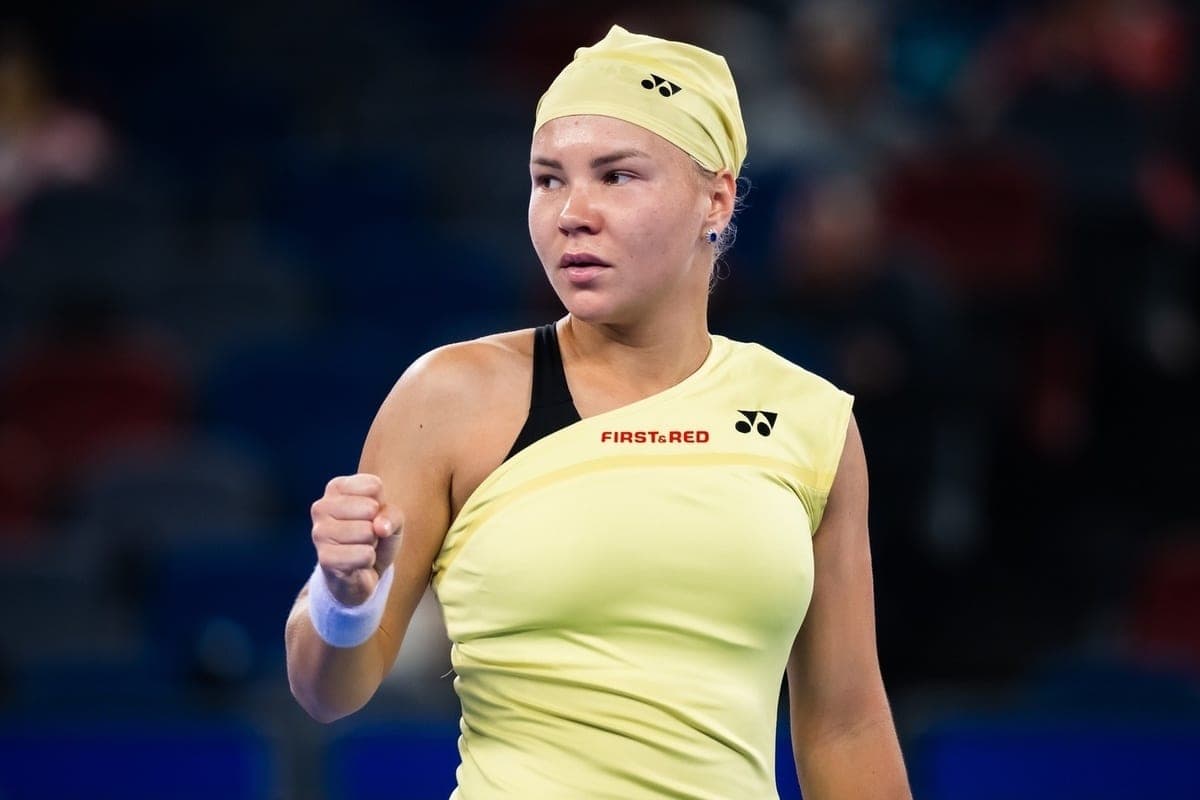
The match against lasted for two hours and twenty-five minutes, and the final score of 6:3, 5:7, 6:3 in favor of Schneider only weakly conveys the tension that reigned on the court.
It would seem that the status of the favorite and the place in the elite should have allowed Diana to cope relatively quickly with the Belarusian tennis player. But the sport is so beautiful that breaks any forecasts. Sasnovich made her way into the main grid by going through the crucible of qualification. Two additional matches gave Alexandra an invaluable advantage: she already felt covered, adapted to local conditions and gained the same playing rhythm that Schneider so lacked, just starting her way up the grid.
This factor turned the meeting into an exhausting war of attrition, where not only blows but also nerves played a decisive role. Take a look at how the fight for someone else's serve developed: the tennis players together created 34 break points. This is a measure of how often they put each other in an uncomfortable position, making each other wrong in the most important moments. Schneider showed more composure, realizing seven chances out of sixteen. Sasnovich, desperately resisting, squeezed five breaks from eighteen attempts. On the filing, the girls also acted with an eye on risk: Diana was marked by one ace, but two double errors, while Alexandra did not serve through, allowing only one misfire. Each game was given through pain, each ball required extreme concentration.
Schneider herself, after an exhausting battle, very accurately laid out this tactical puzzle on the shelves.
“Of course it was a very tough match. She qualified, so she spent two more meetings. Sometimes it’s really hard to play against an opponent who played two matches in qualifying and then won the first match in the main draw when you’re just starting out on a new surface.
But yes, in the second set she showed incredible tennis, a very high level of play. I don't think I made many mistakes there. In the third set, she just tried to fight for every point, to see if she could keep the level she had in the second set. I tried not to make too many mistakes of my own, play aggressively and fight for every point, waiting for the opportunity to break, Schneider said in an interview on court.
These words are the essence of mature tennis. Schneider did not panic as she lost the second set, nor did she try to turn the tide of the meeting with one risky shot. She chose the tactic of patience: play aggressively, but without adventure, and wait for the physics and emotions of the opponent to begin to lose ground. That plan worked flawlessly. In the decisive party, Sasnovich could no longer maintain that crazy pace, and Diana methodically led her to defeat.
The Russian tennis player has a new challenge ahead. In the quarterfinals, Schneider will face the 19th racket of the world Alexandra Eala from the Philippines. It will be a completely different story, but the Tokyo lesson has already been learned: there are no easy walks at this level, and every match must be approached with the utmost readiness.
The tournament in the Japanese capital, the current champion of which is Swiss Belinda Bencic, started on October 26 and will last until November 1. And judging by the dramas unfolding on the courts, it's too early for fans to relax.