WWA: the cause of the collapse of the glacier in Nepal was global warming
The World Weather Attribution (WWA) team said climate change was the cause of the glacier's demise, which caused devastation in Nepal and Tibet in August. Reuters reports.
The World Weather Attribution (WWA) team said climate change was the cause of the glacier's demise, which caused devastation in Nepal and Tibet in August. Reuters reports.
According to scientists, the rapid increase in temperature in the region led to thinning of glaciers and melting of ice and permafrost in the Himalayas.
As indicated in the study, the average temperature in the Himalayan region in August was about 5 degrees Celsius above normal. The increase in average temperature by 1.5 degrees was due to climate change. Heavy snowfall in October and November last year also led to an increase in meltwater volume.
Since 2000, glaciers in the region are thinning by about half a meter per year, which leads to a change in the load on the rocks. Melting permafrost could also weaken the rock wall.
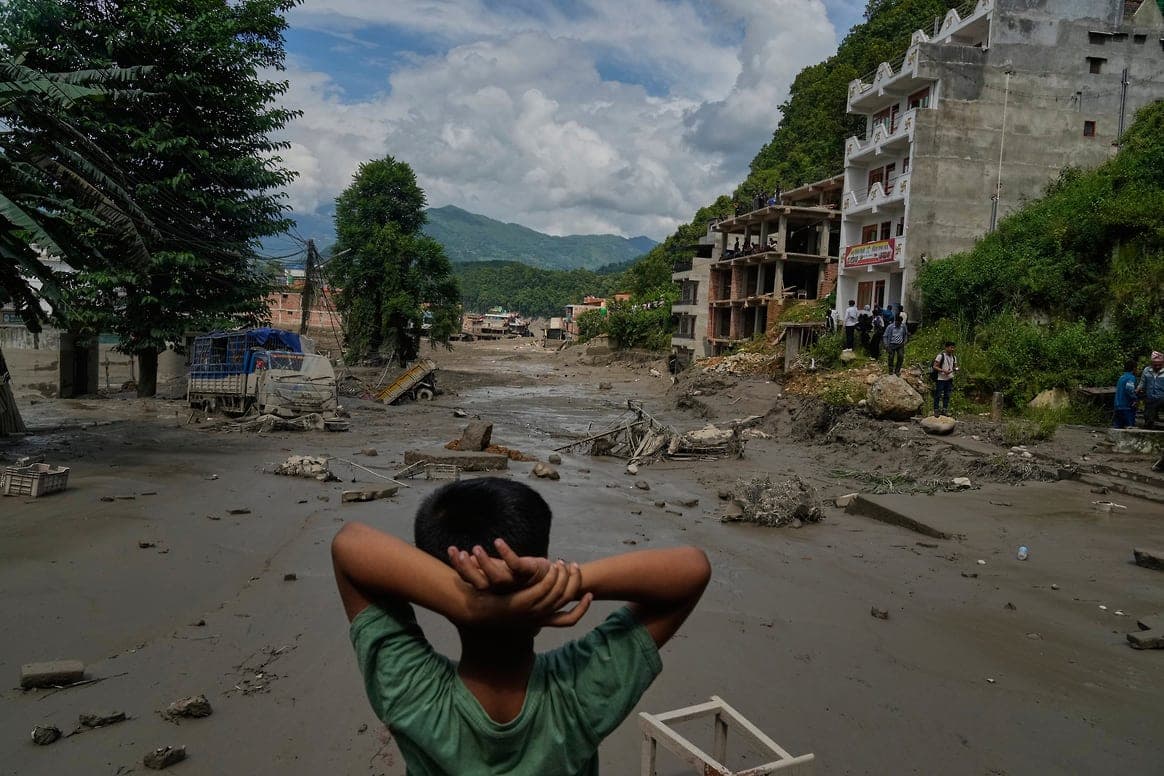
On August 25, a glacier collapsed on Mount Langtang-Lirung. Part of the ice collapsed in the gorge of the Lhende Khola River, which led to the closure of the channel. Due to the cascading effect, three more rivers were affected. The resulting mudflows caused destruction in six regions of Nepal and in the Tibet Autonomous Region of China. As of September 15, almost 1.4 thousand people were recognized as dead as a result of the disaster.
Ernest Philippowski