Control algorithms. How computer intelligence is trying to control human behavior
History is a change of wars and inventions. But the past is also a change in appropriation. Thousands of years ago, the winner turned...
History is a change of wars and inventions. But the past is also a change in appropriation. Thousands of years ago, the victor turned the vanquished into a slave, took his land. What now? Today they are trying to get our attention, our desires and our ability to make choices. A new model of profit and wealth is emerging. Where does that lead?
In the textbooks of political economy it is written: "The mode of production determines the social structure of society." If we speak in the categories of property relations, to appropriate what is most valuable in a particular era.
In slavery, muscle strength was important. Surplus product was extracted rigidly - with a whip and chains. During feudalism, land became the main resource. The peasant was no longer a thing, but he was tied to territory. This meant formal freedom, but no choice. Rent (working, natural, monetary) took the lion’s share of what was produced. Appropriation and redistribution of wealth has become more elegant through custom, tradition, and law.
Capitalism brought pairs, machine tools and manufactures to the world. The object of appropriation was materialized labor. The worker is formally free. He sells his time under contract, gets paid. But the whole point is that he creates more value than his food, his clothes, his housing. The so-called surplus value was taken by the factory owner.
Embezzlement, or, roughly speaking, robbery, has been hidden in the buy-sell formula, in discussions about fair profit sharing, and in risks. Often the worker was made to think that he was a partner, but in reality he was a resource for the owner of the means of production. Throughout history, the driving force behind all social conflicts, uprisings, and revolutions has been the desire to make the system of profit distribution more equitable and equitable. Today marks the transition, in fact, to a new socio-economic formation. In the language of political economics, this period is called a phase crisis. It is due to the emergence of new technologies that make the old way of economic organization of society inefficient. History proves that such a transition is often not quiet and smooth.
So, at the time of the collapse of the slaveholding model, Rome had up to 1 million inhabitants. The city had water supply and sewage systems, public baths. After the systemic breakdown, the largest cities of feudal Europe hardly numbered 50,000 people. Mankind was forced to forget about functioning water supply and sewerage for at least 800 years.
The period from 1453 to 1648 historians call the "long XVI century". Feudalism was cracking at the seams, and the new capitalist order was only making its way. This was done with the slightest compromise. For example, in “enlightened” England, nothing better than “enclosure” was found to launch the wool industry. This is when peasants were simply driven off the land to raise sheep. "Extra" people did not die instantly. They were joining an army of vagrants. In the cities where they fled in search of work, there was crowding, unsanitary conditions. There were epidemics.
The collapse of the USSR was also a kind of “phase transition” for the former socialist countries. Manufacturing collapsed almost everywhere, and millions of people, just yesterday engineers and teachers, traded in the markets to avoid starvation. Today, global humanity is once again on the verge of change. But this process does not start through the redistribution of property. The subject of appropriation is our needs. As part of the digital transformation, the mobile phone is no longer just a communication device. Every finger movement, every pause before a like, every search query is thoroughly analyzed. American social psychologist Shoshana Zuboff called it a “behavioral surplus” that companies can use to make a profit. Today, the personal data collected allows corporations to obtain complete information not only about what you are doing now, but also about what your behavior will be in the future. In the industrial era, added value was generated by the labor of workers. In information, the main value is not even an array of data, but algorithms for predicting consumer behavior and preferences. What to buy a coffee maker, what work to agree to – machine
the mind can predict this before the individual is aware of his desire. And that knowledge is sold to the payer and turned into a new value-added generator.
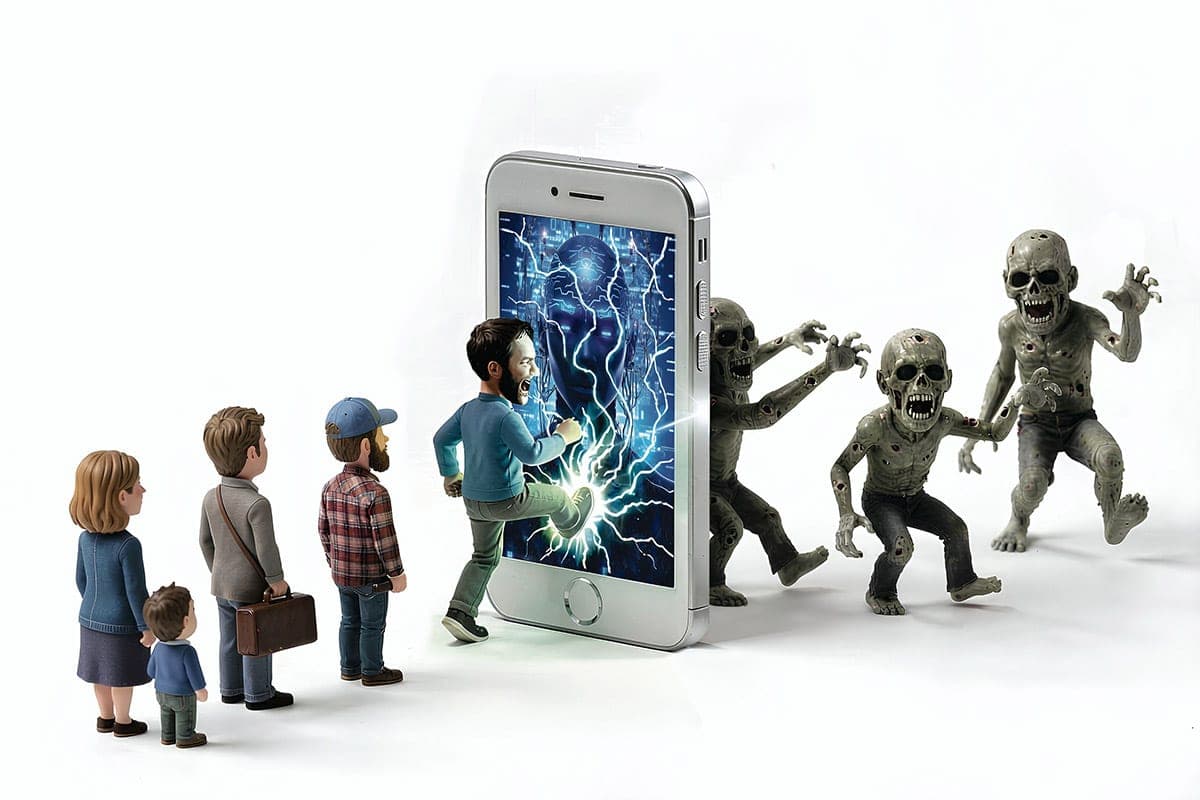
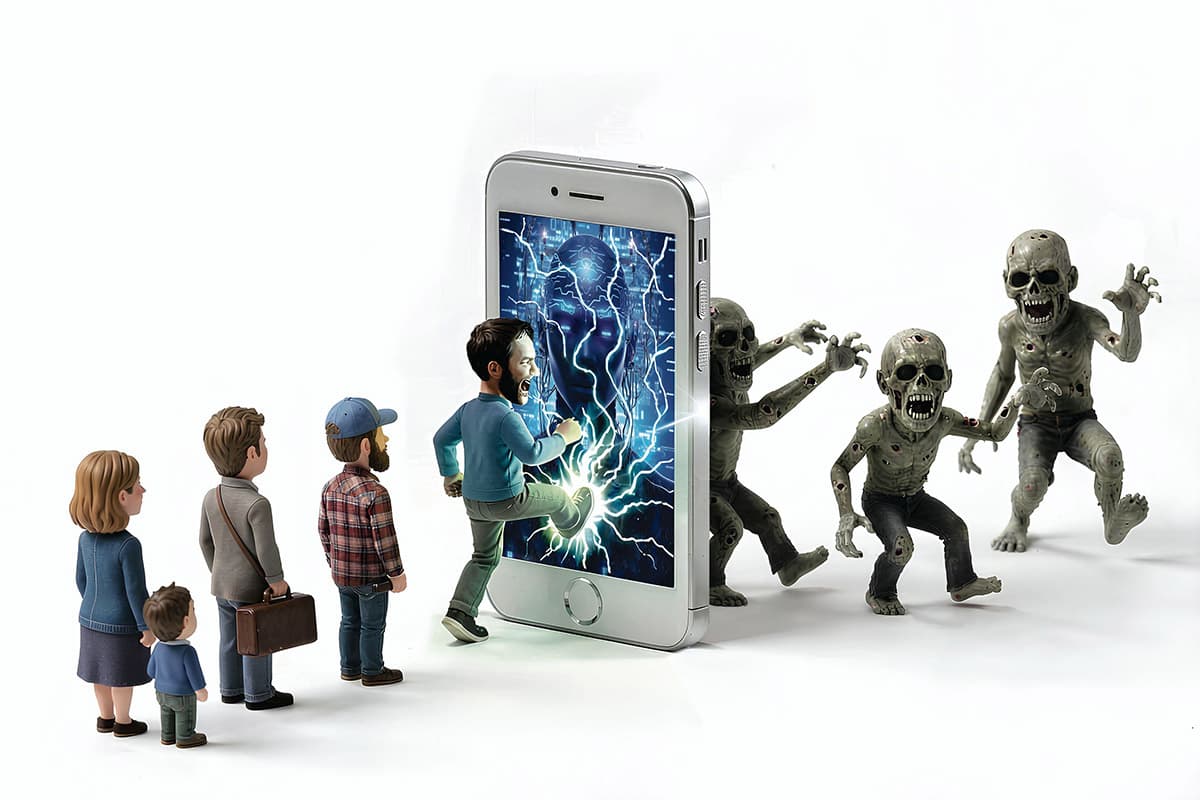
We see in the collective West attempts to create an “instrumental power” that gets the desired result, not by coercing or changing laws, but by correcting, in scientific terms, “the interaction of the citizen with reality.” Or what is perceived as reality. The biggest problem is that during the transition time, the “atomized mass” of people that will exist in the virtual reality world can grow. Their thoughts will be controlled by “cheap” doping in the form of an absorbing endless feed of news, games, narratives, fictional events, illusory conflicts and achievements. And life in this way will turn into a simulacrum, where reality is replaced by an interface. Virtual management systems are already being built. Social media is not just about communication. It's the architecture of addiction. Recommendation systems are not just a search, it is more like a hypnotic effect on a person. Dating platforms are not so much a way to meet new people as weaning a person from real contact, immersing him in the illusion of communication. AI, by and large, doesn’t help you think—it thinks for the person who asks it the question.
This is what political philosophers call epistemic inequality. It is created through access to knowledge about human behavior, where technology corporations know more about us than we do about ourselves. This information can be used for management. Algorithms see the patterns of each person’s fears and weaknesses. This is how you access a person’s subconscious through their digital footprints. It's the power of prediction. And its power to society has yet to be fully realized. Sovereignty of choice: Can these processes be stopped? Hardly. The tide of history does not reverse. But you can understand and adjust the rules of the new game.
The real struggle is the struggle for the sovereignty of the will. If humanity allows algorithms to make our lives completely controlled, we will cease to be human in the full sense of the word. Virtual reality encroaches on the most precious thing that a person has – freedom and the right to choose. Therefore, the task for the future is to create a new ethics and laws, where it will be laid down that the behavioral data belong to the person himself. And it's untouchable. Otherwise, there is a danger of dissolving into the consumption matrix.
THEME
Under the pressure of technology, there is a shift from owning assets and resources to controlling goal-setting and behavior. This is much more subtle and complex than the whip of the slave owner, the order of the feudal lord or the appropriation of value by the manufacturer. The system simply gives a person the options that are beneficial to it. It shapes the environment and makes it so that, for example, the consumer wants what is beneficial to the corporation, considering it his free choice.
Andrey Savinykh, expert on foreign policy.