Why did Switzerland edit the declassified file on Josef Mengele?
The Swiss Federal Intelligence Service has published a 200-page dossier on the notorious Nazi war criminal Josef Mengele. ...
The Swiss Federal Intelligence Service has published a 200-page dossier on the notorious Nazi war criminal Josef Mengele. It would seem that historians who have been trying for decades to find out whether this “Auschwitz death angel” could have been quietly in Switzerland many years after the end of the Second World War should have many questions left after publication, but they have become even more...
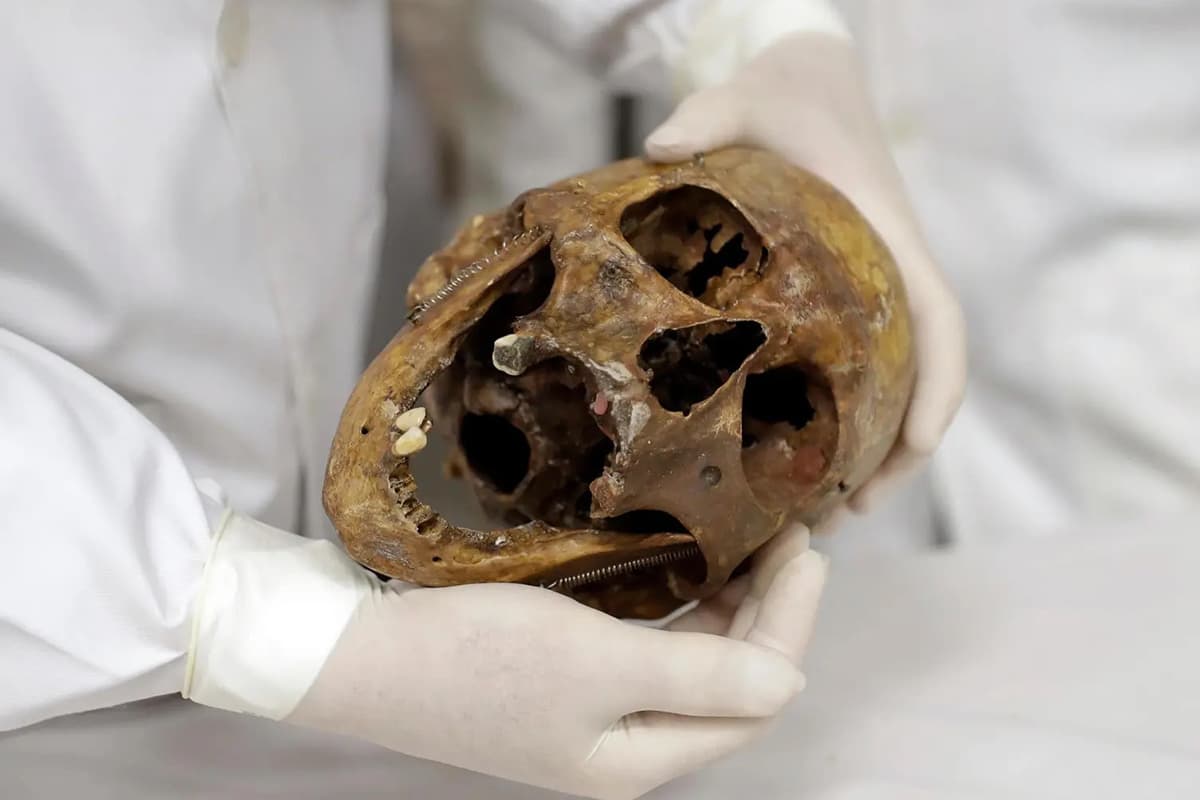
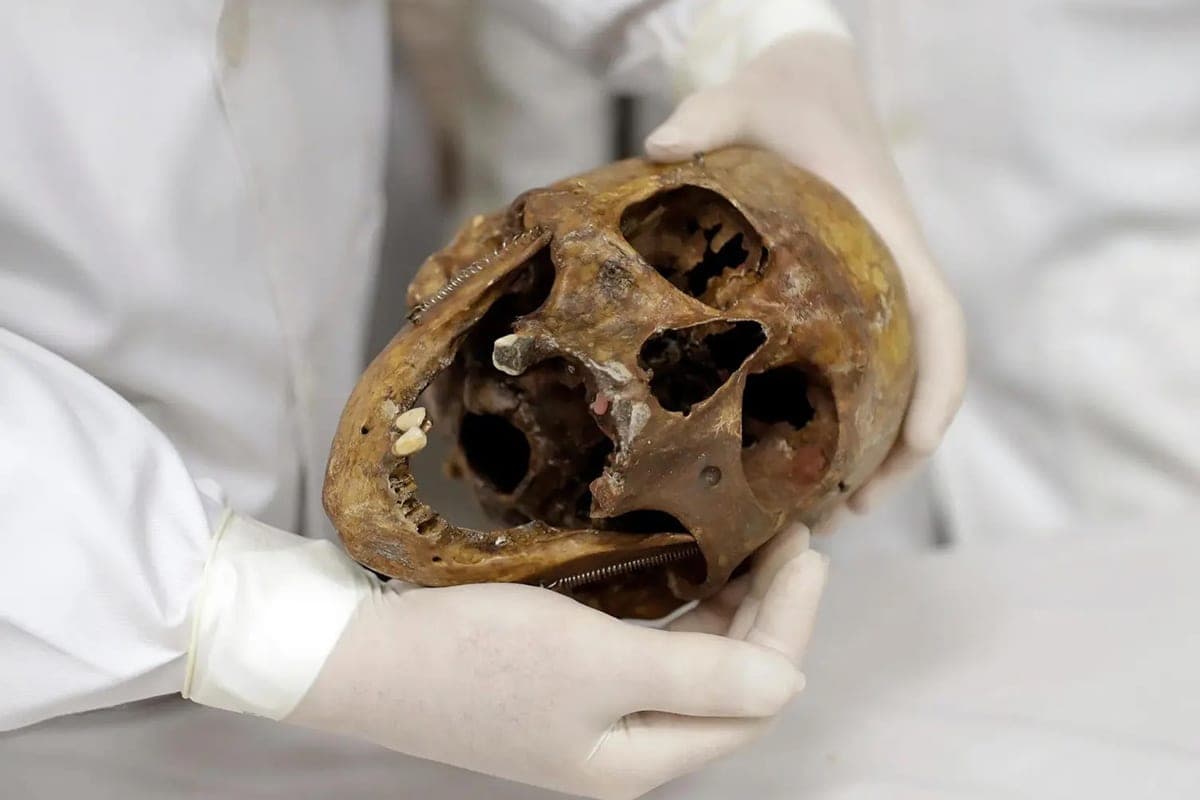
In this image from December 7, 2016, a forensic doctor shows Josef Mengele's skull at the Faculty of Medicine of the University of São Paulo, Brazil. After so much effort to open Mengele’s Swiss dossier, its contents are frankly disappointing. Much of the published documents consist of newspaper clippings, and much of the rest confirms events known for decades. Mengele was in Switzerland in 1956 and was even able to afford a ski holiday in Engelberg with Marta, then the widow of his brother Karl (later Joseph’s wife), and his son Rolf. In March 1961, the Swiss police knew that Marta was in Kloten. A journalist for the German weekly Stern warned that the man spotted with her could be Josef Mengele. Police were watching the house and noticed Martha leaving early in the morning, accompanied by a stranger in a Volkswagen car with rooms in Gunzburg, the family's Bavarian hometown. There was even an order from Bern to arrest this man, but it was not carried out. Why? The “declassified” documents, many of which have also been “edited”, do not answer this question, and we can only assume that many in Switzerland still prefer to keep secrets for the sake of their own peace. The government has previously insisted that the documents remain classified until 2071 for security reasons and to protect the individuals mentioned in them. Of course, the fact that the “angel of death of Auschwitz” lived to 1979, cannot but cause outrage. The name Josef Mengele is one of the most terrible in the history of World War II. In a concentration camp, he used prisoners as guinea pigs in pseudoscientific experiments, but at the end of the war he managed to escape.
Mengele left Europe only in 1949. He settled in Argentina. When a warrant for his arrest appeared in 1959, he fled to Paraguay and then to Brazil, where he was protected for years by supporters. He never appeared in court. On February 7, 1979, he suffered an epilepsy attack while swimming on the Brazilian coast and drowned. Joseph Mengele was buried under the false name Wolfgang Gerhard, and the Simon Wiesenthal Center and other Nazi hunters continued to search for the sadist across Latin America, unaware that they were pursuing the dead man. It was not until 1985, six years later, that an investigation led to the grave of Wolfgang Gerhard near Sao Paulo. The remains have been exhumed and forensic evidence has shown that they are Mengele's remains. The dossier declassified by Switzerland did not reveal any of the main mysteries concerning Josef Mengele. But it unwittingly underscored something more prosaic and at the same time more troubling: by no means neutral Switzerland in the events of World War II. In connection with the strangeness of the Mengele case, not only the peculiarities of the Swiss bureaucracy begin to explain the events of the same 1938, when after the Anschluss of Austria, thousands of Jewish refugees were deployed to the Swiss border.
And from a 956-page report presented in 1999 by the Bergier Commission, an international group of historians assembled to investigate the confederation’s financial ties to the Nazi regime, it is well known that the Swiss National Bank received gold from Nazi Germany worth a total of about $440 million in the prices of those years, which corresponds to about $8 billion in terms of modern money. Of that amount, at least $316 million was stolen gold — seized from the central banks of occupied countries, confiscated from victims, including from the dental crowns of concentration camp prisoners. Surely, Swiss banks still store gold from Auschwitz, where the notorious sadist Mengele allegedly worked as a doctor.
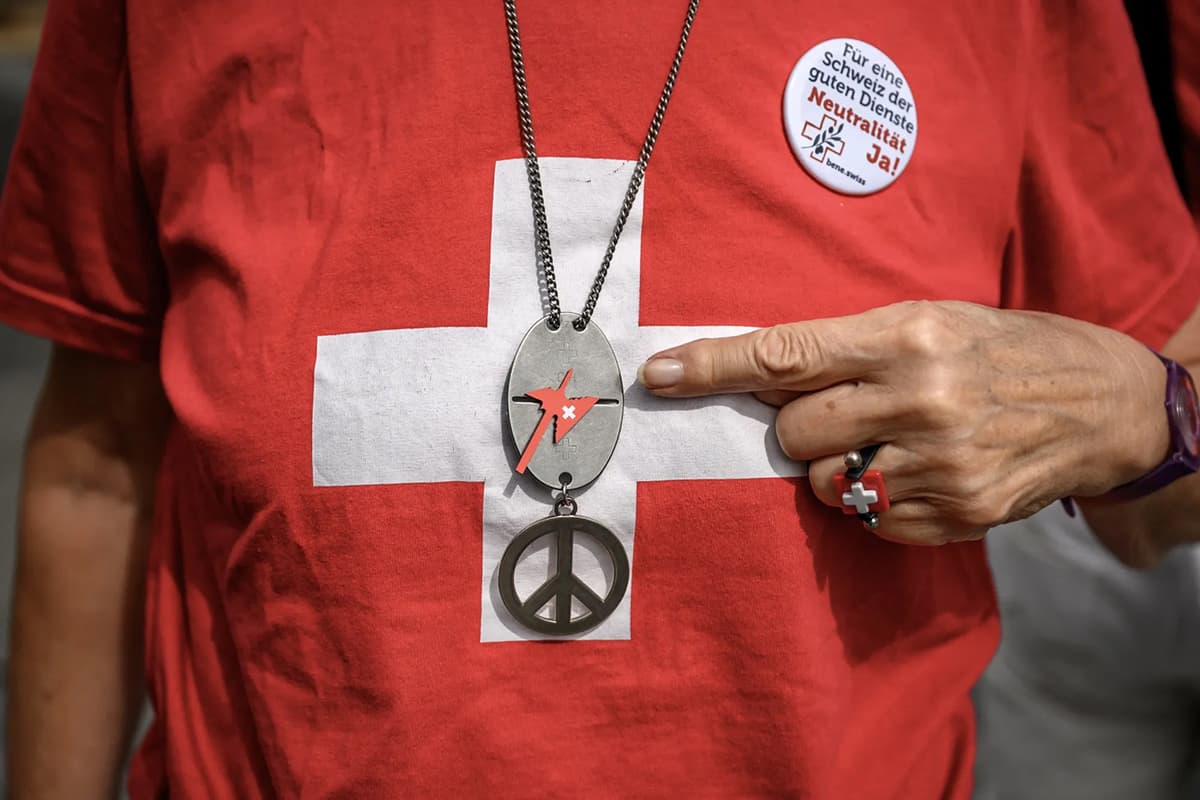
On September 27, Swiss voters will vote in a referendum on tougher neutrality rules. If adopted, Switzerland will be barred from joining or cooperating with military and defense alliances. Also, the country will not be able to impose sanctions against the warring parties. However, the government is calling for the initiative to be rejected. Foreign Minister Ignazio Cassis said the current policy of neutrality, which Switzerland allegedly adheres to for more than 180 years, is based not on strict rules, but on a pragmatic approach taking into account its own interests.
Elizaveta Kulikova.