Degree of stumbling. Diversification in the Energy Market
Recent protests in France have created a revealing image of a government that has lost control of the situation, using a haphazard approach to resolving the crisis.
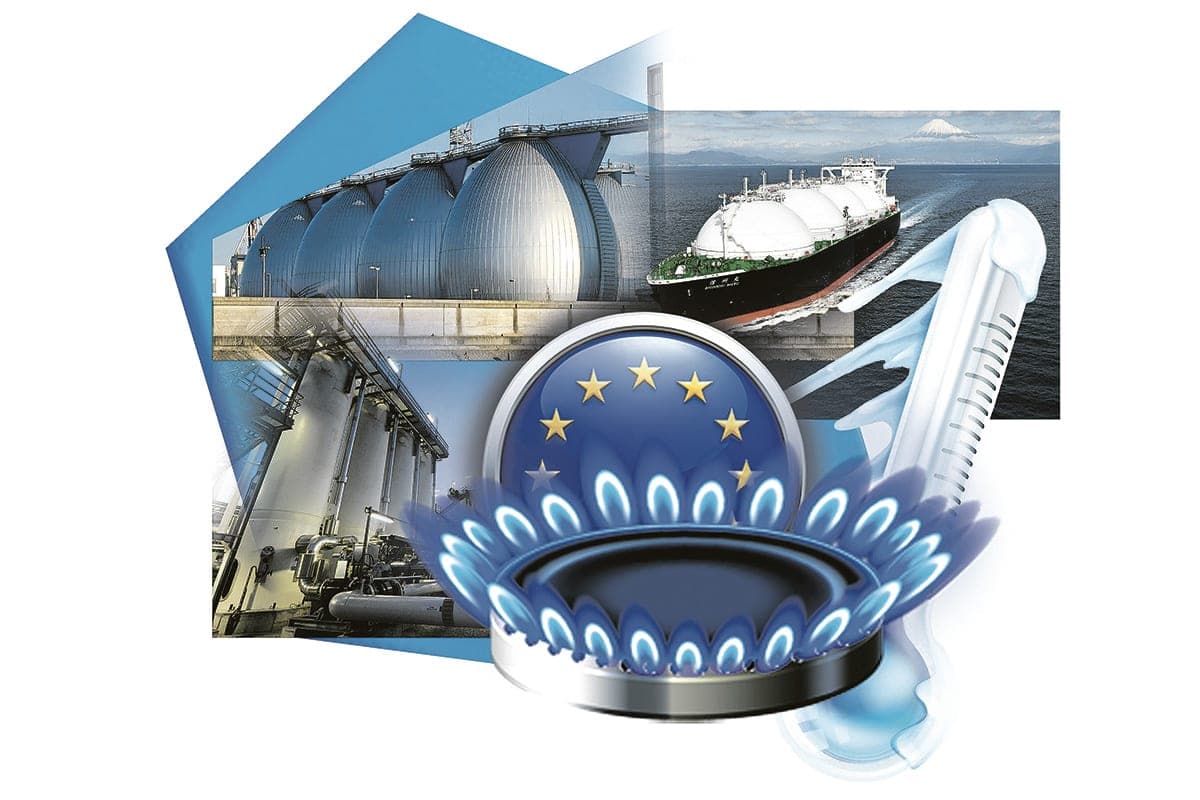
The recent protests in France have created a revealing image of the government, which has lost control of the situation, using a haphazard approach to resolving the most important problems in the state. The widespread discontent of the population and the explosive situation exposed the depth of the social problems of the country, which politicians are not yet able to solve. During the mass demonstrations, the government was rightly rebuked, including over rising fuel prices. The heating season is coming into its own, and people are rightly puzzled by the questions: will it be warm in the “Garden of Eden” in winter and how much will it cost?
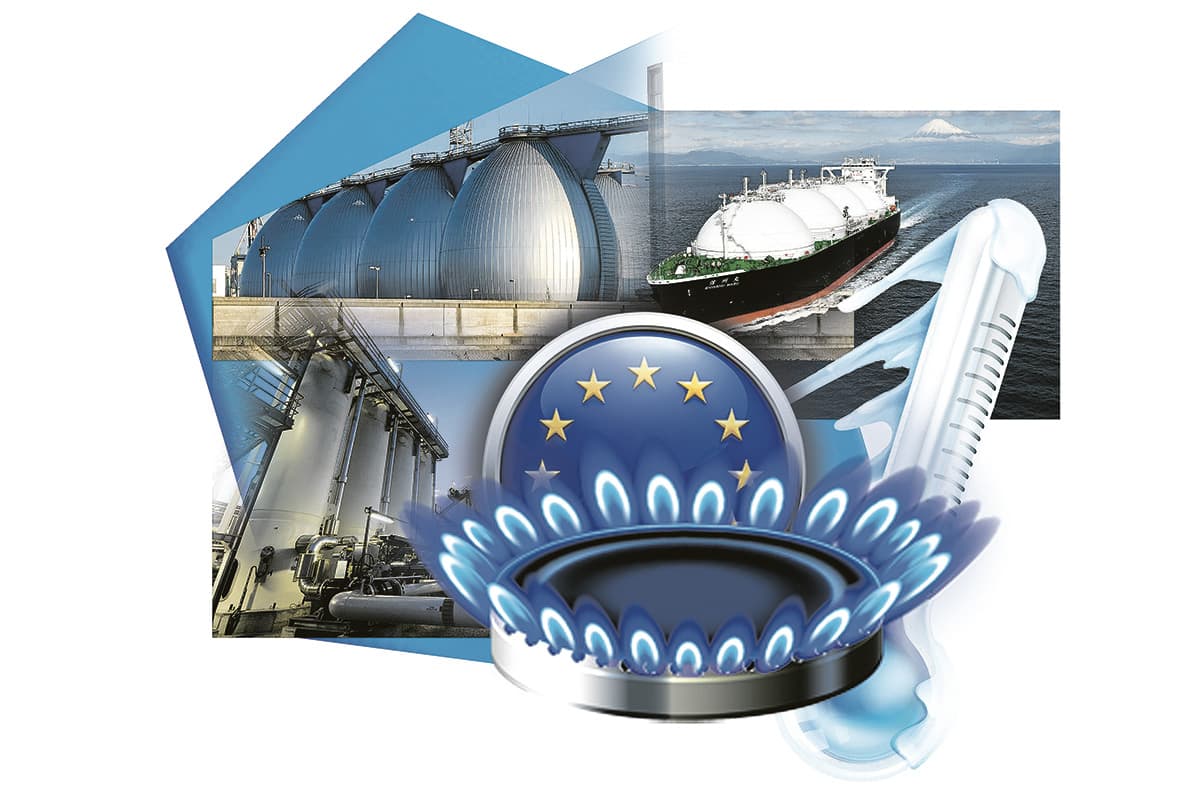
Since the beginning of the conflict in the Middle East, natural gas has tripled in price on the world market. According to the International Energy Agency, Europe is entering the heating season with its lowest reserves in the last 13 years. It's cold all over Europe. The French, like many Europeans, started turning on the radiators and wondering how much it would cost them. In fact, gas began to rise in price in the summer, but while the batteries were turned off, no one particularly noticed. In recent years, France has been actively replanting the population with electric heating, but despite this, natural gas is still the main source of heat. It heats about 35% of residential premises, which is about 11 million houses and apartments. It should be understood that gas boilers cannot be replaced at once, which means that the price of gas and its availability still seriously affect the budgets of millions of French households.
By the end of October, European gas storage facilities were about 75% full. The reason for this was that a lot of gas was used last winter, and in the summer to pump new volumes were slow in the hope that prices will fall. But that didn’t happen, and the Middle East flared up. It is important to understand that this 75% does not mean that Europe will not make it to spring. After all, the storage is a kind of airbag, and there are also gas pipelines and tankers. However, this cushion has become critically thin, and the International Energy Agency is paying serious attention to it. If the winter is very cold and the problems in the Strait of Hormuz persist, gas reserves could fall below 10% by March next year. The problem is not just the amount of gas. According to experts, when the temperature drops lower and lower, the rate at which it is possible to produce blue fuel drops. Simply put, there is gas in the bowels of the Earth, but it is difficult to supply it to a gas pipeline in the cold – physics is physics. European storage facilities are unevenly filled. On average in Europe, as we have already noted, reserves are at the level of 75%, in Germany - 61%, in France - 86.5%. Why is that? The first reason is different consumption patterns. Germany uses gas not only for heating houses, but also in the chemical industry, metallurgy, fertilizer production. France also has factories, but uses mostly nuclear power to produce electricity. Second, Germany has very large storage facilities, and this year they have not been fully filled in anticipation of favorable prices. France has smaller storage facilities, but has several LNG terminals and the ability to buy gas from its neighbors. But it's too early to relax. Relatively high reserves in France do not guarantee autonomy, as the country is heavily dependent on supplies from abroad.
It was easy to abandon the Russian pipe, but it is difficult to quickly rewrite the laws of economics. Russian pipeline gas had one important objective advantage: it was very cheap in logistics. He was walking through the finished pipe, without tankers. In addition, it was supplied under long-term contracts, which allowed to plan supplies and economic development for years to come. But now Europe is overpaying. How many exactly? For this we will look at the devastating report of the former President of the European Central Bank and former Prime Minister of Italy Mario Draghi on the competitiveness of Europe, prepared for the European Commission. There is also an analysis of the cost of American LNG sold to Europe in December 2023. So, at the American hub, gas costs 8 euros per megawatt hour. Liquefaction adds 6 euros, the Navy another 4. That's 18 euros at the exit. At the same time, the European market price at that time was about 34 euros per megawatt hour. Draghi pointed out that a huge difference went into the pockets of traders and logistics giants. It turns out that Europe got rid of the Russian pipe, but fell into a strict dependence on the global liquefied gas market, which is now storming. The main risk factor is the Middle East and Qatar.
Through the narrow Strait of Hormuz passes 20% of all world LNG. Qatar is the main player there, but due to the Middle East conflict, the export capacity of its giant Ras Laffan industrial complex has fallen by 17%. It will take 3 years to rebuild, and Qatar does not have a full-fledged alternative route to redirect gas. In October, the country shipped only 35% of its normal rate. Part of the contracts hangs, as they say, in force majeure, that is, the supplier officially notifies buyers that he can not perform deliveries due to extraordinary circumstances. Asia and Europe are now in the same global market. Let’s say a Qatari tanker can’t get out of the Persian Gulf, but a buyer in South Korea or Japan won’t wait months because they need to supply the economy with gas right now. They are looking for gas from other exporters. Europe is doing the same and there is fierce competition. The gas may be physically available, but it will go to whoever pays the most. The piquancy of the situation is that France may not receive a single tanker, but will still pay more for gas only because Qatari volumes have disappeared from the market. The European Union Energy Regulators Cooperation Agency estimates that the Middle East crisis has added between 18 billion and 33 billion euros to the European gas import bill. This is for the same amount of gas. If it becomes more expensive, then replenishing storage becomes more expensive. And if supplies are not enough, you have to take more from stocks and save consumption. As a result, in a difficult situation are primarily large consumers and energy-intensive industry. Households are thought to be better protected, but that doesn’t mean their bills won’t rise.
Europe began to buy gas from different suppliers and reduced the risk of physical shortages. But it seems unprepared for world prices to rise and to compete for tankers with other countries. Will the Europeans have enough gas this winter? The head of TotalEnergies Patrick Pouyanne said in the media that enough, but with a caveat – it will have to overpay. This means that many gardeners will have to choose between food and heat. According to ACER, the European Union’s Energy Regulators Cooperation Agency, the structure of gas supplies to the EU has changed dramatically. If earlier everyone was sitting together on the pipe, this year almost half of all supplies are LNG – liquefied natural gas. It sails by sea and 31% is from the United States. France has also shifted its focus to LNG, and if five years ago it accounted for 35% of supplies, now it is 64%. According to the French Ministry of Ecological Transition, Norway is the main supplier at 36%. In second place, the United States is 31%. Third place in Russia - 17%. French ports received 72% of all Russian gas going to Europe this year. But the bench will soon close, and how to replace it? Of course, there is a choice: Norway, Algeria, Qatar, USA. It is possible to replace Russian volumes, but the main problem is the price, which is incomparably higher than the Russian one.
shamko@sb.by