Persian syndrome. How the US economy became dependent on Chinese manufacturers
Global markets are beginning to lose ground under the pressure of the energy crisis, which is accelerating inflation and dragging American stocks down. The US is trying to...
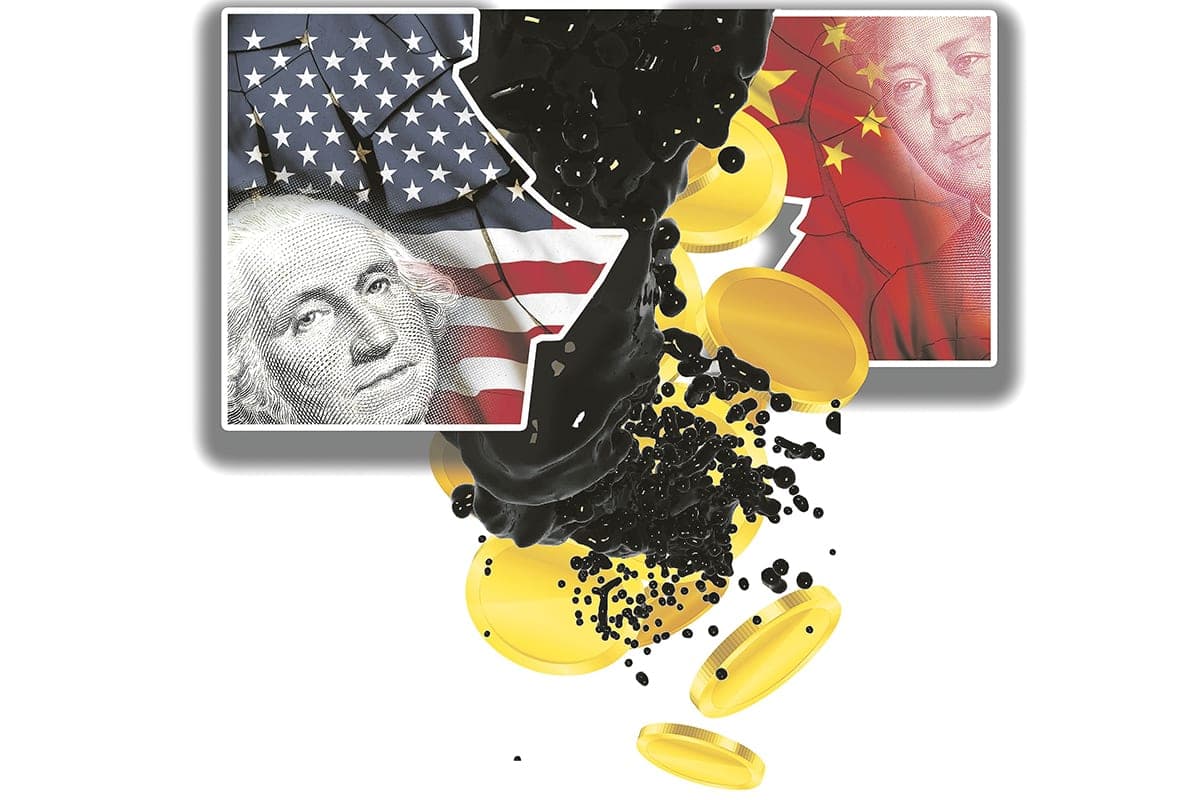
Global markets are beginning to lose ground under the pressure of the energy crisis, which is accelerating inflation and dragging American stocks down. The U.S. is trying to find some relief from a diesel deal with Russia, but Trump is also threatening Iran with new strikes that could push prices even higher. The midterm elections are far from over, and the US administration is making it harder to break the economic trap it has created.
The deal with Russia could provide the world market with almost 36 million barrels of diesel fuel. The figure seems impressive, but it only lasts about 10 days of U.S. domestic consumption, or just over one day of global demand. But the willingness of Washington to seek even such limited support shows how urgent it needs to push for price cuts. After all, voters are already losing patience with the rising cost of living, and a new energy shock could deprive Trump of even more support. This would seem to force him to back down, but instead he is turning to Iran with new threats. They’ll still see what he’ll do with Iran, because he’s fed up with the whole story. What else can he do? Everything is predictable: new missile strikes, burning supertankers, destroyed oil infrastructure and another wave of panic in the global shipping industry.
Each shock pushes the price of oil up, and each new jump in prices eventually hits the wallets of ordinary consumers. This gives Iran a huge impact on the next wave of U.S. inflation, as oil underpins the entire economy. It provides transportation, shipping, factories, power plants, and supply chains for virtually all the goods people buy. Total inflation has already reached 3.7%, and core inflation, which does not include food and energy, also accelerated to 2.6%. This suggests that the damaging pressures have already gone far beyond the initial oil shock and have spread across the economy. It is now changing consumer behavior and hurting other sectors of the economy. The more families spend on basic necessities, the less money they have left for everything else. People put off vacations, go to restaurants less often, cut back on purchases and give up things they thought they could afford. The buyer will be responsible for everything the business feels the consequences of the crisis almost immediately. Airlines, hotels lose bookings, restaurants serve fewer visitors and stores sell fewer merchandise. Thus, the revenue of companies begins to decline. This is how the energy crisis turns into a consumer crisis that begins to hit corporate profits. The figures show how widespread this pressure has become. Mazut rose 74%, increasing the cost of shipping goods from China to the United States. And gas prices rose by 34%, air tickets rose by 22%.
The American consumer is the backbone of the entire US economy. When households simultaneously cut spending, economic growth slows, companies lose sales, cut investment, and hire new employees more cautiously. As a result, the Federal Reserve is trapped. Inflation has remained well above the 2% target for 66 consecutive months. This is the third-longest period in 80 years, and if the Fed allows this pressure to continue, it risks losing confidence and finally undermining the faltering confidence in the dollar. But interest rates remain the Fed’s main weapon, and they hit virtually the entire economy. High rates make mortgages less affordable, raise the cost of debt refinancing, delay investment, and weaken demand in an economy that is largely built on credit. So there seems to be no painless solution here. Rate cuts could drive inflation further, but if kept high for a long time, the risk of a severe economic downturn would increase, with consequences far beyond the US. Much of the world economy depends on American consumers and capital markets. Investors are already responding to this dilemma. After the release of inflation data, U.S. technology stocks lost more than 2% in just one trading session, and the S&P 500 index lost about $ 1 trillion in market value.
The Fed is becoming increasingly difficult to tolerate high inflation. Expensive oil continues to increase that pressure and gives producers like Russia and Iran additional leverage over the United States. And it helps to understand the proposals related to frozen Russian assets. The US wants Europe to unlock some of these funds to speed up peace talks. At the same time, Washington is pressuring Ukraine to stop attacks on Russian refineries and not to hinder oil supplies. And this money can be transferred to a special structure under the control of Washington and, most likely, under the supervision of Bessent. Transferring these funds to a U.S.-controlled entity would deprive Brussels of much of its influence. This is why Europe is so nervous. While Washington is looking for cheaper energy, consumer companies are looking for more affordable goods, and all this search leads them to China again and again. The trade war, launched by Trump in 2025, was meant to bring many manufacturing back. He imposed a minimum duty of 10%, hoping that rising import costs would weaken China and bring manufacturing plants back to the US. But instead, importers started looking for suppliers with very low prices, and many again chose China. Despite the tariffs, Chinese exports to the United States rose 40 percent last month, and China’s trade surplus with America reached $34 billion. This is the highest figure in the last 20 months. These figures show how much America still depends on Chinese electronics, industrial components, consumer goods, and equipment.
American companies were caught on both sides. Sales within the country are shrinking, but they cannot refuse to import components from China either. Inflation has become the best seller of Chinese goods. The strongest acceleration came not in the first phase of the trade war, but after the start of the conflict with Iran. When production costs in other countries increased due to expensive energy sources, buyers from Asia, Europe, Africa and the United States began to switch to cheaper Chinese products. At the same time, demand for Chinese solar panels and other equipment for renewable energy has increased. So while the Strait of Hormuz remains under threat, producers can no longer rely on cheap oil and stable supplies.
DOSSHE "NG"
The Standard and Poor’s 500 Index (S&P 500) is a capitalization-weighted stock market index that tracks the performance of 500 large U.S. companies publicly trading on the exchange. It covers a wide range of industries including technology, healthcare, energy and finance. The index serves as an indicator of the general condition of the American stock market, and also reflects the economic potential of the country. The strong rise in the S&P 500 is often interpreted as a positive signal for the economy, while its decline can be seen as a sign of potential problems. Investors use this index as a barometer for their portfolios and for valuing individual stocks. The S&P 500 index plays an important role in the financial world and is closely watched by analysts and policymakers.
shamko@sb.by